
Converting a Phoenix Yard to a Real Desert Landscape
Phoenix lawns are the single largest residential water draw in the Valley. Converting to a real Sonoran desert landscape isn't only good for the city's aquifer — it usually pays back in 4–6 years through water bill savings, and the right palette outperforms turf for curb appeal year-round.
Done right, it's a 25-year landscape: graded for drainage, planted for shade structure, irrigated with a smart drip controller, and finished with decomposed granite that doesn't migrate into the pool.
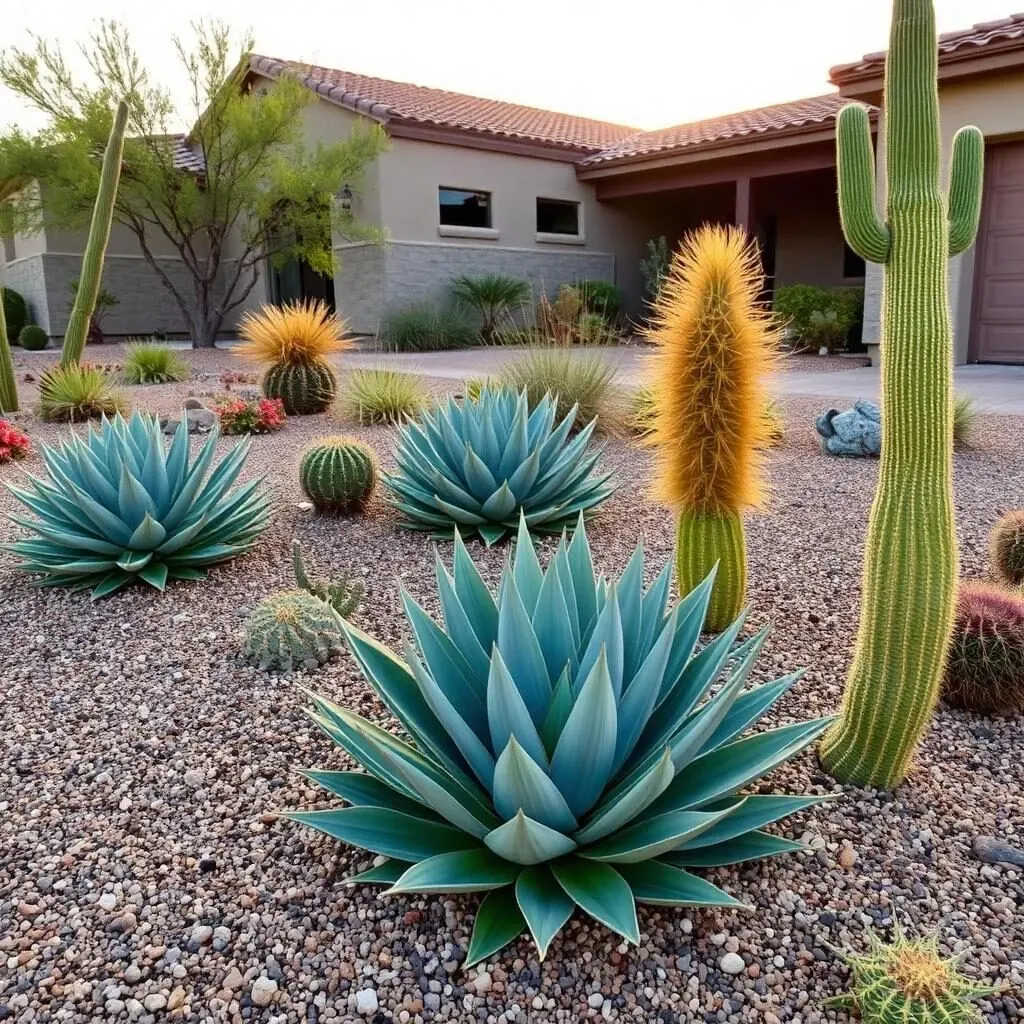
In this guide+
Why a desert conversion makes sense in Phoenix
- Water — a typical 1,500 sf grass front yard uses 60,000+ gallons/year. A converted desert landscape uses 8,000–15,000 gallons/year.
- Rebates — many Valley cities pay for verified grass removal. Tempe and Queen Creek figures were reviewed 2026-09-02: Tempe publishes $0.50/sq ft up to $2,000 and Queen Creek publishes $2/sq ft up to $5,000; Mesa publishes tiered awards of $1,000–$2,000 plus up to a $100 tree bonus, and Gilbert publishes up to $2,000 plus up to $1,000 in additional incentives. Scottsdale, reviewed 2026-09-22, publishes $2/sq ft up to $5,000 with eligibility and design conditions. Amounts and rules change — confirm your city's current program page before counting on a number.
- Maintenance — no mowing, no over-seeding, no fertilization cycle.
- Curb appeal year-round — the right palette has color in February when most lawns are brown.
- Resale — buyers in the Valley now expect (or actively prefer) low-water landscapes; lawns are a marketing liability in many neighborhoods.
A real Sonoran plant palette
Most underwhelming desert conversions are actually a rock-and-three-yuccas problem. The yards that look like a magazine spread layer canopy, structure, accent, and ground cover with intent.
- Canopy trees — Desert Museum palo verde, Sweet acacia, Mesquite (Chilean or thornless native), Texas ebony. Shade is the highest-ROI investment in a hot landscape.
- Structural — Argentine saguaro, totem pole cactus, ocotillo, agave (Weber's blue, Parry's), barrel cactus. These are the architecture of the yard.
- Accent — Texas sage (cenizo), red bird of paradise, Baja fairy duster, Mexican honeysuckle, brittlebush.
- Ground cover — trailing rosemary, damianita, blackfoot daisy, prostrate myoporum, ice plant for accent beds.
- Color punch — desert marigold, penstemons, globe mallow for spring; Texas mountain laurel for late-winter purple.
Drip irrigation done right
- Smart controller — Hunter Hydrawise, Rachio 3, or RainBird ESP-TM2 + LNK. WiFi, ET-based scheduling, leak alerts.
- Pressure-regulated drip — Netafim or RainBird XF drip with built-in pressure compensation. Avoid above-ground spray emitters; they crack in UV.
- Zones — separate canopy trees (deep, infrequent), cacti and agave (very rare), accent shrubs (moderate), and ground cover (frequent shallow). One zone per plant water need.
- Emitter sizing — trees get 2 gph emitters on multiple loops out to the dripline. Cacti get 1 gph at the base, run once every 3–6 weeks.
- Cap-off old grass irrigation properly — pressure-test the line, cap with PVC, and re-run drip on its own valves. Don't just convert spray heads to drip.
Real Phoenix desert conversion ranges
AMWUA city rebates of $500–$3,000+ offset 8–25% of the project. AE files the paperwork on every conversion that qualifies.
What kills a Phoenix desert landscape
- Spray heads converted to drip without zoning — every plant gets the wrong water.
- No weed barrier under the DG — bermuda grass returns within one year.
- Wrong DG color and size near a pool — small granite migrates into the skimmer.
- Planted too late in the season — anything planted June–August at full sun stress fails without a 30-day water-in plan.
- No canopy plan — sun-baked plant beds at 115° don't survive without intentional shade.
Frequently asked
- How much does it cost to convert a Phoenix lawn to a desert landscape?
- Plan on $6–$9 per square foot for a basic conversion (rock, drip retrofit, sparse plants), $9–$14/sf for a designed conversion with layered plants and smart drip, and $14–$22/sf for a full redesign with boulders, mature specimens, and integrated lighting. City rebates can offset part of that — where flat rates are published they run $0.50–$2 per square foot, and several cities pay tiered or application-based awards up to $5,000. Confirm your city's current program before counting on a number.
- What rebates are available for grass removal in Phoenix?
- Tempe and Queen Creek figures were reviewed 2026-09-02: Tempe publishes $0.50/sq ft up to $2,000 and Queen Creek publishes $2/sq ft up to $5,000; Mesa publishes tiered awards of $1,000–$2,000 plus up to a $100 tree bonus, and Gilbert publishes up to $2,000 plus up to $1,000 in additional incentives. Scottsdale, reviewed 2026-09-22, publishes $2/sq ft up to $5,000 with eligibility and design conditions. Amounts and rules change — confirm your city's current program page before counting on a number. AE handles the application, pre-inspection, and post-inspection paperwork.
- Will a desert landscape really save water?
- Yes — typical 4–6 year payback in water bills alone, before factoring rebate. A 1,500 sf grass front yard uses 60,000+ gallons/year; the same converted yard uses 8,000–15,000 gallons/year. Savings scale with lawn size and irrigation efficiency.
- Can I keep some grass and convert the rest?
- Yes — partial conversions are common. We separate irrigation zones so the remaining lawn is on its own controller schedule and the converted area gets its own drip program. Rebates usually still apply to the converted square footage.
- What's the best plant palette for a low-maintenance Phoenix yard?
- Canopy: Desert Museum palo verde, sweet acacia, thornless mesquite. Structure: Weber's blue agave, ocotillo, golden barrel cactus. Accent: Texas sage, red bird of paradise, Mexican honeysuckle. Ground cover: damianita, trailing rosemary, blackfoot daisy. We design the palette to your sun aspect and HOA palette restrictions.
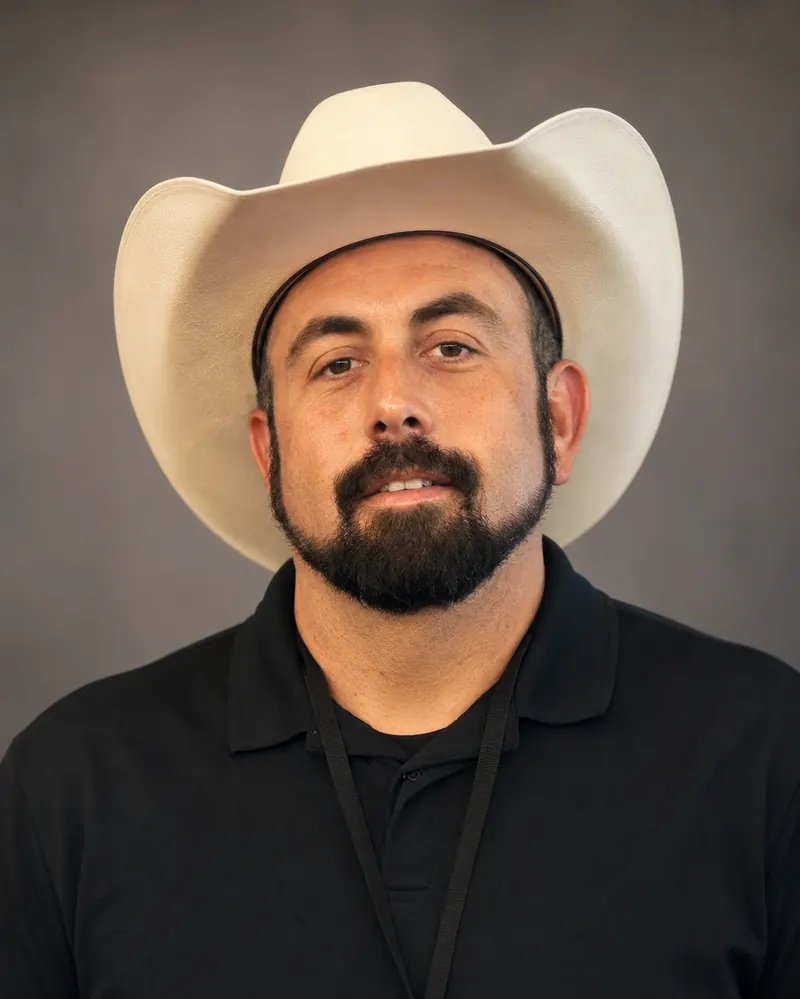
David "Dave" Bell
Dave is the owner of AE Outdoor Living in Peoria, Arizona and the current president of the Southwest Hardscape Association — 13 years on the board, 15 years involved. He has designed and built outdoor environments across Greater Phoenix since 2005.