
How Artificial Turf Should Be Installed in Phoenix
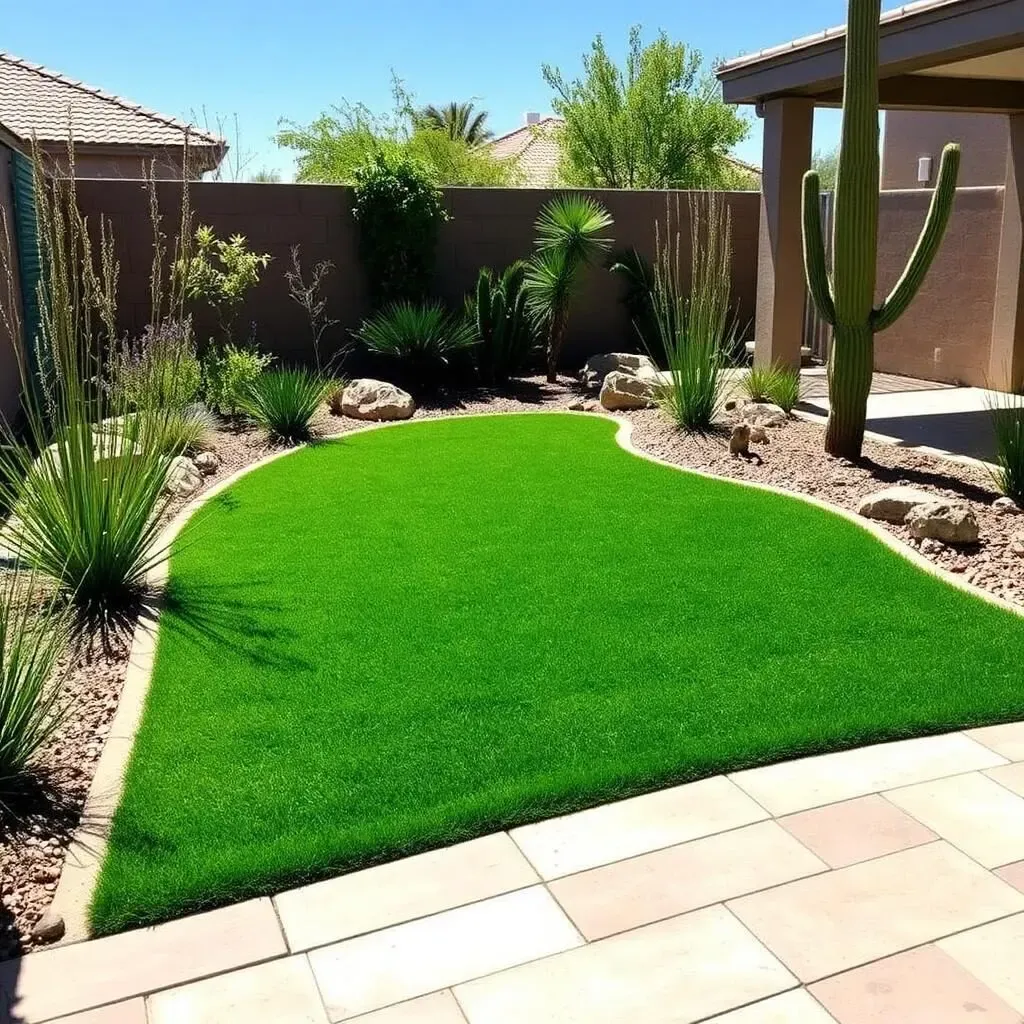
A good turf install in Phoenix sun looks like real lawn from your kitchen window and holds up under sun, monsoon, and — if planned for — pets. A bad one mats down quickly, can start to smell, and gets very hot in direct summer sun.
The difference is almost never the turf. It's the base prep, the infill, the seam work, and — for pets — whether there's a real drainage system underneath.
In this guide+
The Phoenix turf spec
- Base — a compacted base sized to the site. Quarter-minus (decomposed granite) at typical residential compacted depths of roughly 3–4" is one common option; the correct base material, depth, and compaction target depend on soil, intended use, drainage requirements, manufacturer instructions, and applicable local standards.
- Weed barrier — pinned over the base before turf goes down.
- Turf — polyethylene blade with a polyurethane backing is a common premium spec; the specific product for your project depends on use and is confirmed in the written scope.
- Infill — silica sand and/or antimicrobial zeolite are common options; the appropriate infill (including for pet zones) depends on use and manufacturer guidance.
- Seams — sewn or seam-taped with an outdoor-grade urethane adhesive per manufacturer instructions.
- Nails — galvanized landscape nails at close perimeter centers and in the field per the manufacturer's specification.
AE Pet Turf Infiltration System
Dog turf is the most common reason for early failure in Phoenix. Urine, heat, and a sealed base produce the smell every neighbor complains about. We engineered a layered drainage system that solves it.
The AE Pet Turf Infiltration System adds:
- An open-graded drainage stone layer above the compacted base, sized for flow-through.
- A perforated drain field tied into the yard's drainage plan, not pooled at the foundation.
- Copper-bonded zeolite infill that locks ammonia before it volatilizes.
- Permeable seam tape so urine doesn't pool under seams.
- An optional rinse loop at the dog's primary pee zone.
What Phoenix turf typically costs
Base material, depth, compaction, grading, drainage, turf product, and infill depend on the property, soil, intended use, manufacturer requirements, and signed proposal.
Turf project timeline
- 1 wkSelection + design
Turf face weight, color, and base spec selected; drainage planned.
- 2–4 dDemo + base
Sod, decomposed granite, or old turf removed; base placed and compacted.
- 1–3 dInstall + seams
Turf rolled, seamed, nailed, trimmed at edges.
- 1 dInfill + brush
Infill broadcast, power-brushed to lift fibers.
Ask any turf contractor before signing
- What base depth and material — and how it's compacted.
- Turf brand, face weight, blade shape, and backing type — in writing.
- Infill type and pounds per square foot.
- How seams are joined (sewn vs glued) and whether they're cut to blade direction.
- Nail spacing at perimeter and field.
- For pets: whether a real drainage system exists beneath the turf — not just a 'permeable backing' claim.
- Warranty length on turf fiber color and backing separation — manufacturer coverage varies by selected turf product. Written manufacturer documentation and the signed agreement control.
What tends to shorten Phoenix turf life
- Under-thickness or under-compacted base for the site and use case.
- A base material or drainage strategy that isn't matched to the intended use, especially in pet zones.
- Latex-backed turf, which can separate from the fibers over multiple Phoenix summers.
- No infill or under-infilled, which lets fibers lay over so the field mats and reads flat.
- Dark turf in high-sun exposure without shade, rinsing, or cooling-focused infill — dark surfaces get very hot in direct Arizona sun.
- Pet zones installed without a drainage strategy sized for the use.
Frequently asked
- How much does artificial turf cost in Phoenix?
- Most AE artificial turf installations typically range from $11–$18 per square foot. Custom putting greens, specialty drainage, intensive pet systems, demolition, and unusual site conditions are quoted separately.
- How long does artificial turf last in Phoenix?
- Product lifespan varies based on product selection, exposure, traffic, pets, drainage, maintenance, and manufacturer documentation. Base and infill choices meaningfully affect how well an install holds up. Manufacturer product coverage varies and controls product-related terms.
- Will artificial turf burn my dog's paws in Arizona?
- Turf can become very hot in direct Arizona sunlight. Cooling infills, lighter-colored fibers, shade, and rinsing may help reduce surface temperature, but no particular temperature reduction is guaranteed. Check the surface before pets or children use it during hot weather.
- Can I install turf myself?
- You can. The labor in a real turf install is largely the base and the seams; getting either wrong tends to show quickly and is hard to correct without redoing the field. For anything beyond a small patch, most homeowners are better served by a professional install matched to the site.
- Does turf hold up under dogs?
- AE installs pet-conscious turf lines with infill options and drainage strategy sized to the site. Pet applications may require additional drainage, odor-control materials, and maintenance provisions; ongoing cleaning is still required regardless of infill.
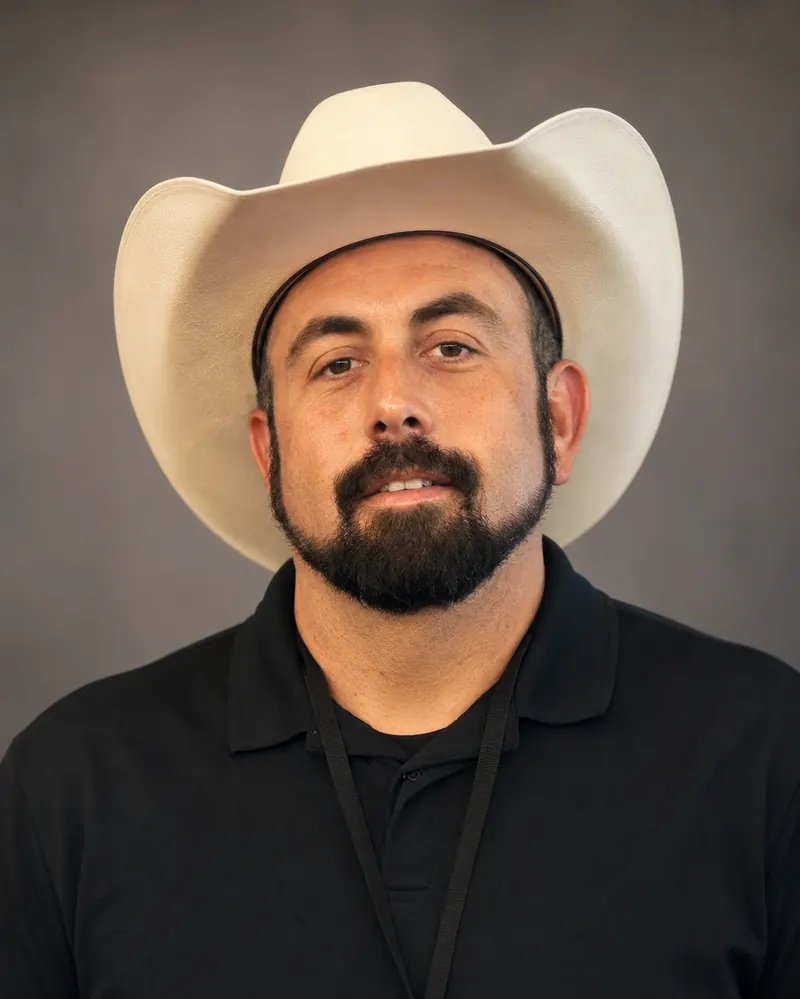
David "Dave" Bell
Dave is the owner of AE Outdoor Living in Peoria, Arizona and the current president of the Southwest Hardscape Association — 13 years on the board, 15 years involved. He has designed and built outdoor environments across Greater Phoenix since 2005.