
How Much Does a Patio Misting System Cost in Arizona?
Misting systems in Phoenix run anywhere from a $150 hose-bib kit to a $15,000 whole-yard installation. The gap isn't a sales markup — it is design, PSI, plumbing, controls, and warranty. Here is the honest 2026 breakdown so you can compare a DIY kit against a full install line by line.
We install misting systems every week across the Phoenix metro. These numbers are the same ranges we quote in real proposals — not stock content.
In this guide+
Investment ranges by system type
Ranges include design, parts, labor, backflow, and written warranty. DIY figures are parts only.
What actually drives the price
- Linear feet of misting line — the biggest single driver.
- Number of zones — each zone needs a valve and separate control channel.
- PSI target — 1,000 PSI pumps cost 4–6× a 200 PSI booster.
- Line concealment — running copper inside a ramada rafter costs more than surface-mount nylon.
- Backflow prevention — required by Arizona code on any potable tie-in.
- Pre-filtration — mandatory in Phoenix hard water; 5-micron minimum.
- Controller — a smart humidity/temperature controller adds $300–$800 over a basic timer.
- Freeze protection — a $60 drain valve saves a $1,600 pump every February.
DIY kit vs full install — the honest math
A retail high-pressure kit runs $1,200–$2,800 in parts. If you hire an installer separately, plan $1,500–$4,500 in labor. Total: $2,700–$7,300 for a system with a manufacturer warranty on the parts only.
AE's full install lands in the same range but rolls in design, backflow, filter, pump enclosure, freeze drain, controller programming, commissioning under load, and written warranty on parts AND labor.
The gap isn't 'they're cheap, we're expensive.' The gap is what happens if a nozzle drips on your outdoor TV three months later — one company covers it, the other tells you to call the manufacturer.
Arizona ROC $1,000 rule
Frequently asked
- How much does a patio misting system cost in Arizona?
- Installed in the Phoenix metro: a single-zone high-pressure patio misting system runs $1,800–$3,500, a full ramada or pergola with 2–3 zones runs $3,500–$7,500, and whole-yard or commercial systems run $7,500–$15,000+. DIY hose-bib low-pressure kits are $80–$300 in parts but deliver a fraction of the cooling.
- How much does an outdoor misting system cost installed?
- For an outdoor misting system installed on a Phoenix patio, budget $2,500–$5,000 for a typical single-ramada high-pressure install. That covers the 1,000+ PSI pump, ASSE 1013 backflow, 5-micron pre-filter, stainless nozzles, concealed lines, and a smart controller with temperature and humidity gating — not a parts kit.
- Is a high-pressure misting system worth the cost vs. low-pressure?
- In Phoenix, yes. High-pressure (1,000+ PSI) delivers a measurable 20–35°F drop and keeps surfaces dry. Low-pressure hose-bib misting drops temperature 3–8°F and wets everything above 35% humidity. If you actually want to sit outside from May through September, the price gap pays for itself in usable patio hours.
- How much water does a patio misting system use?
- A properly designed high-pressure patio misting system uses about 0.5–1.5 gallons per minute per zone when running. At Phoenix water rates, expect $8–$25/month during peak summer if you run it 3–5 hours a day on temperature/humidity gating. Electric draw is negligible (350W–1,000W pump).
- What does patio misting system maintenance cost per year?
- Plan on $150–$400/year for a residential system: annual nozzle descaling (vinegar or commercial solution), pre-filter swap, pump oil check on high-pressure units, and a winterization drain in February. Every 2–3 years, plan on replacing nozzles in hard-water zones. A Guardian maintenance contract wraps all of this into a fixed monthly fee.
- Can I install a patio misting system myself in Arizona?
- You can install a hose-bib low-pressure kit on a dog run or small garden. For a high-pressure system with backflow, pump, filter, and controls, Arizona ROC law requires a licensed contractor on any project over $1,000 in parts + labor — and unlicensed work transfers workers' comp liability to the homeowner if the installer is injured.
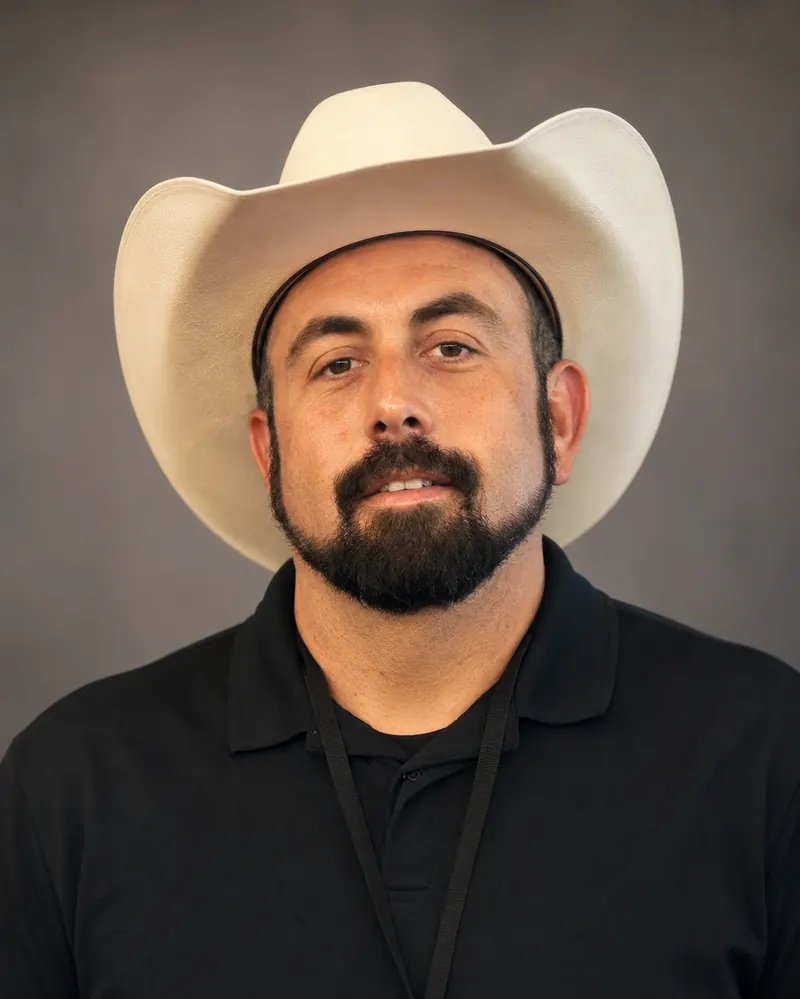
David "Dave" Bell
Dave is the owner of AE Outdoor Living in Peoria, Arizona and the current president of the Southwest Hardscape Association — 13 years on the board, 15 years involved. He has designed and built outdoor environments across Greater Phoenix since 2005.