
Designing a Pergola or Ramada That Actually Works in Phoenix Summer
Shade is the single most-asked-about backyard upgrade in Phoenix — and the one most often built wrong. A pergola with open slats over a west-facing patio is a $20k decoration that does nothing from 1 PM to sunset.
Real summer shade means choosing the right structure for your sun exposure, sizing footings for monsoon wind loads, and detailing it so the structure still looks like part of the house — not a kit dropped on a slab.
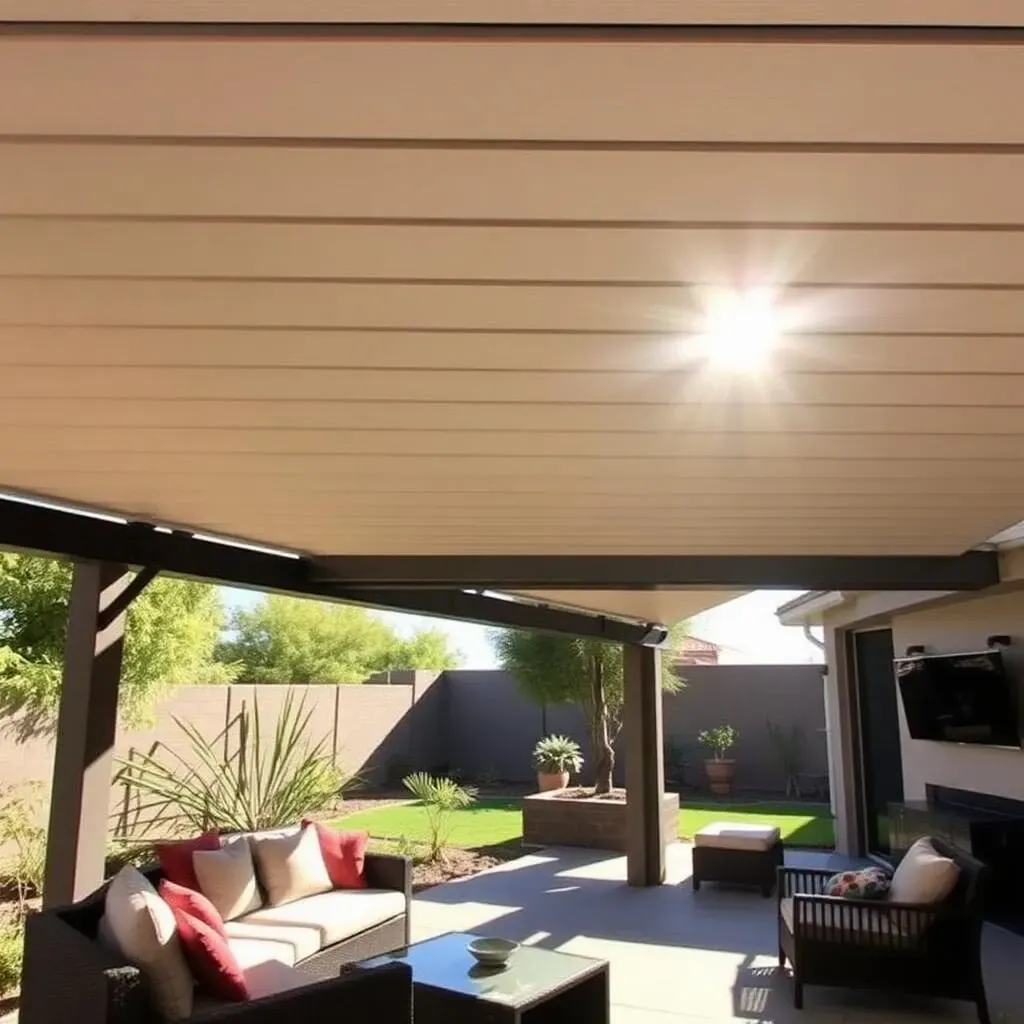
In this guide+
Match the structure to your sun exposure
Sun aspect changes the right answer:
- South / east exposure — open-slat wood or aluminum pergola works well. Morning sun is filtered, afternoon shade is reasonable.
- West exposure — open slats fail. You need louvered aluminum (closeable), a solid ramada roof, or motorized side screens to block direct afternoon sun.
- Pool deck — louvered aluminum lets you open for sun, close for shade and rain. Best of both worlds.
- Outdoor kitchen — solid-roof ramada with insulated panels. Cooks need shade and a place to mount a vent hood.
Pergola and ramada construction options
- Aluminum louvered (Equinox, StruXure, Azenco, Renson) — closeable louvers, integrated LED lighting, motorized rain sensors. 20+ year structure with powder-coat finish. Manufacturer frame warranties vary by brand — several offer limited lifetime frame coverage subject to their written terms; AE provides a 2-year install workmanship warranty on top of that.
- Heavy timber pergola — 6×6 or 8×8 cedar, glulam, or rough-sawn Douglas fir. Warmer aesthetic. Needs side screens or shade sails for west exposure.
- Steel pergola — fabricated to spec, painted or galvanized. Modern industrial look; the longest-lasting wood-alternative for custom geometries.
- Ramada — solid roof on engineered posts, tied to footings. Stucco, wood, or metal-clad. Acts as a permanent room.
- Side screens — motorized fabric screens (Phantom, Insolroll) drop on the sunny side to extend usable hours.
Footings, wind, and permits
Phoenix monsoon wind events regularly hit 60–80 mph. Every pergola or ramada we build is engineered for the city's design wind speed (typically 90 mph), with footings sized to the post spacing and span.
- Footings — 24" diameter × 30–36" deep minimum for residential louvered or heavy-timber pergolas. Larger for ramadas.
- Post attachment — anchor bolt set in concrete with stainless saddle, not Simpson post bases nailed to a slab.
- Permit — required by every Greater Phoenix city for structures over 120 sf, or any structure with a roof. HOA architectural review is separate.
- Setbacks — most cities require 5–10 ft from rear and side property lines for a permanent structure. AE checks before design.
Real Phoenix pergola and ramada ranges
Outdoor kitchen, fireplace, side screens, fan, and lighting integration are separate scopes that often run alongside.
Why most Phoenix pergolas underperform
- Open slats over a west-facing patio — looks great in catalogs, useless in July at 4 PM.
- Undersized footings — first monsoon racks the structure.
- Big-box kit installed by a handyman — no engineering, no permit, often noncompliant with setbacks.
- Posts mounted to a slab with surface anchors — pulls out under wind load.
- No integration with the lighting or kitchen — every wire becomes visible later.
Frequently asked
- How much does a pergola cost in Phoenix?
- Aluminum louvered pergolas run $12k–$22k for a 10×14, heavy-timber pergolas $15k–$28k for a 12×16, custom steel $22k–$45k+, and solid-roof ramadas $25k–$55k+ depending on size and finishes. Footings, permitting, and integrated lighting are included; outdoor kitchens and fireplaces are separate.
- Aluminum louvered or wood pergola for Arizona?
- Louvered aluminum for any west-facing or pool-deck application — it closes when you need shade and rain protection, opens for sun. Heavy timber for east or south exposure where you want warmth and traditional aesthetics. We build both regularly.
- Do I need a permit for a pergola in Phoenix?
- Almost always. Every Greater Phoenix city requires a permit for structures over 120 sf or any structure with a roof. HOA architectural review is separate and runs in parallel. AE pulls both.
- Will a pergola hold up in monsoon?
- Yes if it's engineered. Phoenix monsoon wind regularly hits 60–80 mph; cities require 90 mph design. AE's footings, post anchors, and connectors are sized to that load — every time. Kit pergolas from big-box stores are not.
- Can I add a pergola to an existing patio?
- Usually yes — we core-drill footings through the existing slab or pavers, set anchor bolts, and pour engineered footings beneath. The patio itself rarely needs to be replaced.

David "Dave" Bell
Dave is the owner of AE Outdoor Living in Peoria, Arizona and the current president of the Southwest Hardscape Association — 13 years on the board, 15 years involved. He has designed and built outdoor environments across Greater Phoenix since 2005.