
Frameless Glass Pool Fencing in Phoenix Planned Around Arizona Pool-Barrier Requirements
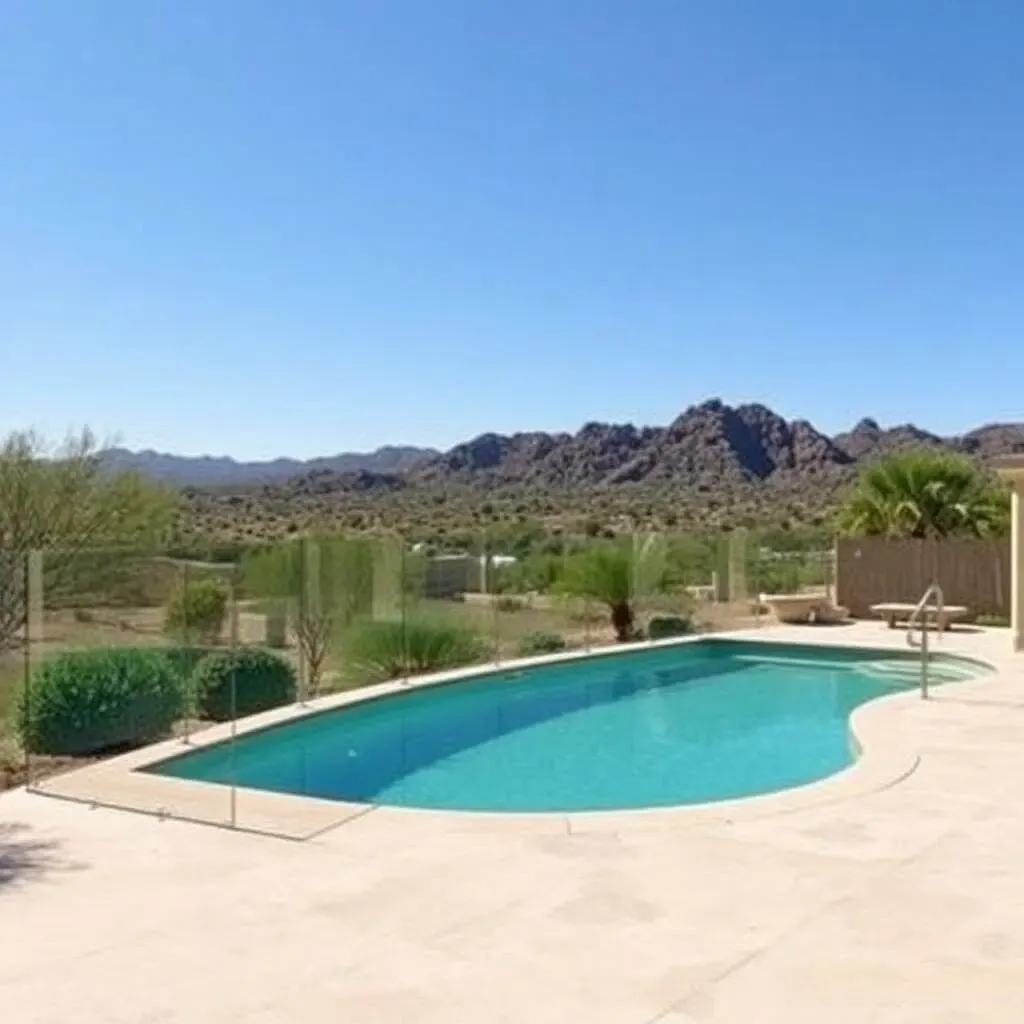
Glass pool fencing addresses a common conflict for pool owners: Arizona pool-barrier requirements must be met, but many traditional fence types obscure the yard view. Frameless or minimally-framed glass can be configured as a barrier while preserving sight lines, subject to statutory, municipal, HOA, and site-specific requirements confirmed with the applicable authority and recorded in the written proposal.
Not all glass fencing is equal. The hardware, panel thickness, post spacing, and footing detail are what separate a well-documented install from one assembled without project-specific detailing.
No fence, gate, or barrier replaces active adult supervision. Designate an undistracted adult Water Watcher whenever children are in or near water, and treat a barrier as one layer of protection rather than a foolproof safeguard. The property owner confirms required height and other project requirements with the municipality or authority having jurisdiction and, where relevant, the HOA and insurer; AE installs to the approved written scope and does not guarantee municipal, HOA, insurer, or inspection approval.
In this guide+
Arizona pool barrier code, in plain English
Arizona's statewide pool-barrier statute (ARS § 36-1681) applies to most private pools capable of holding water deeper than eighteen inches. It generally requires an enclosure at least five feet high, with a limited four-foot alternative that can apply when a residence or living area forms part of the enclosure and the statutory conditions are met.
Cities and counties may impose stricter or additional requirements covering barrier height, opening sizes, climbable surfaces, gate configuration, latch height, and inspection. HOA rules, remodel conditions, and the specific pool configuration can also affect what is required.
AE reviews the applicable statutory, municipal, HOA, and site-specific requirements and defines the barrier height, gate hardware, clearances, permit, and inspection responsibilities for the specific property in the written proposal.
Frameless vs semi-frameless vs framed
- Frameless — minimum 1/2-inch tempered safety glass in stainless floor spigots. The cleanest look. Premium pool decks and modern builds.
- Semi-frameless — glass panels with mini-posts at regular intervals; AE uses a minimum of 1/2-inch tempered safety glass here as well. Slightly less open than frameless but still very transparent.
- Channel-set glass — continuous aluminum base channel hides the spigots. Quickest install but the channel is a visible line.
- Framed — aluminum frame around each panel. Blockier look, more common in townhome HOAs.
- Mesh and iron — non-glass systems occasionally paired with a glass run for view corridors; barrier code applies to every segment.
Hardware that holds up in Phoenix
- Spigots — Duplex 2205 stainless-steel core-mount spigots are AE's fence standard. Ask any installer to document the specific alloy, finish, and manufacturer for the hardware being supplied; corrosion performance depends on the alloy, finish, pool chemistry, and maintenance described in the product documentation.
- Panel thickness — AE uses a minimum of 1/2-inch tempered safety glass on every Sonoran Glass fence, frameless or semi-frameless. No thinner panel is substituted to hit a price.
- Glass and hardware sourcing — AE primarily uses PRL glass and Polaris hardware. They are primary rather than exclusive; approved alternatives and final models are confirmed in the written scope.
- Gate hardware — the magnetic latch (self-latching) and self-closing, tension-adjustable hydraulic hinges. Replacement parts available locally.
- Footing — stainless core-mount spigots are AE's standard method: a 5-inch core-drilled hole with 4-inch embedment into concrete, set with Rapid Set rapid-setting anchoring cement. Where a footer is required, the baseline is an 8-inch-by-8-inch reinforced footer with continuous rebar. Bolt-down/surface-mount spigots are used only when necessary and supported by the approved detail. Pavers, ABC, sand and compacted paver base do not anchor glass.
- Edge polishing — panels are polished and chamfered so exposed edges are arrissed for safe handling and finish quality.
AE-installed glass pool fencing — planning range
Frameless glass pool fencing generally ranges from $225–$325 per linear foot installed.
Final pricing depends on total footage, gates, glass selection, hardware, mounting conditions, access, engineering requirements and site conditions.
Specialty glass systems, gates, upgraded glass and custom hardware are quoted separately after the layout and specifications are confirmed.
Other fencing systems and mounting configurations are quoted separately after site review.
Verified Sonoran Glass project examples — owner-verified AE project records:
What fails inspection or fails early
- Pavers used as the sole substrate for frameless spigots — anchoring depends on the concrete slab beneath, not the paver surface.
- Hardware selected without documented alloy or finish for pool-side conditions — AE's fence standard is Duplex 2205 stainless-steel core-mount spigots, and the supplied hardware is identified in the written scope.
- Gate hardware that is not self-closing and self-latching, or latch heights that do not meet the applicable jurisdiction — barrier inspection depends on the local requirements.
- Outdoor furniture, planters, or other climbable objects placed near the inside of the barrier — climbable-surface clearances vary by jurisdiction and configuration.
- Unpermitted installs — required permits and inspections vary by jurisdiction; AE defines those responsibilities in the written proposal.
Frequently asked
- How much does glass pool fencing cost in Phoenix?
- Frameless glass pool fencing generally ranges from $225–$325 per linear foot installed. Final pricing depends on total footage, gates, glass selection, hardware, mounting conditions, access, engineering requirements and site conditions. Other fencing systems and mounting configurations are quoted separately after site review. Permit and inspection requirements vary by jurisdiction and project. AE defines responsibilities for the specific property in the written proposal.
- Is glass pool fencing legal in Arizona?
- Glass is a commonly used pool-barrier material in Arizona. ARS § 36-1681 generally requires an enclosure at least five feet high; a limited four-foot alternative can apply when a residence or living area forms part of the enclosure and the statutory conditions are met. Local ordinances, HOA rules, and site conditions may impose additional or stricter requirements. Permit and inspection requirements vary by jurisdiction and project — AE defines those responsibilities for the specific property in the written proposal.
- Frameless or semi-frameless for a Phoenix pool deck?
- Frameless if the pool deck is the visual focal point and the substrate supports floor-mounted spigots. Semi-frameless is a practical option for larger perimeters where the mini-posts are acceptable in the design; both are quoted separately after site review.
- Can glass fencing be installed on pavers?
- Not as a frameless system on the paver surface alone — spigots anchor into the concrete slab beneath. Options include core-drilling through pavers into the slab, setting spigots in fresh concrete before the deck is finished, or using a channel-set system on a continuous concrete strip. AE confirms the appropriate approach after site review.
- How is glass pool fencing evaluated for Arizona weather?
- System performance depends on the complete installation, including glass thickness, panel dimensions, hardware, anchors, substrate, exposure, and any site-specific engineering requirements. AE confirms the selected system and installation requirements in the written proposal. Acts of nature — including monsoons, microbursts, wind, hail, flooding, and other natural disasters — are excluded from workmanship warranty coverage.

David "Dave" Bell
Dave is the owner of AE Outdoor Living in Peoria, Arizona and the current president of the Southwest Hardscape Association — 13 years on the board, 15 years involved. He has designed and built outdoor environments across Greater Phoenix since 2005.