Salt Pool vs Chlorine Pool in Arizona — Which Is Right for You?
Salt systems get marketed as a miracle. Chlorine pools get marketed as the past. The reality is more nuanced — here's the breakdown for an Arizona pool.
Salt pools still use chlorine
Common misconception: salt pools aren't chlorine-free. The salt cell generates chlorine on-site from dissolved salt — you swim in lightly chlorinated water just like a traditional pool. The salt level (~3,000 ppm) is about 1/10 the salinity of seawater. You'll barely taste it.
Where salt wins
- Softer-feeling water with less of a 'chlorine' smell.
- Easier on swimsuits, hair, and skin for daily swimmers.
- No hauling and storing jugs of liquid chlorine or tabs.
- More consistent chlorine levels — the cell tops up automatically.
Where chlorine wins
- Lower upfront cost — no salt cell to buy ($1,800–$2,800).
- No cell replacement every 3–5 years.
- Better with certain pool finishes — some natural stone copings react poorly to long-term salt exposure.
- Simpler troubleshooting for older equipment pads.
Stone, coping, and salt — the real concern
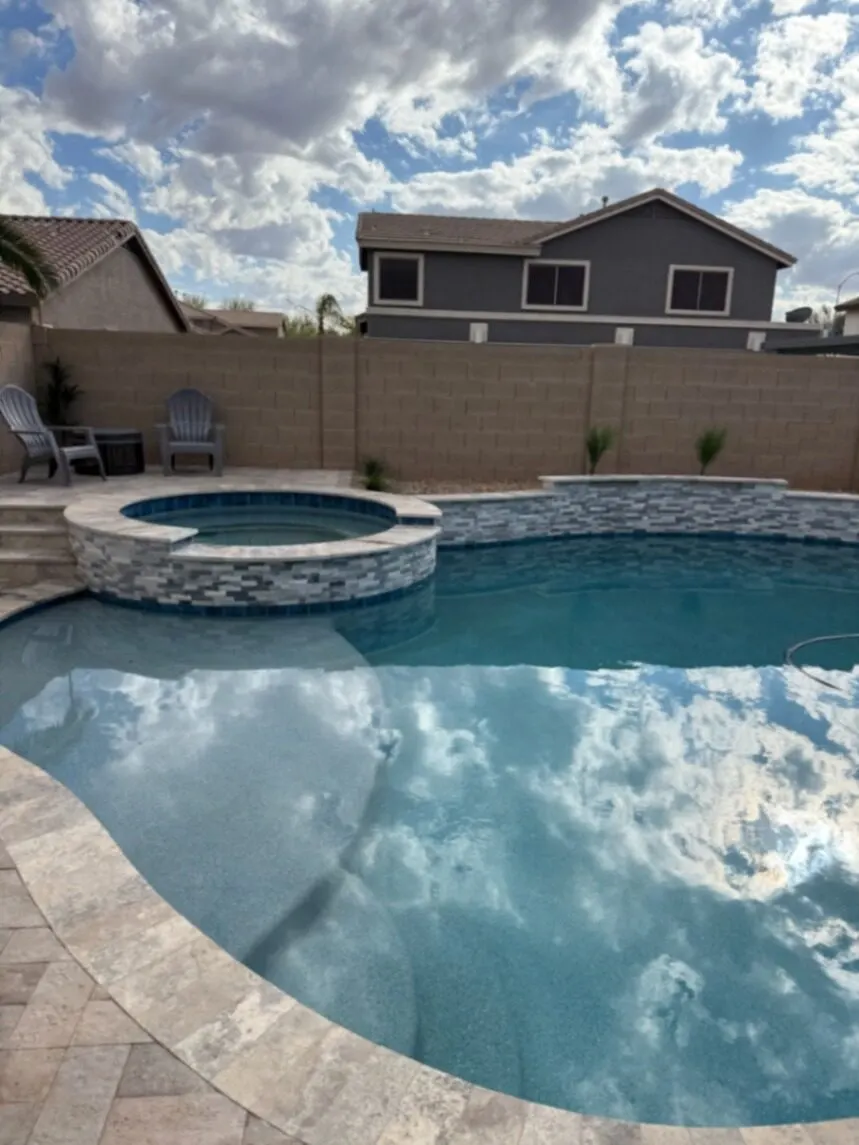
Salt water is slightly corrosive to some natural stones, raw aluminum, and unsealed metal. We don't install salt with travertine coping without a quality sealer and a clear maintenance plan. With porcelain decking and quality coping, salt is a non-issue.
What AE recommends
Default to salt for most new builds — the day-to-day quality of life is meaningfully better and the math works out long-term. Stick with chlorine when the coping/decking choice isn't salt-friendly, or when the homeowner specifically prefers the simpler equipment pad.