Restaurant & Hospitality Patio Design in Arizona
Shade, surface, comfort, and code — what restaurants and hotels need from a patio that has to perform in 115° heat and stay full year-round.
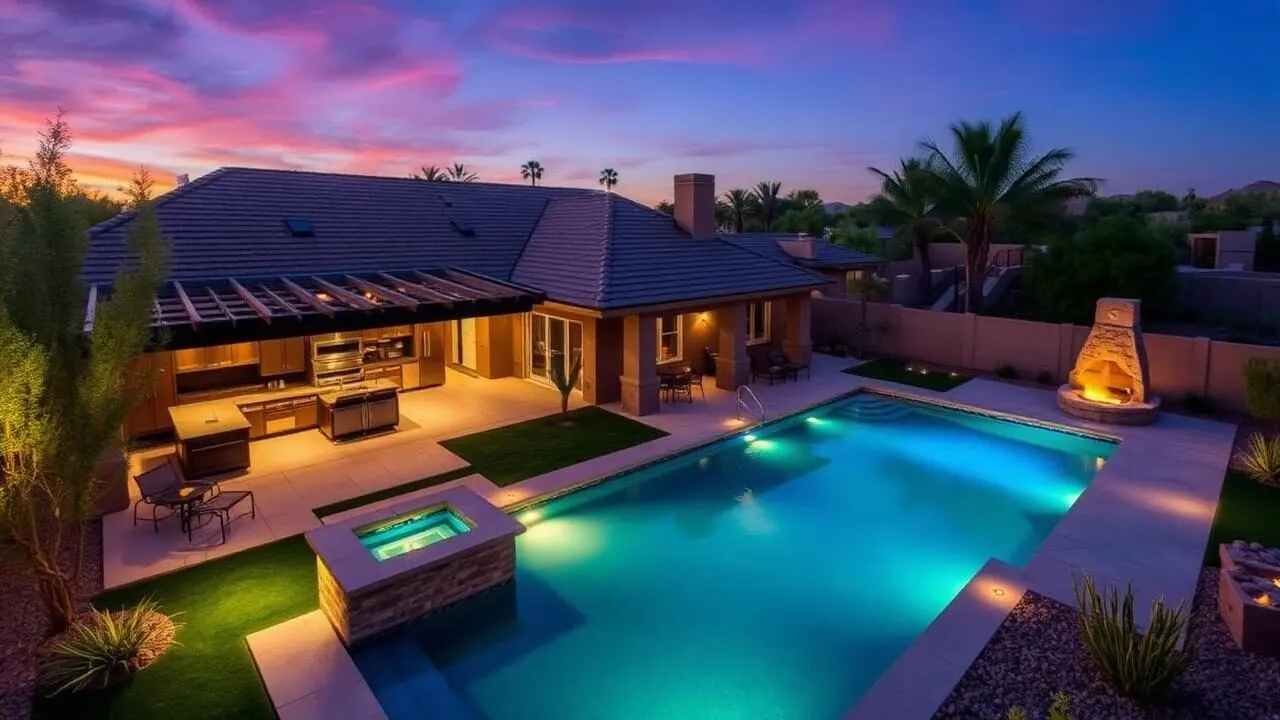
Year-round usability is the only metric that matters
A Phoenix restaurant patio that closes June–September loses 30%+ of annual revenue. The right shade strategy (louvered pergola with misting + ceiling fans), heat-rejecting surface (light-color travertine, not dark concrete), and evaporative cooling can keep a patio open into mid-summer evenings. We've done this for valley restaurants seeing 20%+ revenue lift from the renovation alone.
Surface spec
- DCOF ≥ 0.42 wet (slip-resistance — non-negotiable around any water feature or misting).
- Light-color travertine or porcelain (reflects heat, stays 20–30°F cooler than concrete).
- Commercial-grade base prep — 6" ABC + 1" sand + polymeric sand joints.
- Linear or trench drains every 30 ft on dining areas — monsoons clear in <10 minutes.
- No expansion joints crossing high-traffic aisles.
Shade + comfort stack
Louvered aluminum pergola (motorized, smartphone-controlled), commercial-grade misting at 1,000 PSI (drops air temp 20–25°F), large-blade slow-RPM ceiling fans, and infrared heaters for shoulder-season nights. Together: usable Apr through early-Nov, often year-round.
Permits, ADA, and health-dept items
ADA path of travel from sidewalk to every table, accessible seating mix, fire department clearance from any gas line or fire feature, and health department sign-off if food prep happens on the patio. We coordinate all submittals — owners typically only sign permit applications.