In-Ground Trampolines — The Backyard Upgrade Kids Beg For
In-ground trampolines look cleaner, last longer, and use a risk-reducing design that lowers the exposed fall height around the frame. Here's what installing one actually involves — and the supervision, padding, and manufacturer guidance still required.
Why in-ground for AZ backyards
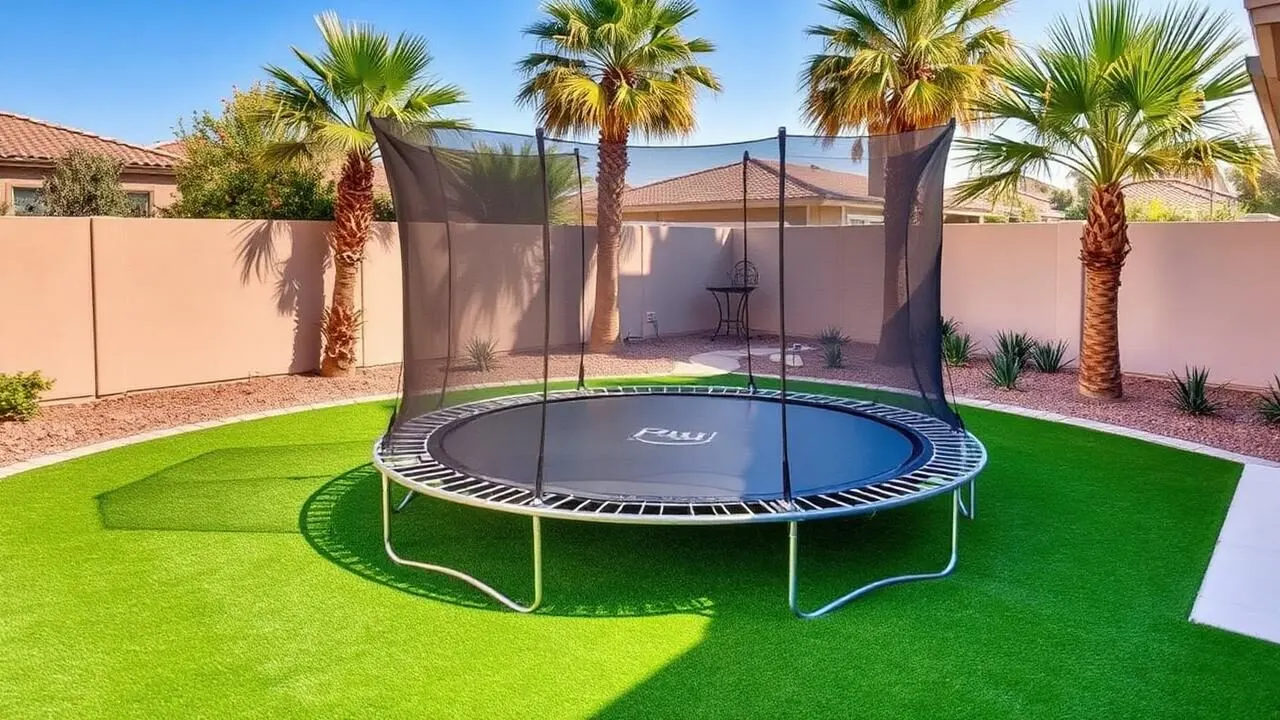
Above-ground trampolines blow over in monsoons and their fabric and springs UV-degrade quickly in Arizona sun. An in-ground install sits flush with the turf, which reduces the exposed fall height around the frame and removes the ladder path. It is a risk-reducing design, not a claim of injury-free use — attentive adult supervision, one jumper at a time, complete spring and frame padding, and the manufacturer's age, weight, enclosure, and maintenance guidance are still required. Per CPSC guidance, flips and somersaults should be avoided outside an appropriately supervised professional environment.
What's actually involved in install
- Excavate a bowl 3 ft deep at the perimeter, 4 ft deep at the center — wider than the trampoline frame.
- Build a retaining wall (concrete block or pre-engineered kit) so the soil doesn't collapse inward.
- Engineer ventilation — without airflow under the mat, kids 'thud' instead of bounce.
- Drainage to daylight or to a French drain — Phoenix monsoons can drop 2 inches in an hour.
- Reinstall surrounding turf or pavers flush with the frame.
Cost in Arizona
A quality in-ground install (10–14 ft trampoline + excavation + wall + drainage + turf restoration) runs $4,500–$9,500. The trampoline kit itself is $1,200–$3,000; the rest is dirt work and finish. We use Capital Play and Avyna kits — both designed specifically for sunken install with bonded retaining walls.
Safety net — yes or no?
For any household with young children we recommend one, along with complete spring and frame padding, an adequate clear zone from walls and fire features, one jumper at a time, and attentive adult supervision. A flush install does not eliminate collision, landing, entrapment, head/neck, equipment-failure, or multi-jumper risks. A removable net pole system runs about $400 and pulls out when you want a cleaner look for entertaining.
What kills cheap in-ground installs
DIY pits without retaining walls cave in within a year. No drainage = standing water + mosquitoes + rotted mat. No ventilation = poor bounce + broken springs. Skipping any of these saves $1,500 now and costs $5,000 in two years.