
Outdoor Sound Systems — How to Get Concert-Quality Audio in Your Backyard
Bluetooth speakers and rock speakers are not the same thing. Here's how pros design backyard audio that fills the space without annoying the neighbors.
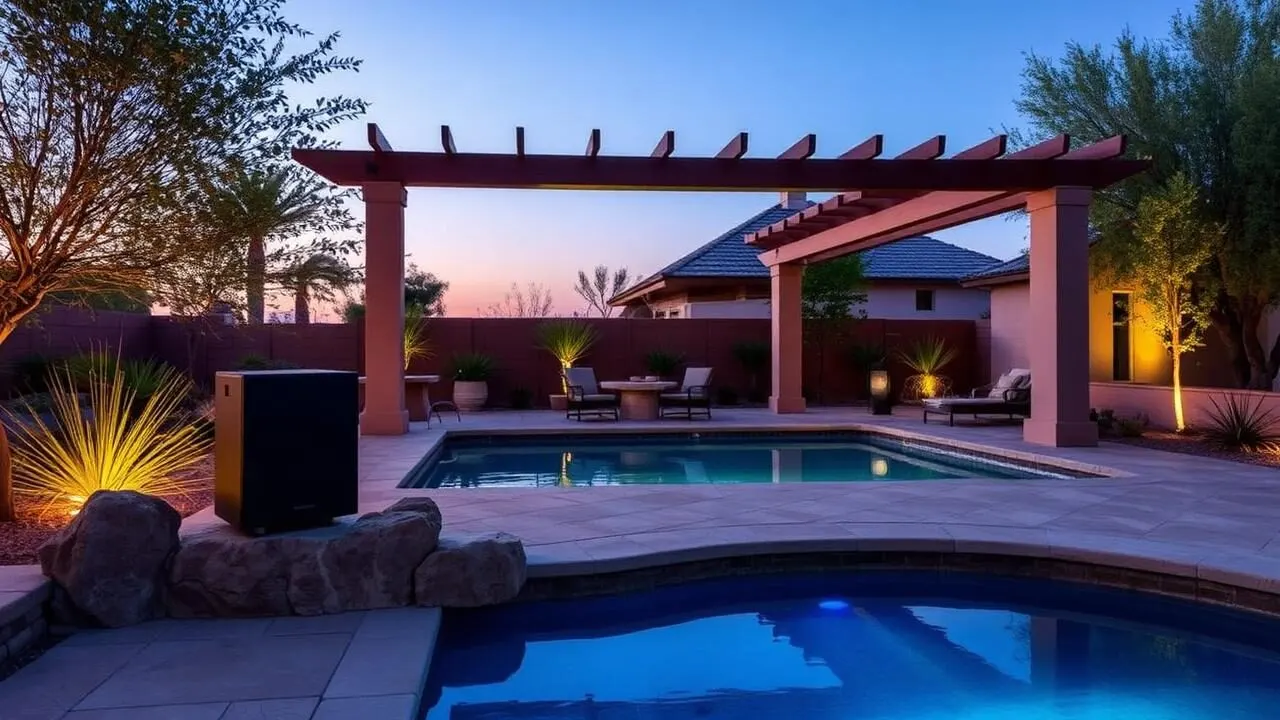
Why one Bluetooth speaker isn't enough
A single portable speaker on a patio table works for 8 ft of dinner conversation. Beyond that, sound drops off cliff-fast — pool, fire pit, far corner of the yard all sit in dead zones. Real outdoor audio uses multiple low-volume sources spread across the space so no one area is too loud and no one area is silent.
Speaker types we install
- Rock speakers: blend into desert landscape, weatherproof, point sound across open areas.
- Eyebrow/eave speakers: mount under soffits for patio and outdoor kitchen coverage.
- Bollard speakers: short pylons along pool decks or pathways, even sound distribution.
- Subwoofers: in-ground or buried — surprisingly important for music to sound full outdoors where there's no walls to reflect bass.
- All run on weatherproof low-voltage wiring buried in conduit.
Brands we trust in Arizona heat
Sonos Outdoor (by Sonance), Klipsch AWR, Episode Landscape, and Bose FreeSpace. All built for UV, monsoon, and 115° decking. Cheap Amazon rock speakers fail in 2–3 summers — the cones literally bake.
Amp and source
You need a multi-zone amplifier (Sonos Amp, Russound, or AudioControl) inside the house or in a weatherproof outdoor cabinet. Source is whatever you want: phone, Sonos, Spotify Connect, Apple AirPlay. Most clients control everything from their phone.
Cost ranges
Entry (4 rock speakers + amp, single zone): $2,500–$4,500. Mid-tier (6–8 speakers + sub + 2 zones): $5,500–$9,000. High-end (whole-yard, 10+ speakers + 2 subs + 3+ zones + smart-home integration): $12,000+. Wiring/conduit during a backyard build is dramatically cheaper than retrofit.
Don't be the neighbor everyone hates
Phoenix noise ordinance generally caps amplified sound at 65 dB at the property line after 10 PM. Properly designed systems hit that easily because the volume per speaker is low — that's the whole point of distributed audio.

