Backyard Splash Pads in Arizona — A Smarter Option Than a Pool?
For families with toddlers, a splash pad gives you the wet-fun factor of a pool with none of the drowning risk, no fence requirement, and a fraction of the operating cost.
Why splash pads are exploding in Phoenix
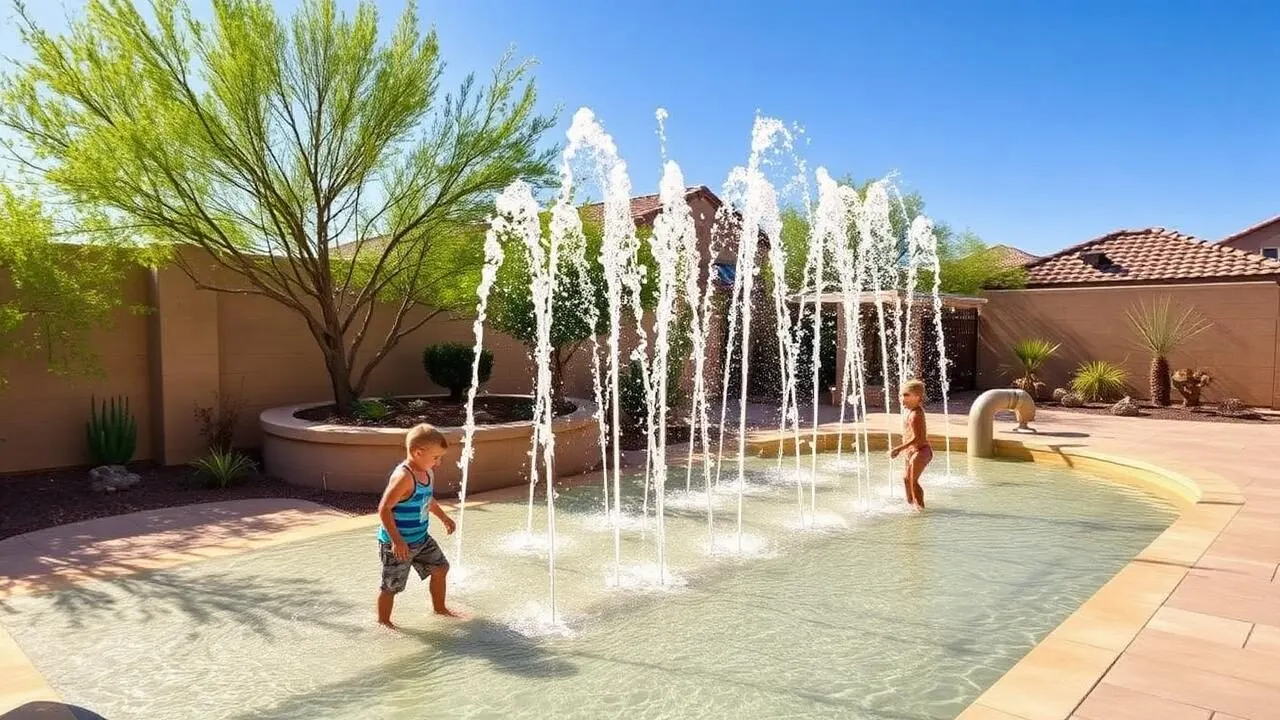
For families with kids under 6, a splash pad solves the problem a pool creates: drowning risk. Zero standing water means no fence required, no daily safety vigilance, and full peace of mind. Add 110° summers and the appeal is obvious — cool, interactive water play right outside the back door.
What a residential splash pad costs
Most residential pads run $18,000–$45,000 installed. Drivers: pad size, number of jets/features, recirculating vs drain-to-waste system, and decorative concrete or paver finish on the deck. Recirculating systems cost more upfront but slash water bills — important in Arizona.
Drain-to-waste vs recirculating
- Drain-to-waste: cheaper install, sends water to sewer or landscape — best where water is cheap and use is occasional.
- Recirculating: filters and reuses water like a pool — higher install, far lower operating cost, more sustainable for AZ.
- Most Phoenix HOAs and water utilities prefer recirculating for residential pads.
Footprint and design
A great residential pad is 200–600 sq ft. We design around jet patterns — arching jets, dump buckets, ground geysers, and bollard sprays. The deck slopes 1–2% toward a center drain, surfaced with non-slip textured concrete or porcelain pavers.
Maintenance reality
Recirculating pads use the same chlorine and filtration logic as a pool, but with way less water volume. Weekly: check chemistry, clean filter basket. Monthly: backwash. Annually: replace nozzles, inspect plumbing. About 30% of the labor of a pool.

