
Prepared by AE Outdoor Living. Reviewed by David Bell. Last reviewed: August 18, 2026. Free to read, no email required.
Pool Installation Guide — Step-by-Step Planning for Arizona Homeowners
Answer first: a pool installation runs in a predictable order — define how you will use the pool, survey the site, design it alongside the rest of the yard, budget the complete scope, verify and compare licensed contractors, sign a detailed contract, clear permits and HOA review, then build through excavation, steel, plumbing and electrical rough-in, shotcrete, tile and coping, decking, equipment, interior finish, and start-up. This guide walks each step and marks the parts that Arizona soil, heat, monsoon, and local approvals change. It is free, ungated, and written for homeowners planning their first build.
- AZ ROC 211530 · 347738 · 341002 · 340966
- Arizona-built since 2005
- President, Southwest Hardscapes Association
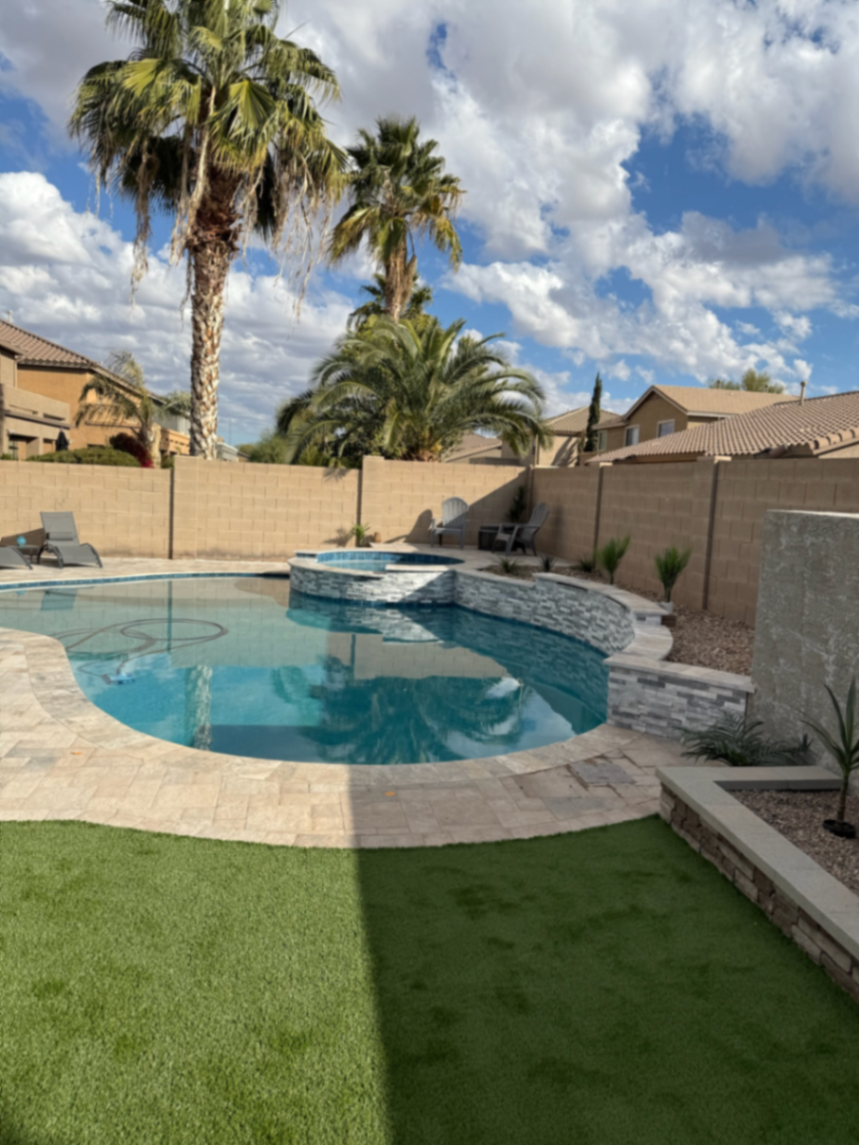
Before design: the three questions that shape everything
Start with use, site, and budget — in that order. Use tells you what the pool has to do. The site tells you what is physically and legally possible. Budget tells you what happens now and what waits. Homeowners who skip straight to shapes usually end up redesigning, because access, setbacks, and drainage quietly eliminate a large share of the options they were considering.
- Use: who swims, how often, spa or not, shade, entertaining size, children and pets
- Site: lot lines, setbacks, easements, utilities, drainage, soil, and the narrowest access point in inches
- Budget: the complete scope, including barrier, electrical, gas, drainage, and restoration
Barrier planning belongs in this phase — see what a glass pool fence costs in Arizona, including the footing work that gets quoted separately.
Arizona site conditions that change the plan
The Valley has a specific set of conditions that a generic pool how-to will not mention. None of them are deal-breakers, but each one belongs in the plan and the proposal rather than in a change order.
- Caliche, hardpan, and rock can change excavation method, equipment, and duration
- Utility locating through Arizona 811 is required before excavation
- Monsoon storms bring runoff and debris — drainage design is part of the pool design
- Summer heat drives deck material choice, shade planning, and crew scheduling
- Hard water affects start-up chemistry, scale management, and long-term finish care
- Barrier and gate requirements are set by A.R.S. §36-1681 within its scope, plus your AHJ, HOA, and insurer
- Tight side-yard access may require smaller equipment, hand work, or a different staging plan
Want a number for your own property?
Tell us the space and we'll come back with a real range for your site — no pressure, no "call for pricing."
What happens during construction, phase by phase
The build itself follows a sequence that inspections partly control. Understanding it makes progress legible and makes it obvious when something has stalled. Layout and excavation establish the shape and depth. Steel is tied to the engineered design. Plumbing and electrical rough-in are set before the shell is placed. Shotcrete or gunite forms the structural shell and then cures. Tile and coping follow. Decking is placed. Equipment is set, bonded, and connected. The interior finish goes in last, and the pool is filled and started up immediately after, because the finish's start-up procedure begins the moment water hits it. Each jurisdiction inspects at its own defined points. Ask which inspections apply to your permit and who schedules them.
- Layout, excavation, and spoil haul-off
- Steel placement per the engineered plan
- Plumbing and electrical rough-in, bonding, and inspection
- Shotcrete or gunite shell placement and cure
- Tile, coping, and masonry
- Decking and surrounding hardscape
- Equipment set, start-up plumbing, automation, and lighting
- Interior finish, fill, and start-up procedure
- Barrier and gate installation, final inspection, and handover
Deck material affects both budget and comfort: hardscape materials compared on cost, heat, and upkeep.
For a smaller water feature instead, see residential splash pad cost in Arizona.
Documents to collect at handover
The end of construction is the moment to gather everything you will need for service, warranty claims, future remodels, and eventual resale. Ask for it before the final payment, not months later.
- As-built drawings showing plumbing, electrical, and equipment routing
- Equipment manuals with make, model, and serial numbers recorded
- Warranty documents for shell, finish, tile, deck, and each piece of equipment
- Permit records and inspection sign-offs
- Barrier and gate details, including gate hardware and adjustment instructions
- A written maintenance plan matched to the equipment actually installed
The ten steps, and what changes in the Valley
The left column is the step itself. The right column is the Arizona-specific part — soil, heat, monsoon, permits, and HOA review — that a national how-to article will not tell you.
| Step | What happens | Arizona context |
|---|---|---|
| 01Define how you will actually use the pool | Swimmers and ages, lap swimming vs. lounging, spa or no spa, shade needs, entertaining size, and whether pets or small children change the barrier plan. Write it down before anyone draws anything. | In the Valley the pool is used most of the year, so summer shade and deck-surface temperature matter as much as shell shape. Decide early whether you want a ramada, sail, or tree canopy over the seating side. |
| 02Survey the site before you fall in love with a design | Lot lines, easements, setbacks, septic or sewer, existing drainage, overhead lines, slab and footing locations, and access for equipment. Note the narrowest access point in inches — that single number changes the whole build method. | Call Arizona 811 before any digging so public utilities are marked. Caliche layers, hardpan, and rock are common across the Valley and can change excavation method and cost after digging starts. |
| 03Design the pool with the whole yard, not in isolation | Shell shape and depth, spa position, deck footprint and material, equipment location and noise, lighting, drainage, and where the barrier and gate land. Decide what is in phase one and what is deliberately deferred. | Deck material choice drives summer comfort, and the equipment pad location affects both noise and service access. Read the pool-and-backyard sequencing guide before splitting the work across years. |
| 04Set a real budget, including the items base bids leave out | Shell, finish, deck, tile, coping, equipment, spa, features, barrier, electrical, gas, drainage, restoration, and permit fees. A bid that omits demolition, drainage, or restoration is not cheaper — it is incomplete. | Arizona planning ranges are published on our cost pages so you can budget without a sales call: standard builds commonly land around $70,000–$110,000, mid-range custom around $110,000–$180,000, and luxury custom higher. Your investment is set by your measured site and signed scope. |
| 05Verify the contractor before you compare prices | Confirm an active Arizona ROC license in the right classification, insurance, workers' compensation, references you can call, and completed projects you can visit. Then compare bids line by line against the same scope. | In Arizona, work valued at $1,000 or more — including labor and materials — generally requires a licensed contractor, and a homeowner who hires uninsured workers can carry liability for injuries on their property. Verify license status directly with the Arizona Registrar of Contractors. |
| 06Sign a contract that spells out scope, allowances, and payments | Named products and model numbers, allowance amounts, exclusions, change-order process, who pulls permits, cleanup and restoration, and warranty terms in writing. Anything verbal is not in the project. | AE uses the same milestone schedule on every new pool build — 15% at signing; 25% after excavation; 25% after steel, plumbing, and shotcrete/gunite; 25% after decking; 10% before interior finish. Each percentage and its contract trigger is itemized in the written agreement. The signing deposit and the final 10% are paid before those phases are finished, so they are not payments for completed work. Your signed agreement controls. |
| 07Permits, engineering, HOA approval, and the barrier plan | Plans, engineering where required, municipal permits and inspections, and HOA architectural approval. Barrier and gate requirements are part of the permit conversation, not an afterthought at the end. | Arizona's pool barrier statute (A.R.S. §36-1681) sets state requirements within its scope, and your city or county authority having jurisdiction plus your HOA and insurer decide what applies at your address. Confirm requirements in writing before fabrication or final approval. |
| 08Construction phases, in the order they happen | Layout and excavation, steel, plumbing and electrical rough-in, shotcrete or gunite shell and cure, tile and coping, decking, equipment set, interior finish, fill and start-up. Inspections gate several of these steps. | Monsoon storms, summer heat, and inspection scheduling all affect sequencing here. A schedule is a plan, not a promise — ask your builder how weather delays and inspection backlogs are handled in writing. |
| 09Start-up, water chemistry, and the first 30 days | Interior finish start-up procedure, brushing schedule, chemistry balancing, equipment orientation, and automation setup. This period protects the finish you just paid for. | Valley fill water is typically hard, so scale management and correct start-up matter. Follow the finish manufacturer's start-up procedure for the product actually installed on your pool. |
| 10Handover, documents, and long-term care | Collect as-builts, equipment manuals, model and serial numbers, warranty documents, the barrier and gate details, and a written maintenance plan. Store them together — you will need them for service and for resale. | Dust, monsoon debris, and summer run-time change filter and chemistry intervals compared with a mild climate. Build the maintenance rhythm around what your equipment manuals require. |
Pool installation planning checklist
All ten planning steps on this page, condensed to a two-page printable checklist — use, site survey, design, complete-scope budget, contractor verification, contract review, permits and barrier requirements, build tracking, handover documents, and first-season ownership. No email required; the PDF downloads straight to your device.
Ask every bidder to price these in writing
These are the lines that most often separate a complete proposal from a low number that grows through change orders. Compare bids only after every builder has priced the same list.
- Excavation contingency language for caliche, rock, hardpan, or unexpected soil conditions
- Demolition and haul-off of existing hardscape, irrigation, or landscape in the work area
- Drainage design and any required grading or drywell work
- Retaining walls or elevation changes the design actually requires
- Pool barrier and self-closing, self-latching gate scope
- Dedicated electrical work, sub-panel capacity, and bonding
- Gas line sizing and run for a heater or fire feature
- Permit, engineering, HOA submittal, and expedite fees
- Landscape, irrigation, and turf restoration after equipment access
- Start-up service, water chemistry, and homeowner orientation
Working through proposals now? Compare pool builder bids walks through reading them line by line.
How AE structures payments on a new pool build
The same milestone schedule applies to every new pool build, regardless of size. The signing deposit and the final 10% are paid before those phases are finished.
- 15% at signing
- 25% after excavation
- 25% after steel, plumbing, and shotcrete/gunite
- 25% after decking
- 10% before interior finish
Other builders structure payments differently. Whatever schedule you sign, confirm what event triggers each draw before the contract is executed.
Common questions.
From planning to estimating
Once you know what belongs in the plan, put rough numbers next to it. Start with the calculator for a whole-project range, then read the guide for each piece of scope you are carrying. These are planning ranges for budgeting, not quotes — measured conditions, selections and the signed scope control the final investment.
Open the outdoor renovation cost calculatorPricing guides by scope
- What an outdoor living space costs in ArizonaOverall project ranges and what moves them.
- Complete backyard costWhole-yard budgeting when several trades overlap.
- Pool installation costPool scope, equipment and deck considerations.
- Paver patio costBase depth, material line and square-foot ranges.
- Outdoor kitchen costStructure, appliances, utilities and finishes.
- Artificial turf costBase prep, turf line and installed square-foot ranges.
Plan the site, not just the pool
Arizona Pool Site Planning Series
These are six separate checks, not one universal pass/fail number. Each one is answered by a different authority, professional scope or document, and a clear answer on one does not settle the others. Work through the decision you are actually facing.
01
Feasibility and buildable area
Whether a pool fits the usable area left after property lines, setbacks, easements, access and equipment placement are accounted for.
02
Permits, HOA and barrier path
Which authority actually reviews the parcel, whether a private community review also applies, and how the barrier path is documented.
03
Arizona 811 and private utility locating
What the statewide notification process marks, what it may not mark, and what still has to be located before excavation.
04
Survey, soils and engineering
Which professional scopes this specific address actually triggers — and what each one does and does not prove.
05
Grade and drainage
Where site water goes before, during and after construction, and which drainage approach the grade and outlet allow.
06
Equipment and service planning
How the equipment pad, utilities, hydraulics and long-term service access are planned around the finished pool.
Keep planning
- Can I build a pool in my backyard?
Setbacks, access, easements, and lot-size reality before you design.
- Pool permits and HOA approval
What the permit and architectural submittal processes involve.
- Pool installation cost in Arizona
Line-item ranges for shell, finish, deck, equipment, spa, and features.
- The true all-in cost of a pool
What lands outside the base pool bid, from drainage to restoration.
- How to choose a pool builder
Verification steps, questions to ask, and warning signs.
- Build the pool and backyard together, or phase it?
Sequencing trade-offs when the budget is the constraint.
Sources & last reviewed
Last reviewed: August 18, 2026. Written by AE Outdoor Living from primary sources and field experience. Educational only — not legal advice, and not a substitute for your approved plans, your authority having jurisdiction, or your signed scope.
- Arizona Registrar of Contractors — license verification and contractor licensing requirements.
- Arizona Revised Statutes §36-1681 — the state pool barrier statute; your AHJ decides how it applies at your address.
- Arizona 811 — required utility locating before excavation.
- CPSC — persistent risk of childhood drowning — federal water-safety context for barriers and supervision.
No barrier, gate, or alarm replaces active adult supervision. Designate an undistracted adult Water Watcher whenever children are in or near water.
Planning a pool in the Valley?
Bring your site, your list, and your questions. We will walk the same steps above against your actual yard, in writing, before anyone talks about a contract.
Start My Pool Planning ConversationWhy this is an investment, not a cost.
An AE backyard is engineered to add daily livability and long-term home value. We publish honest ranges and build to code with a licensed and bonded Arizona crew. AE provides project-specific workmanship and manufacturer-warranty information in the signed agreement. Website summaries are for planning only.
- Licensed, bonded & insured in Arizona. ROC 340966 (R-62) · ROC 341002 (R-3) · ROC 347738 (KA-5) · ROC 211530 (CR-21). Most Arizona contracting work valued at $1,000 or more — or requiring a permit — must be performed by a properly licensed contractor, subject to statutory exemptions. Verify the legal entity, license status, and classification with the Arizona Registrar of Contractors.
- Real ranges, itemized scope. You see materials, finishes, equipment models, and a line-item budget before you sign — not a one-line "pool — $90,000."
Plan your investment with a designer.
Five minutes, a real range, and no sales pressure. Or vet any Arizona contractor (us included) before you spend a dollar.