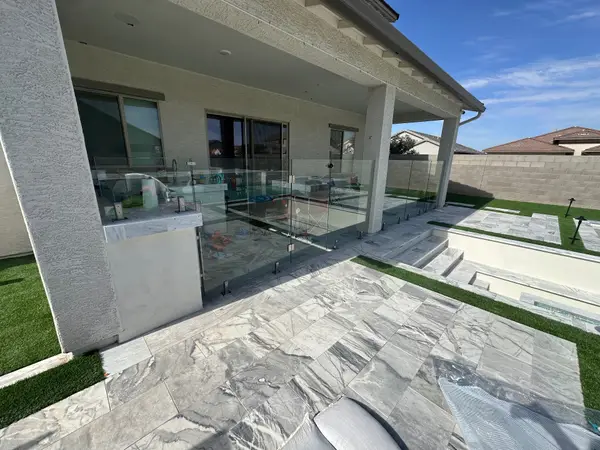
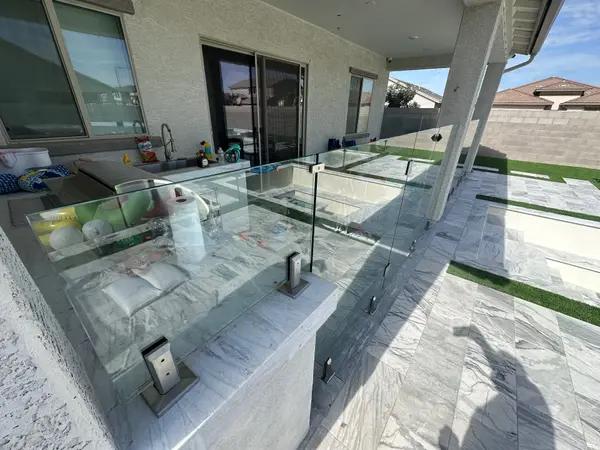
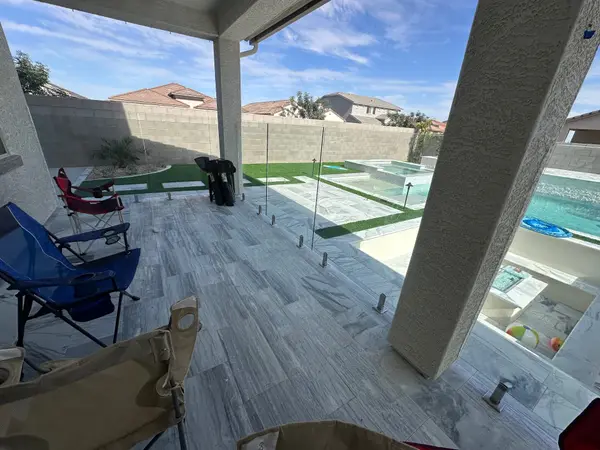
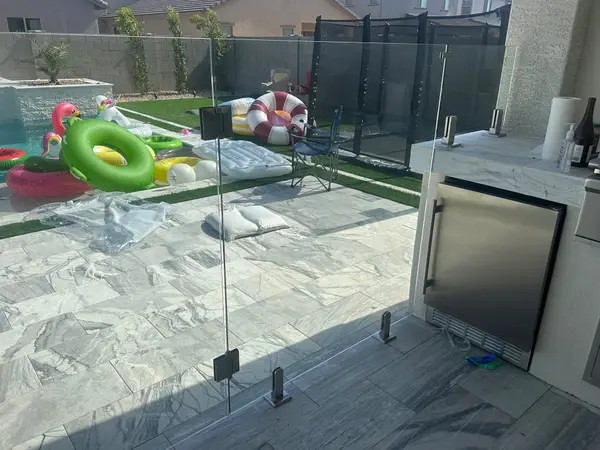
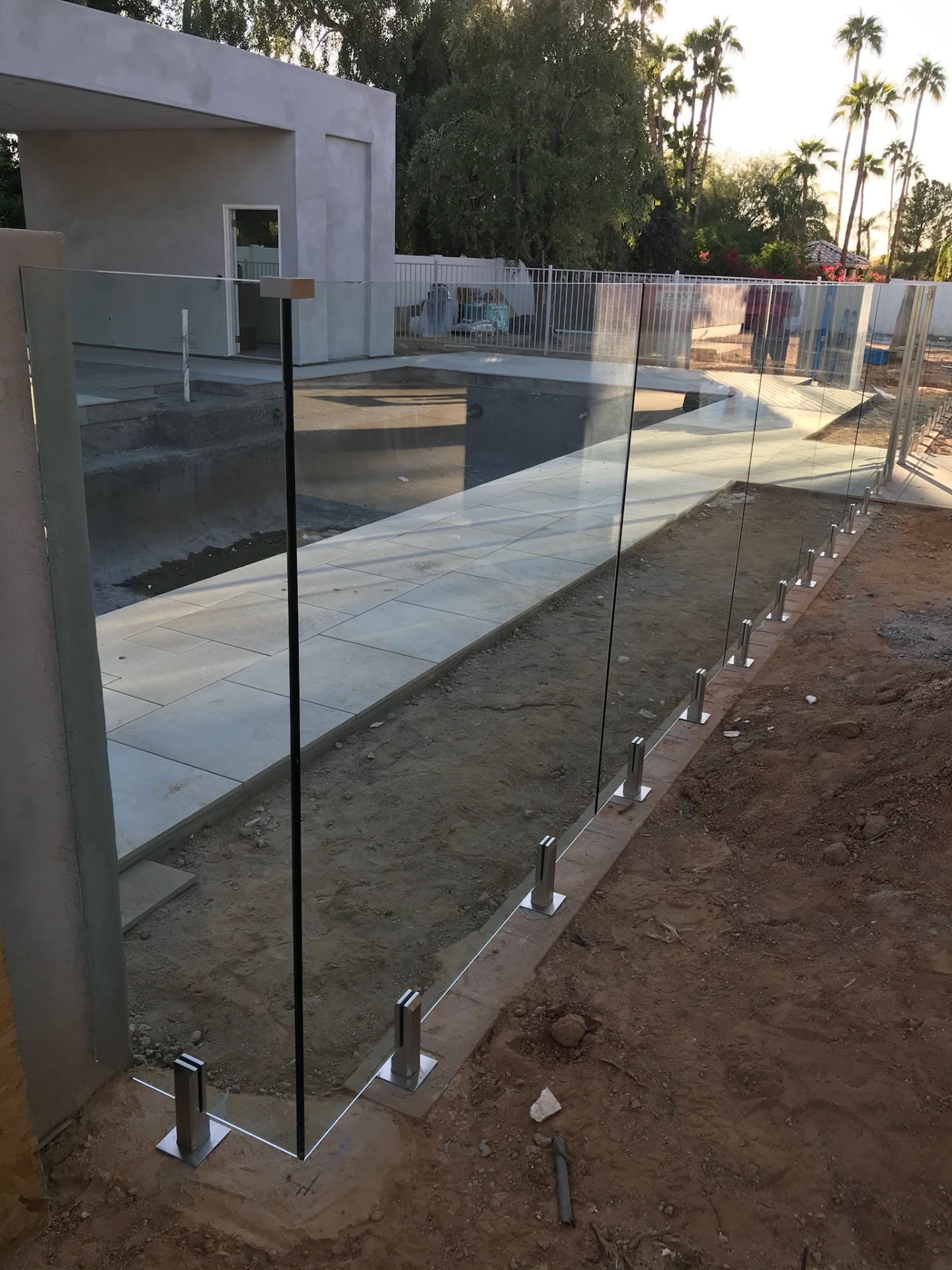
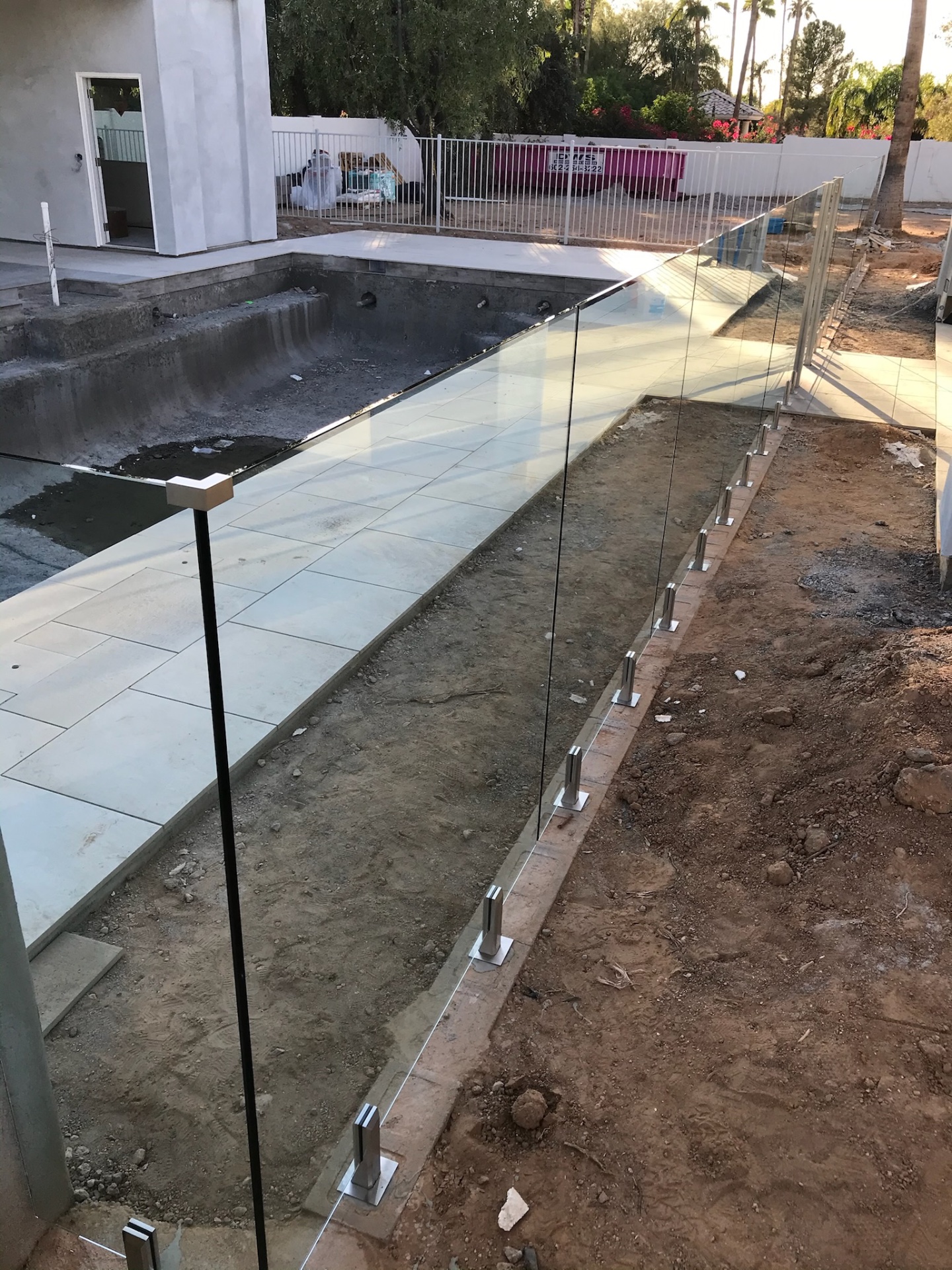
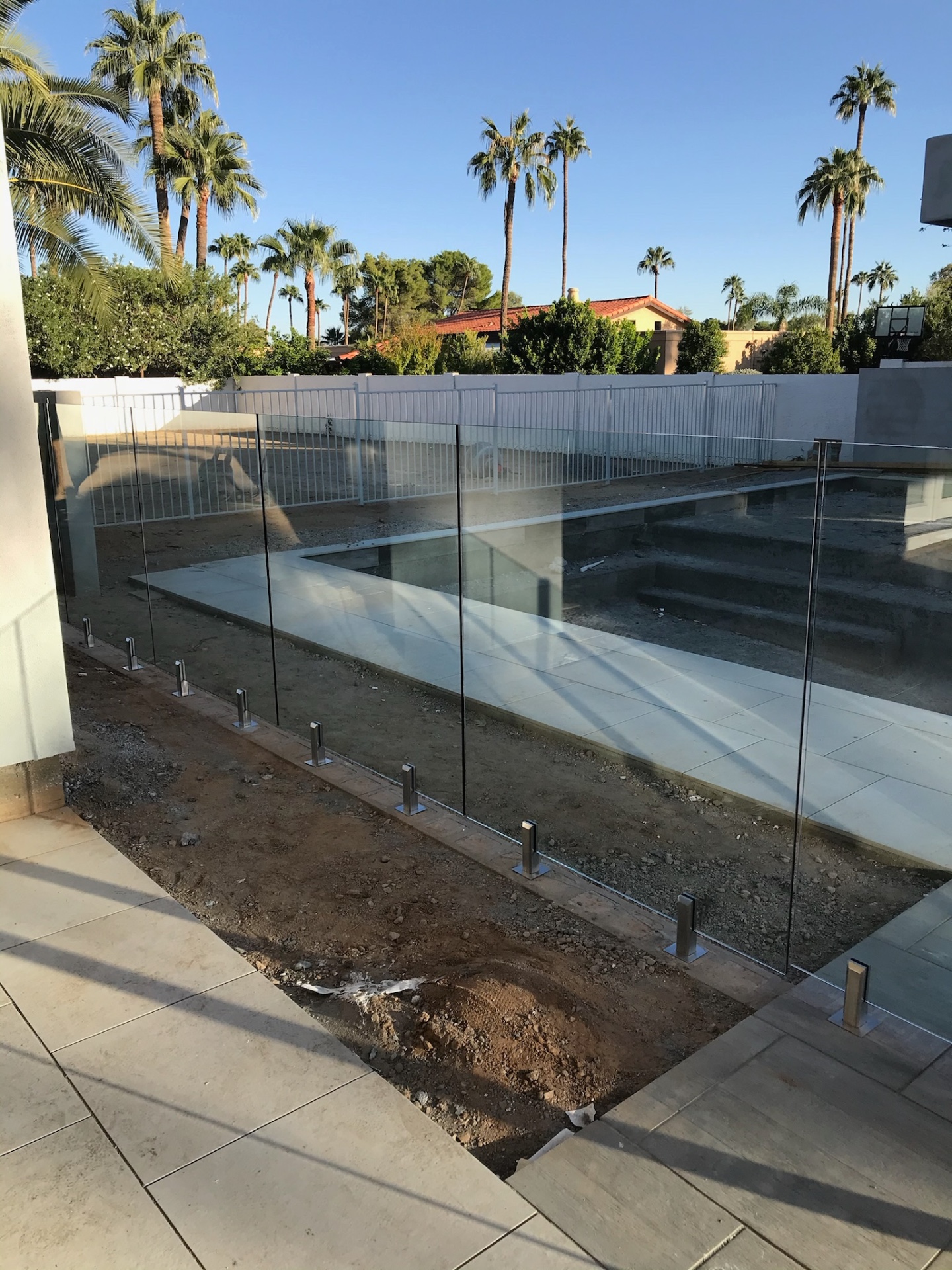
“Glass fence around the pool looks phenomenal — even better than expected! Truly elevates the backyard. Donovan and Adam were really great to work with, and worked through several iterations to create the perfect curve around the pool. They went above and beyond to get everything completed in time for a party we were throwing!”

Glass Fence & Glass Pool Fencing in Arizona — clear views, safety-minded design.
Frameless glass fence panels, glass pool fencing, balcony railings, and view fences across Phoenix, Scottsdale, and the Valley. AE's standard glass pool-fence system uses approximately 5-foot-high, 1/2-inch tempered safety glass with Duplex 2205 stainless-steel spigots.
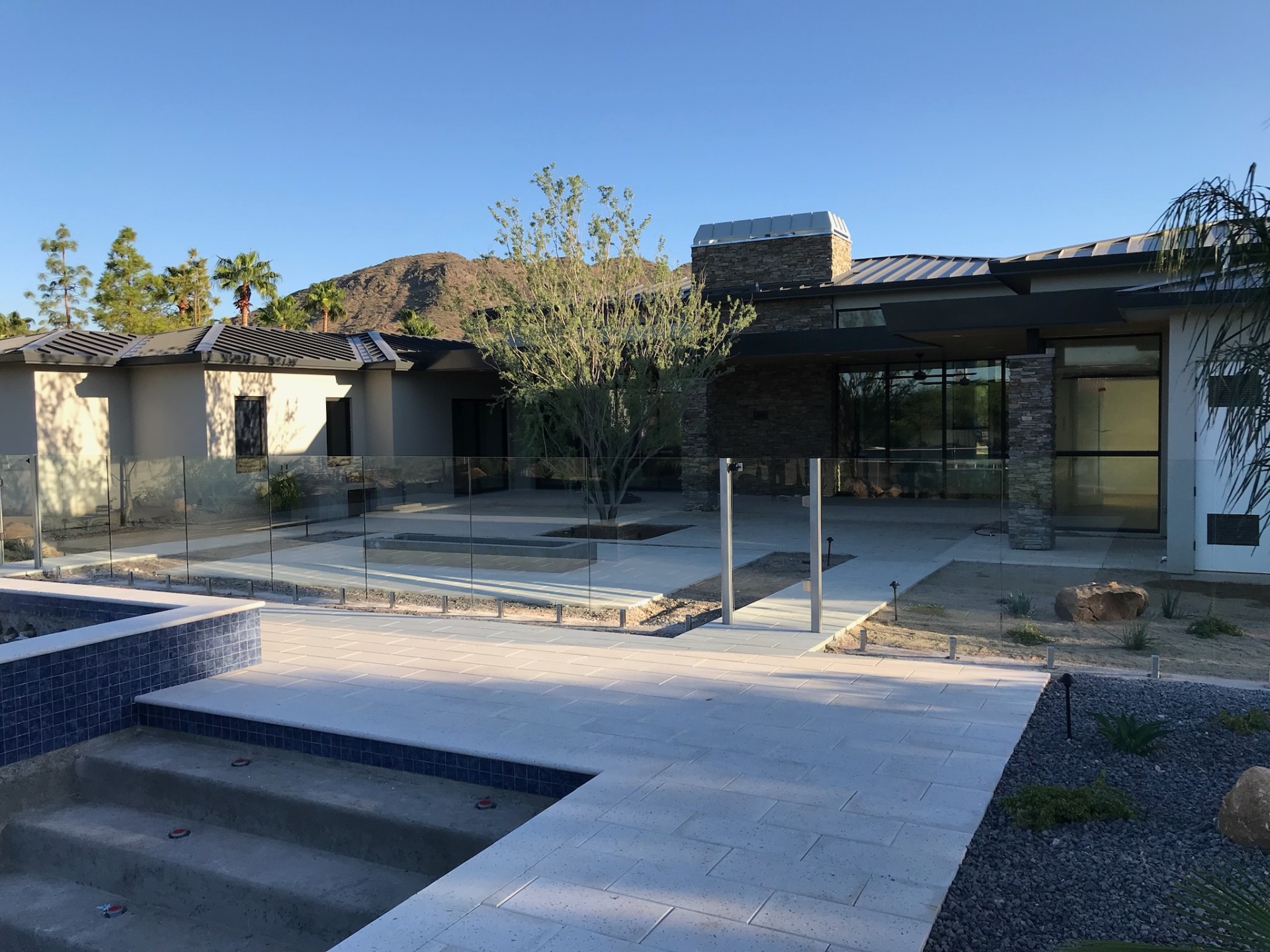
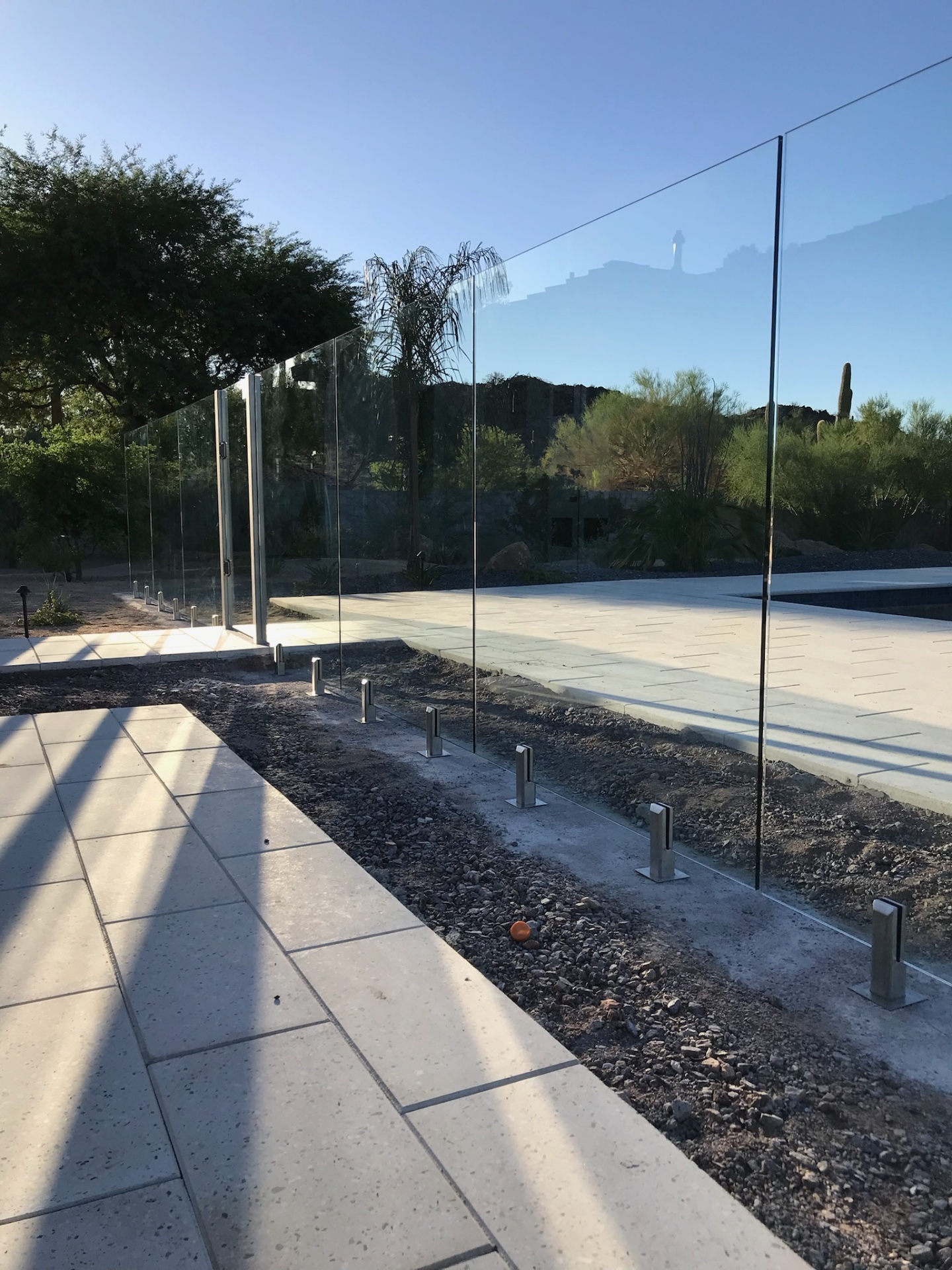
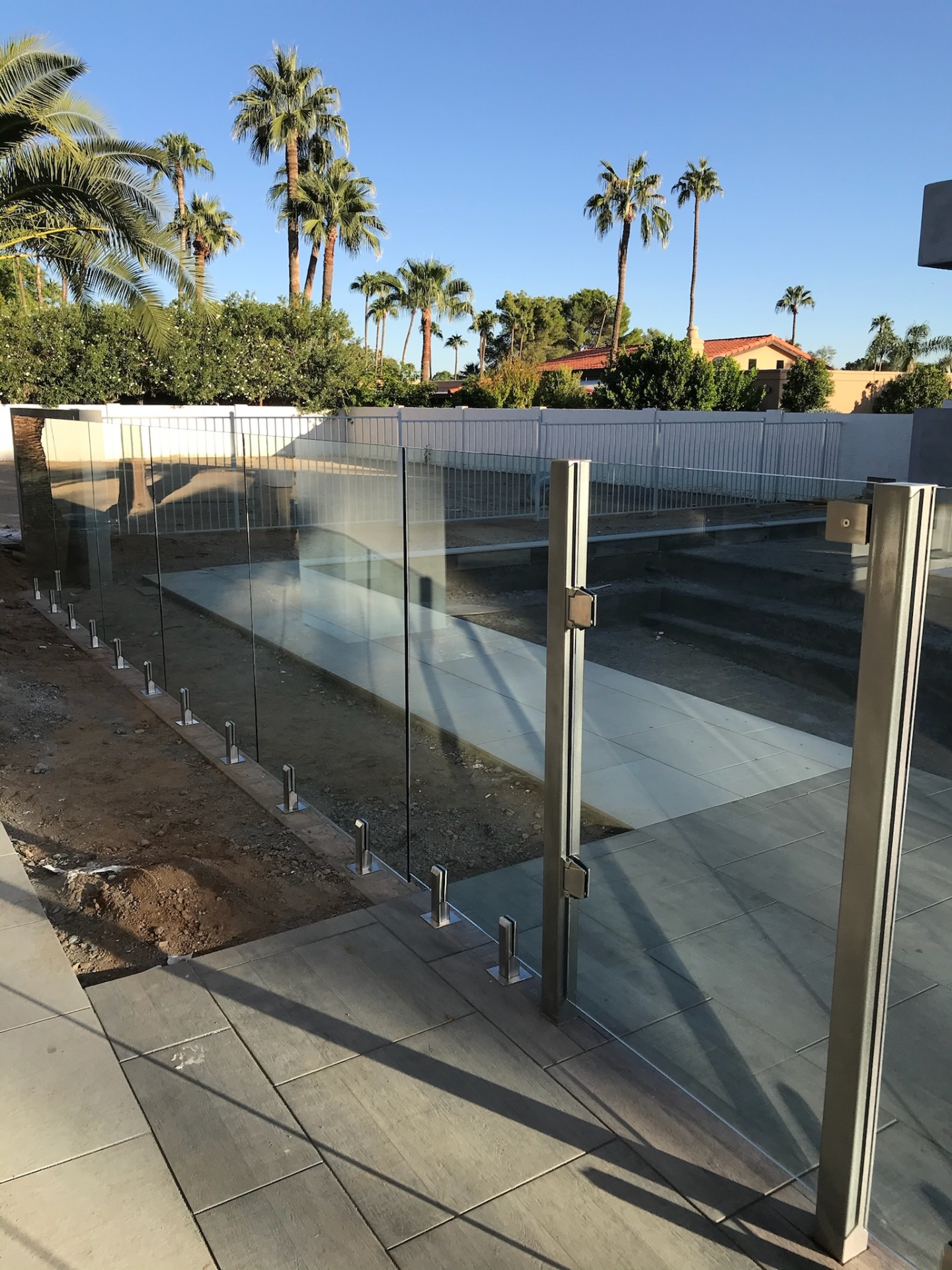
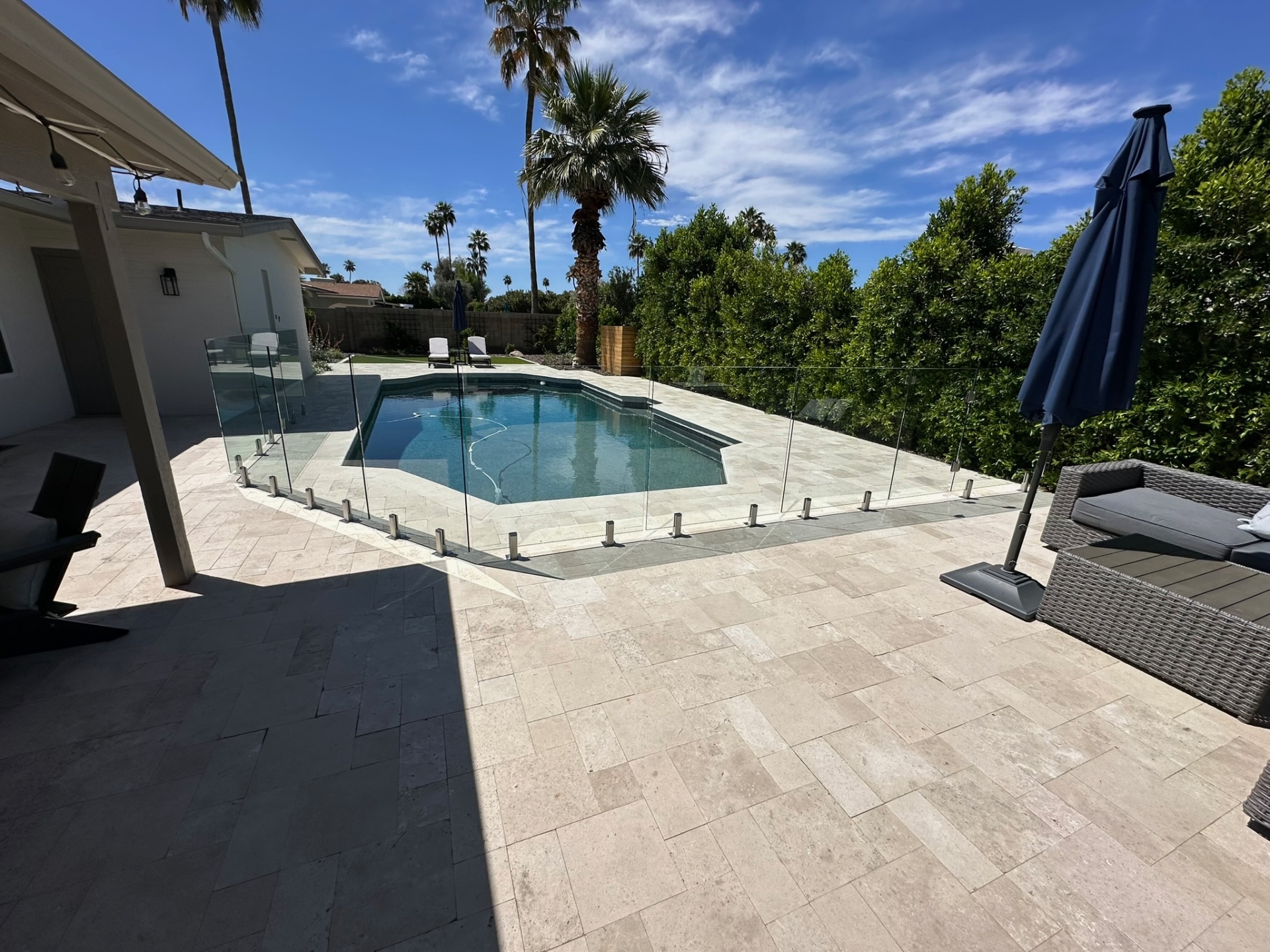
Frameless glass pool fence, just installed.
Tempered glass panels, stainless spigots, code-conscious barrier planning, self-closing gate — set on porcelain marble-look pavers and integrated with the pool, spa, and outdoor kitchen. Photos and video from a recent Sonoran Glass install in the Valley.


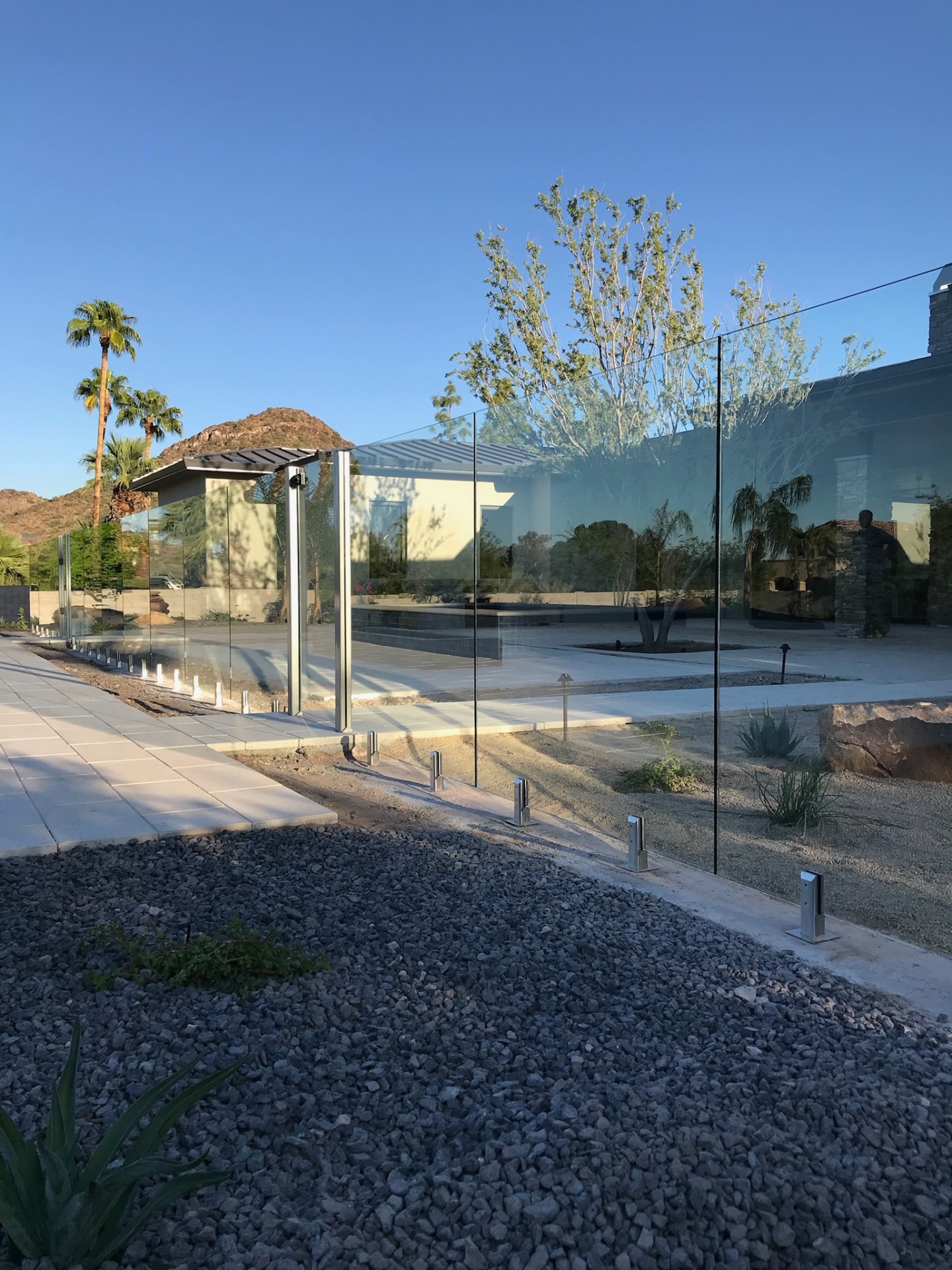
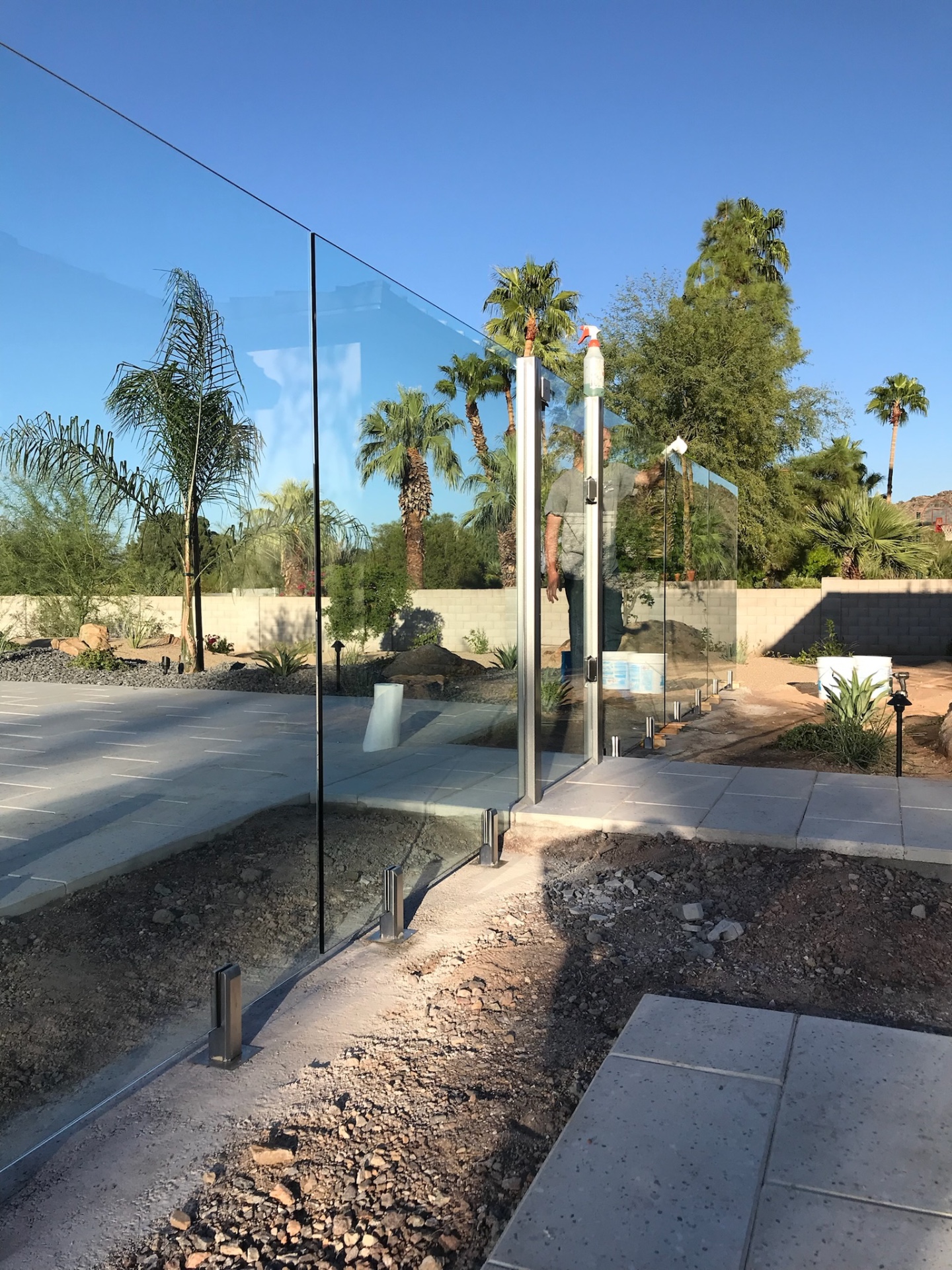
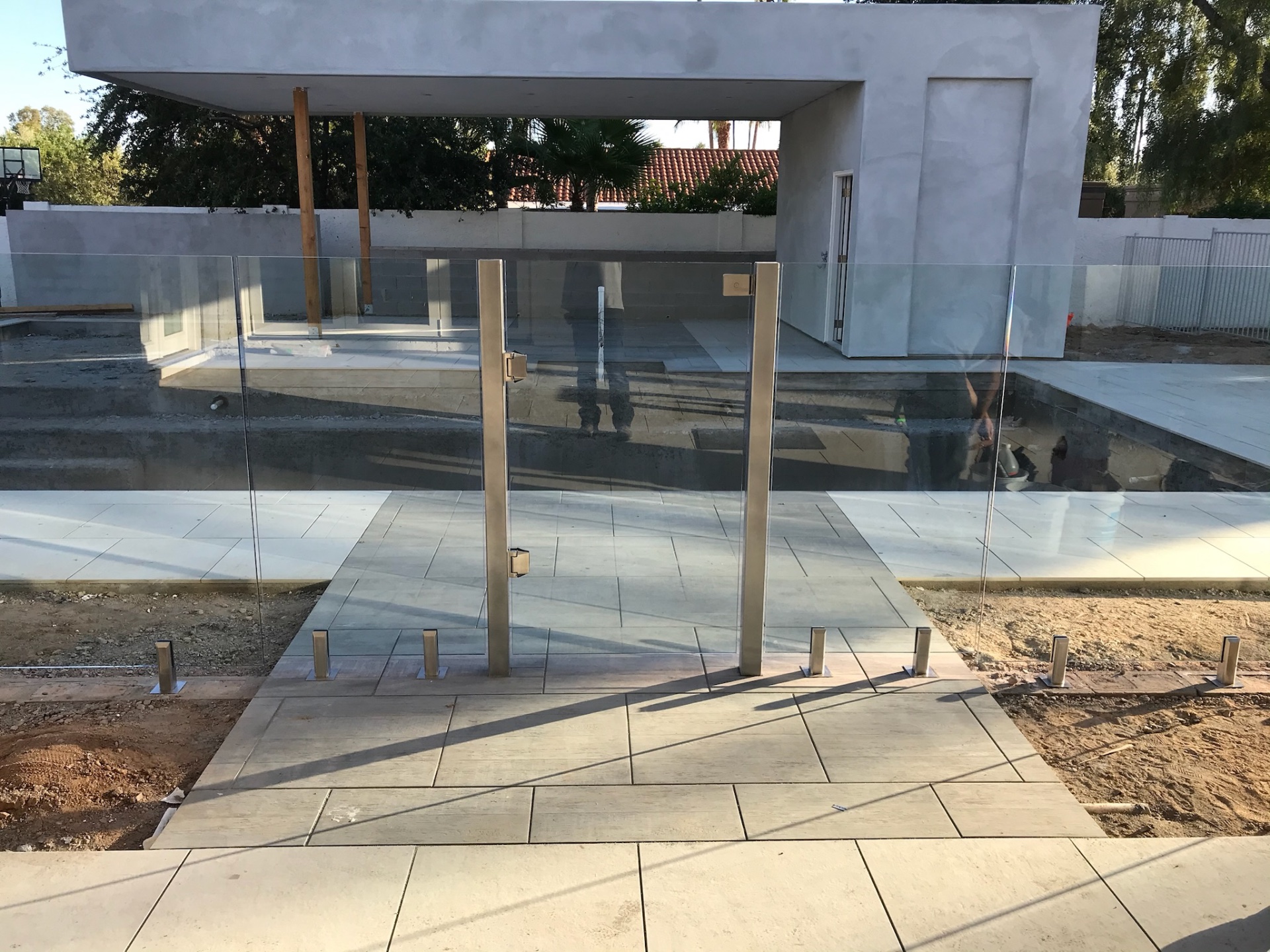
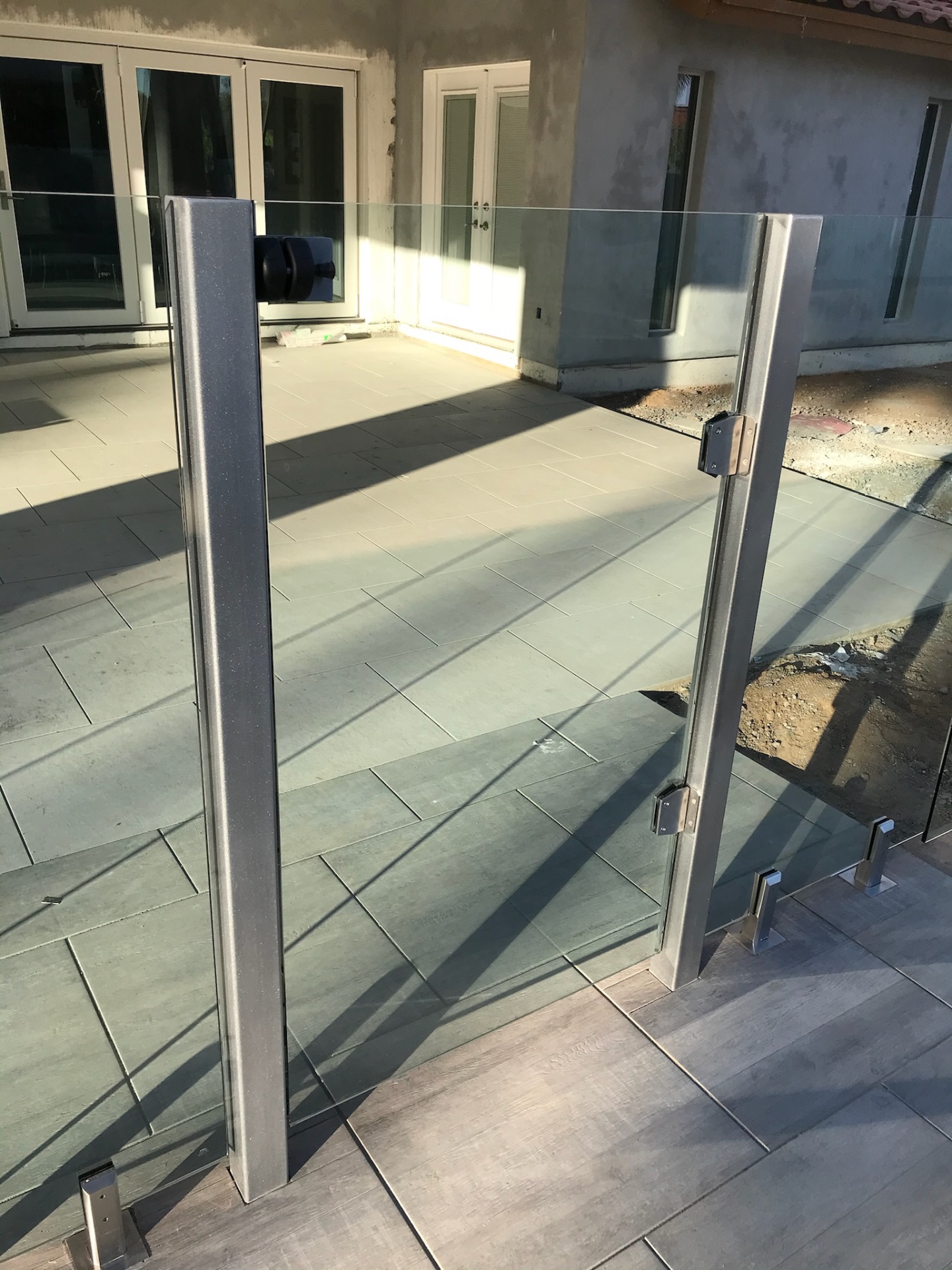
Frameless glass and stainless gates on a custom Valley estate.
Tempered safety glass on stainless steel spigots, self-closing self-latching gate hardware selected for the project, and seamless paver integration — preserving unobstructed views of the home's custom stone architecture, covered patios, and surrounding desert hills. Captured during final detailing by AE craftsmen.


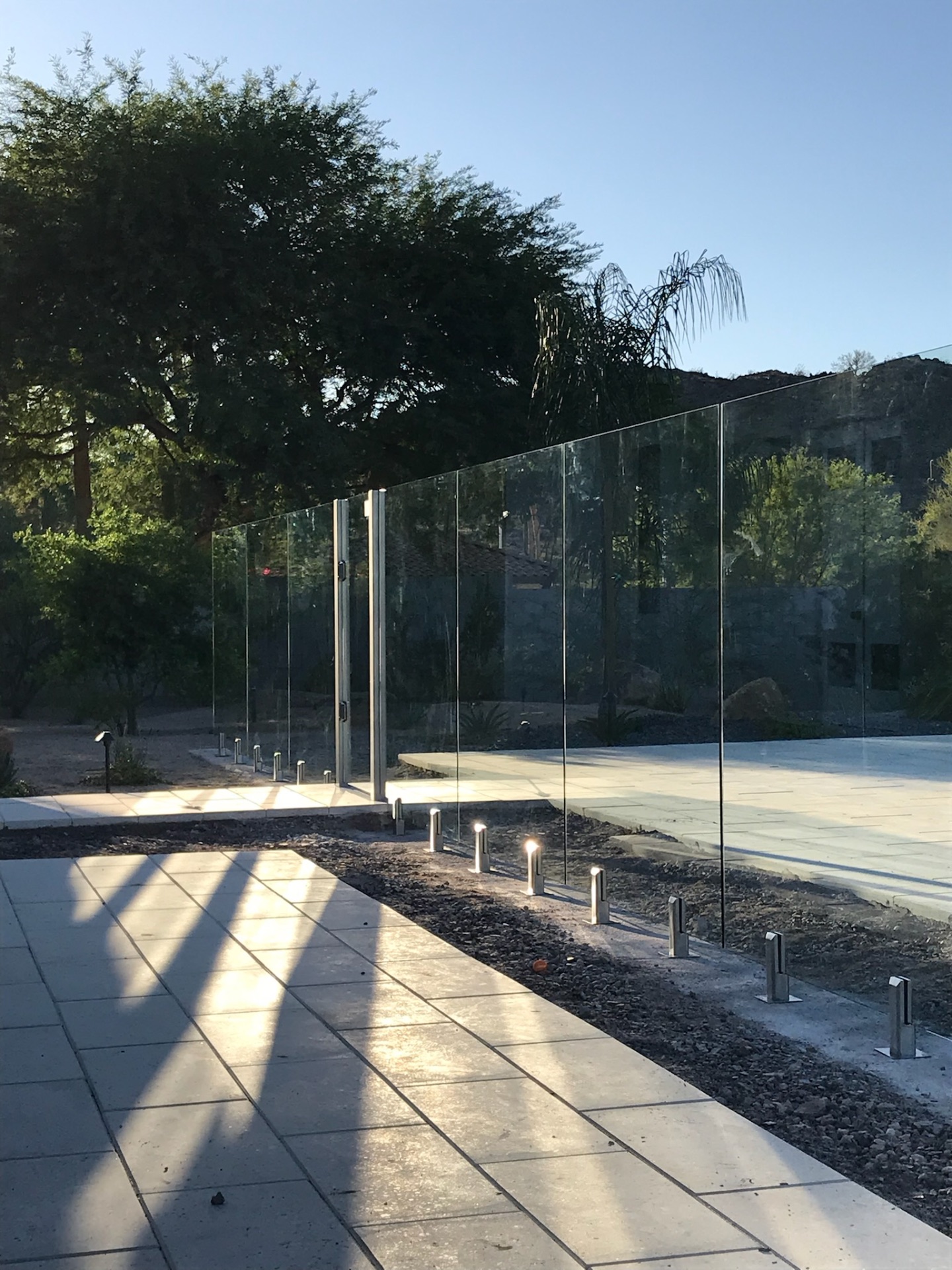
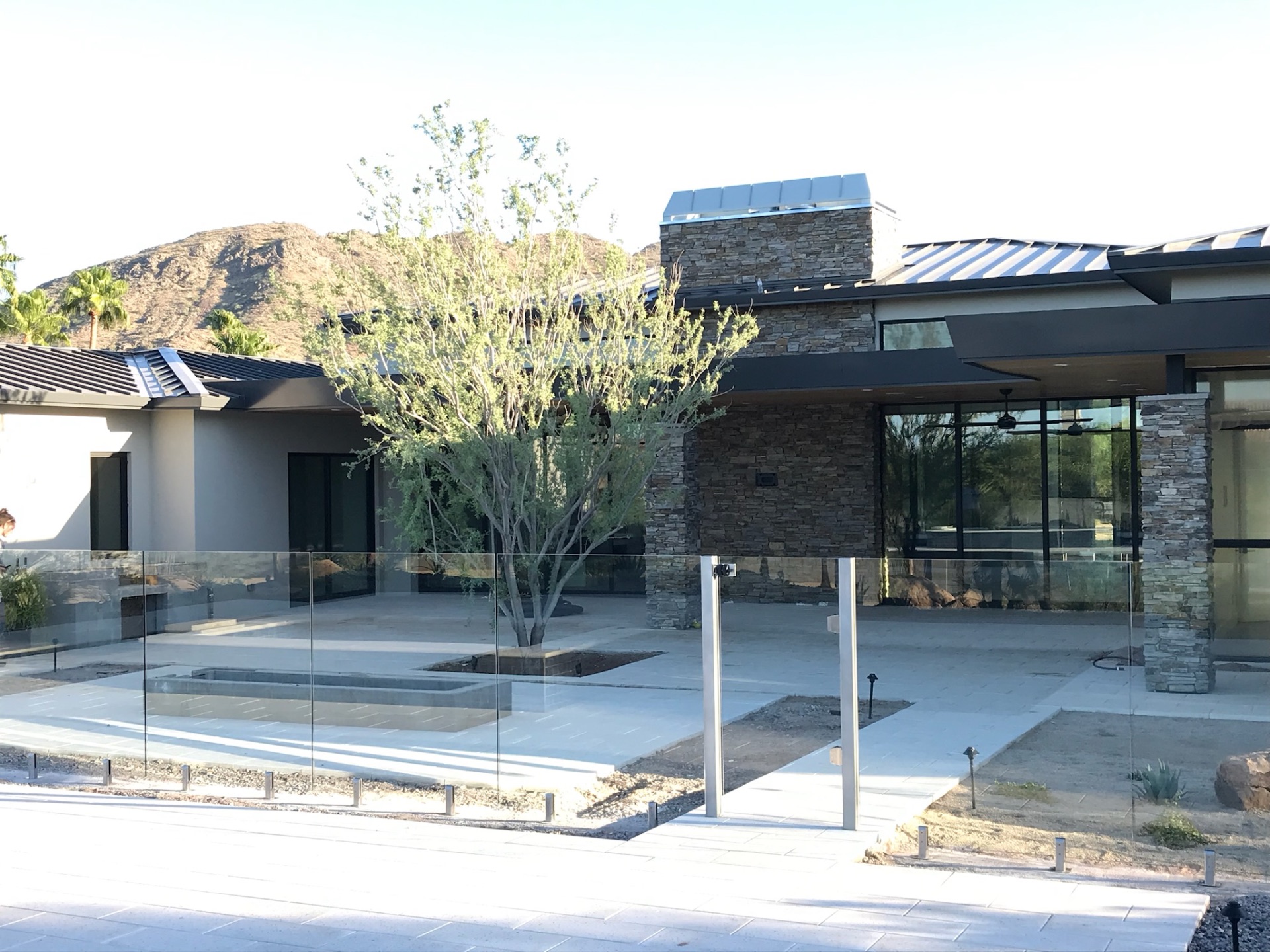
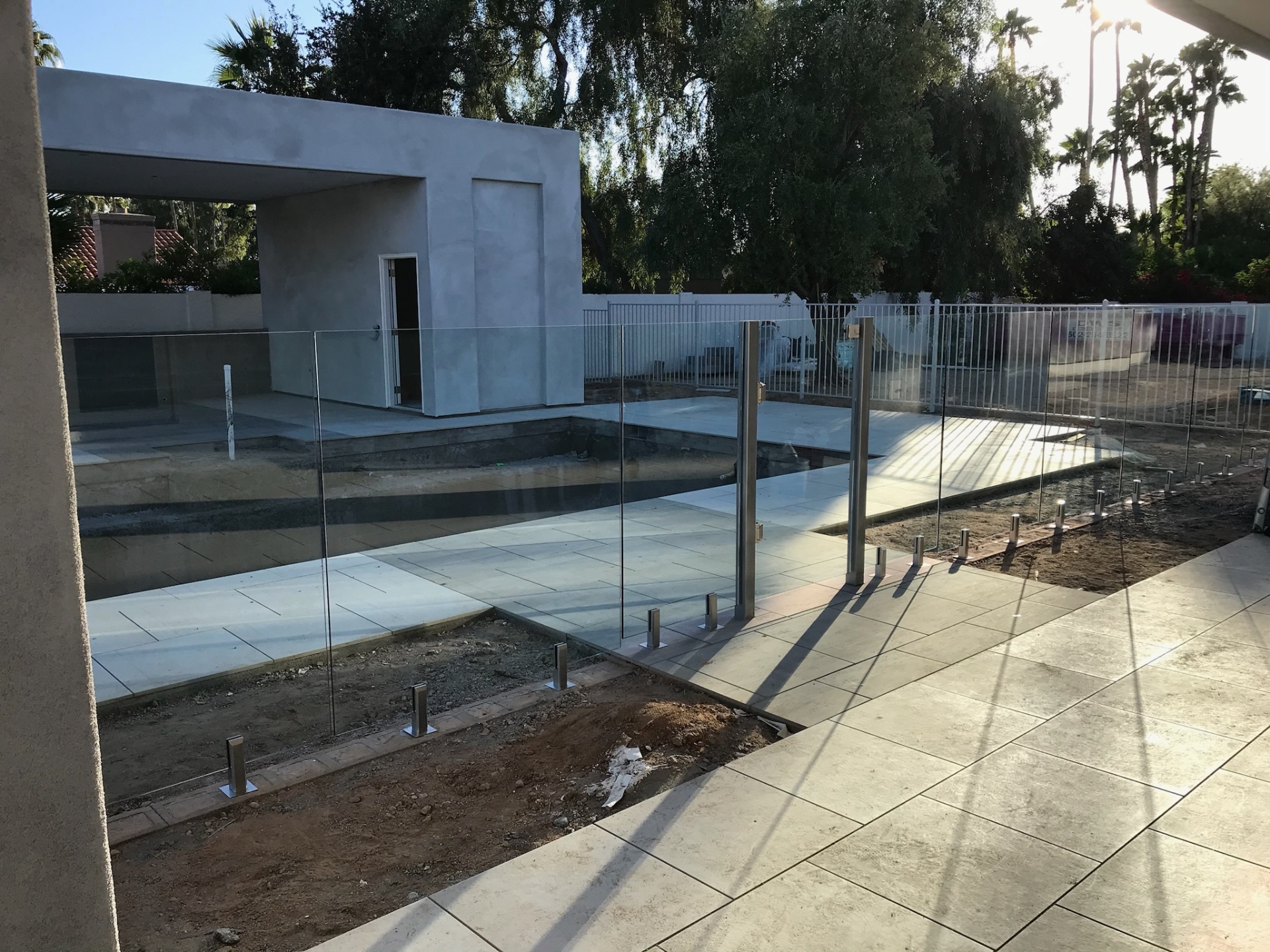
Frameless glass on a new pool build, mid-install.
Tempered safety glass on stainless spigots, self-closing self-latching gate, code-conscious pool-barrier planning — set into porcelain paver decking around a new pool and pavilion. Captured during a recent Sonoran Glass & Fence install in the Valley before final landscape went in.


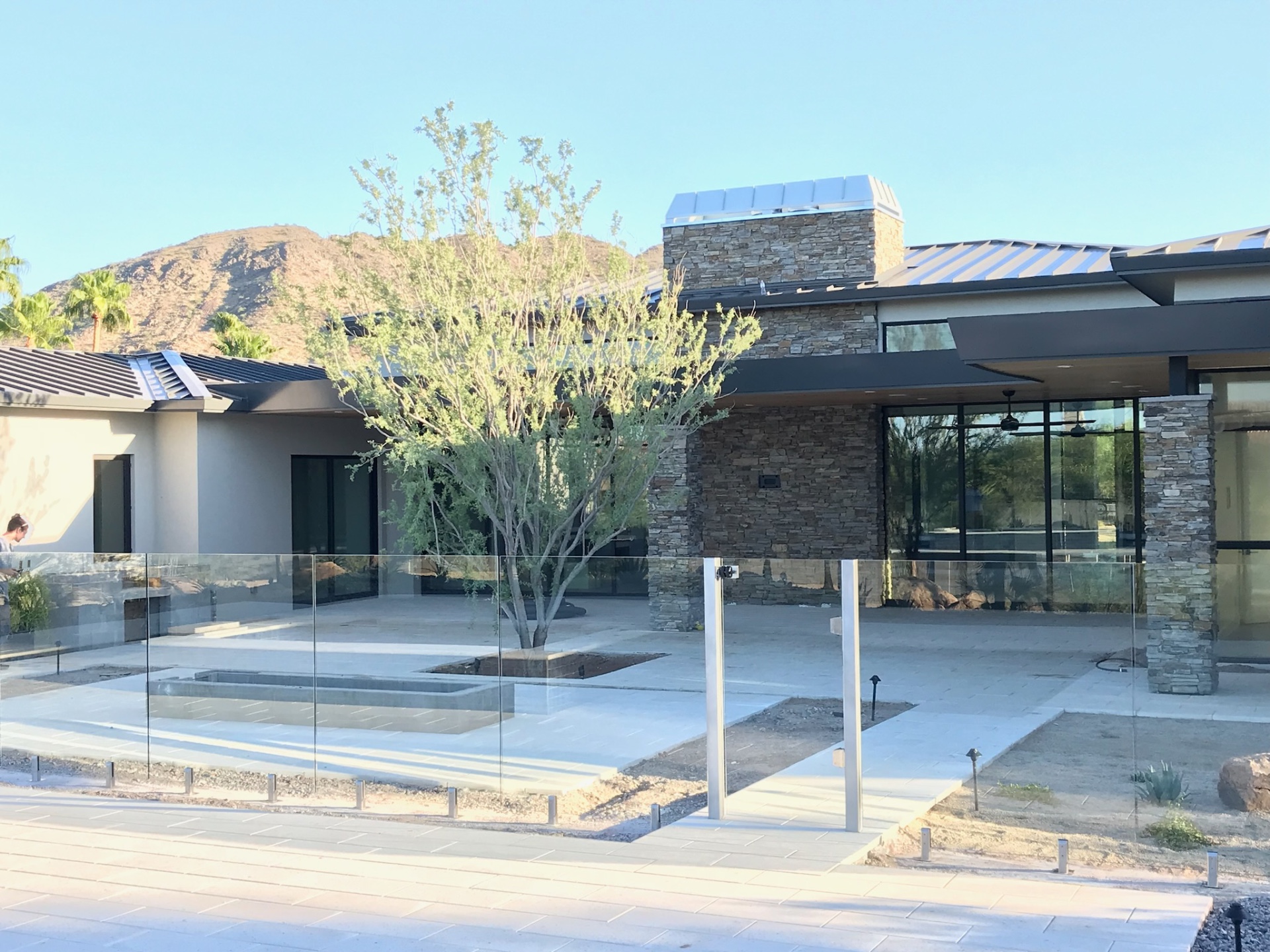
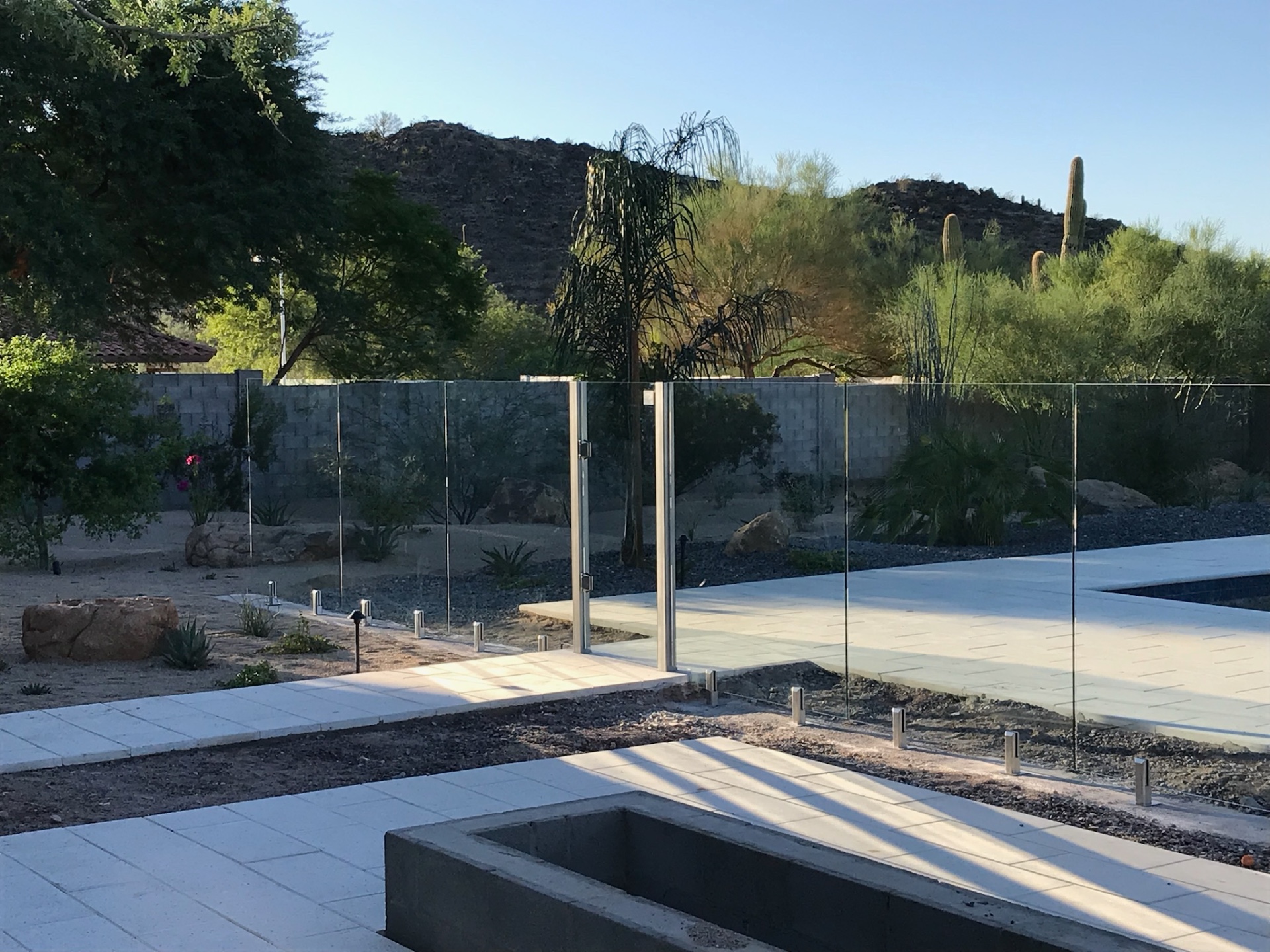
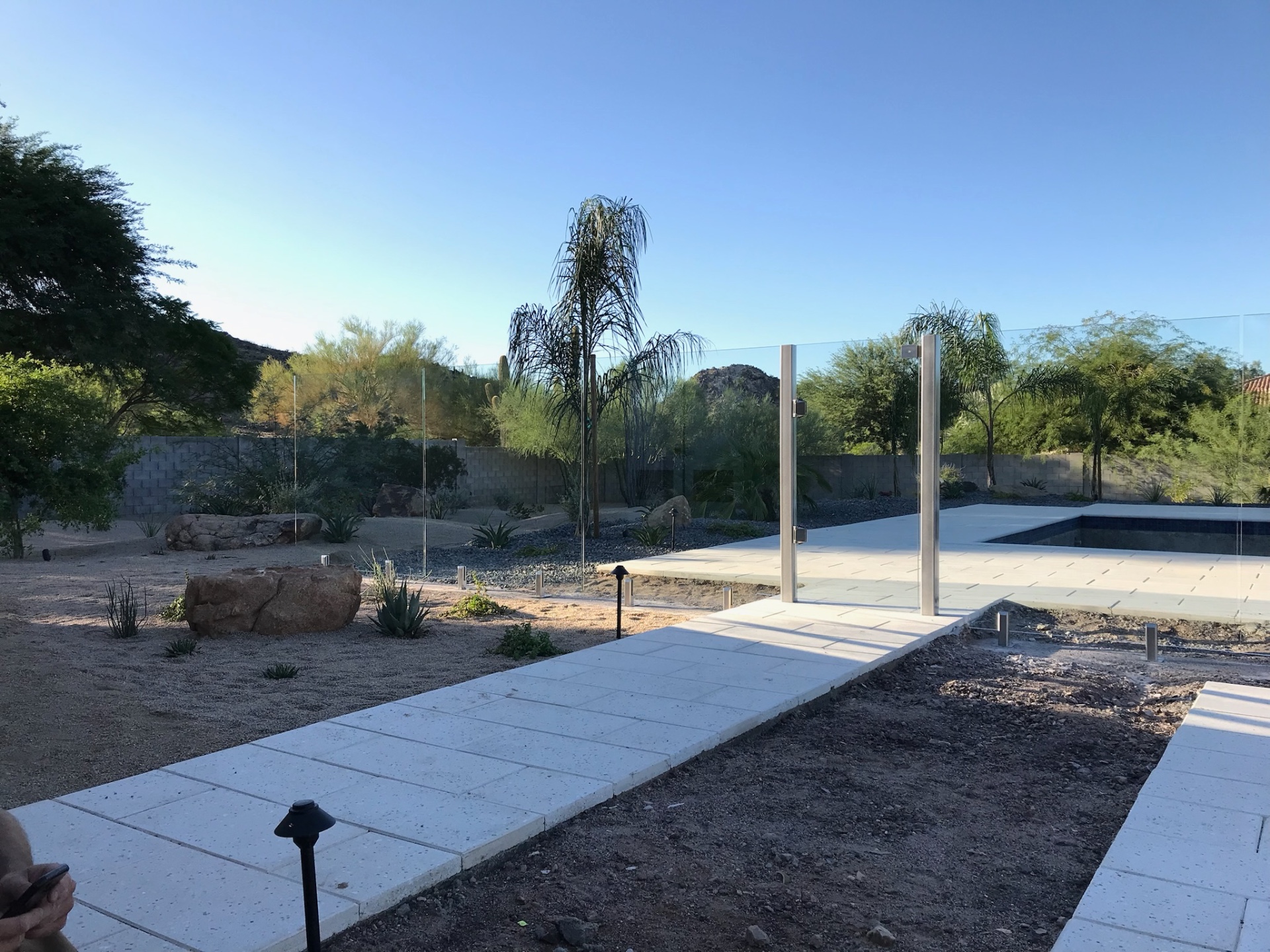
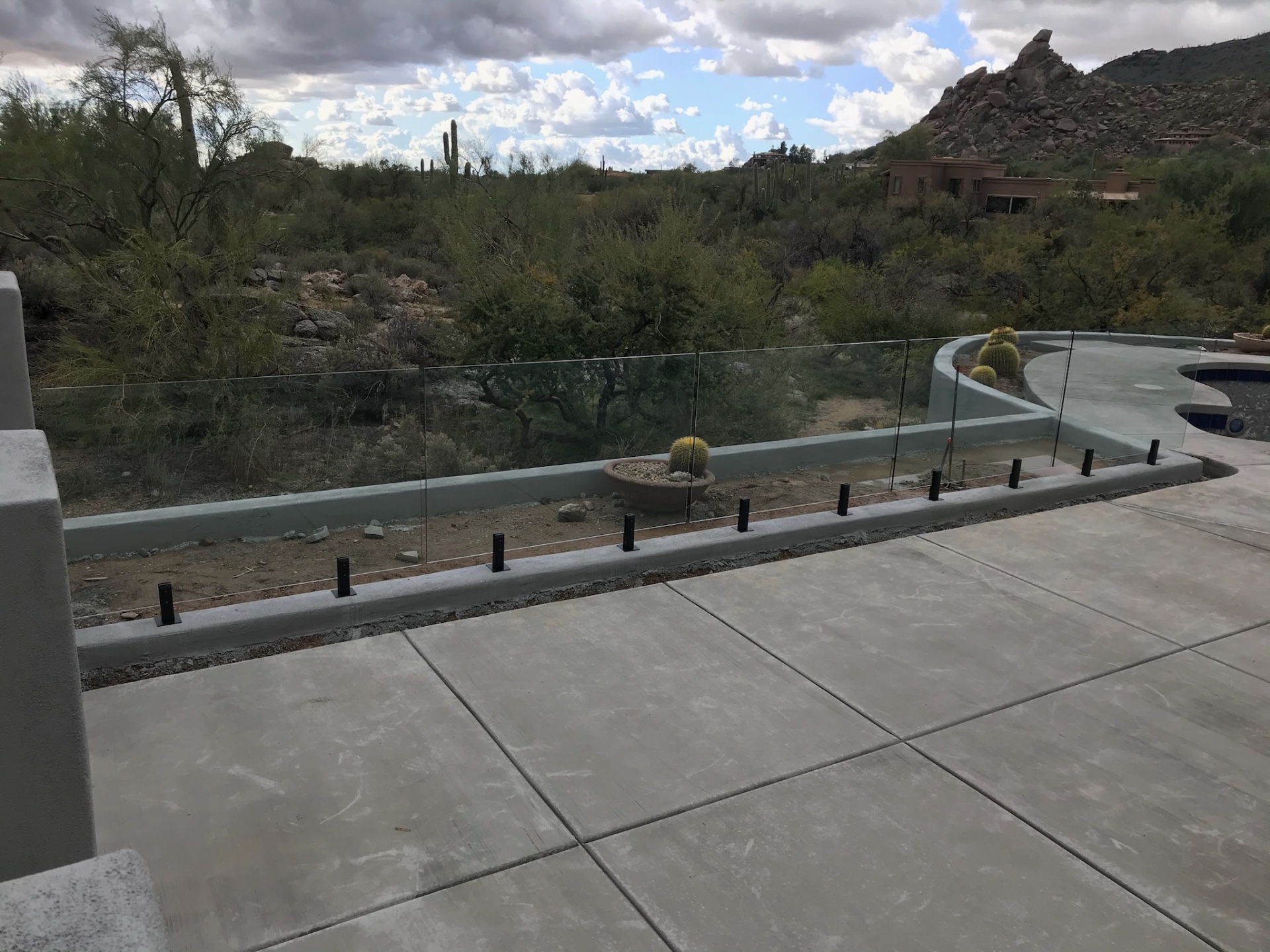
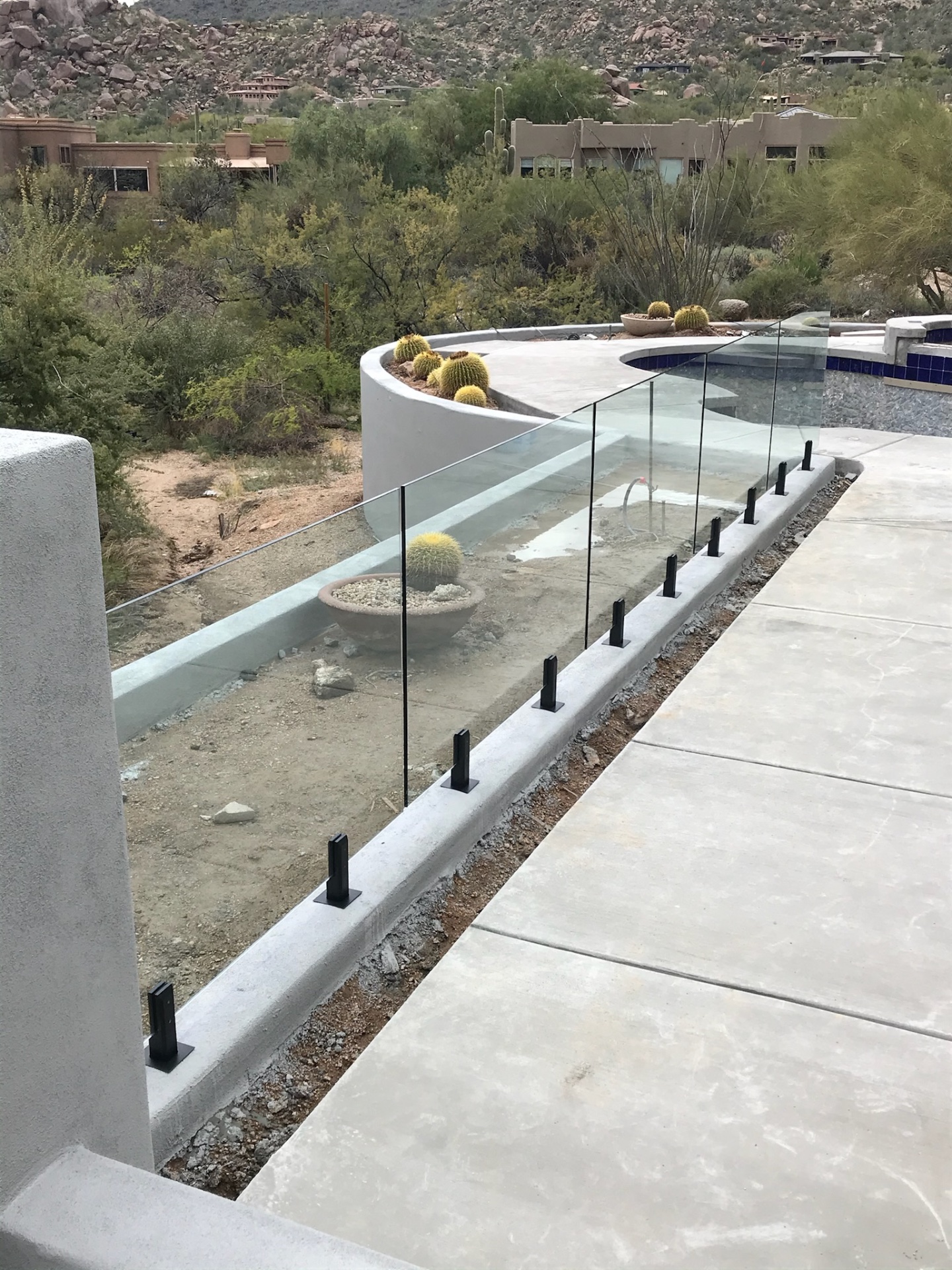
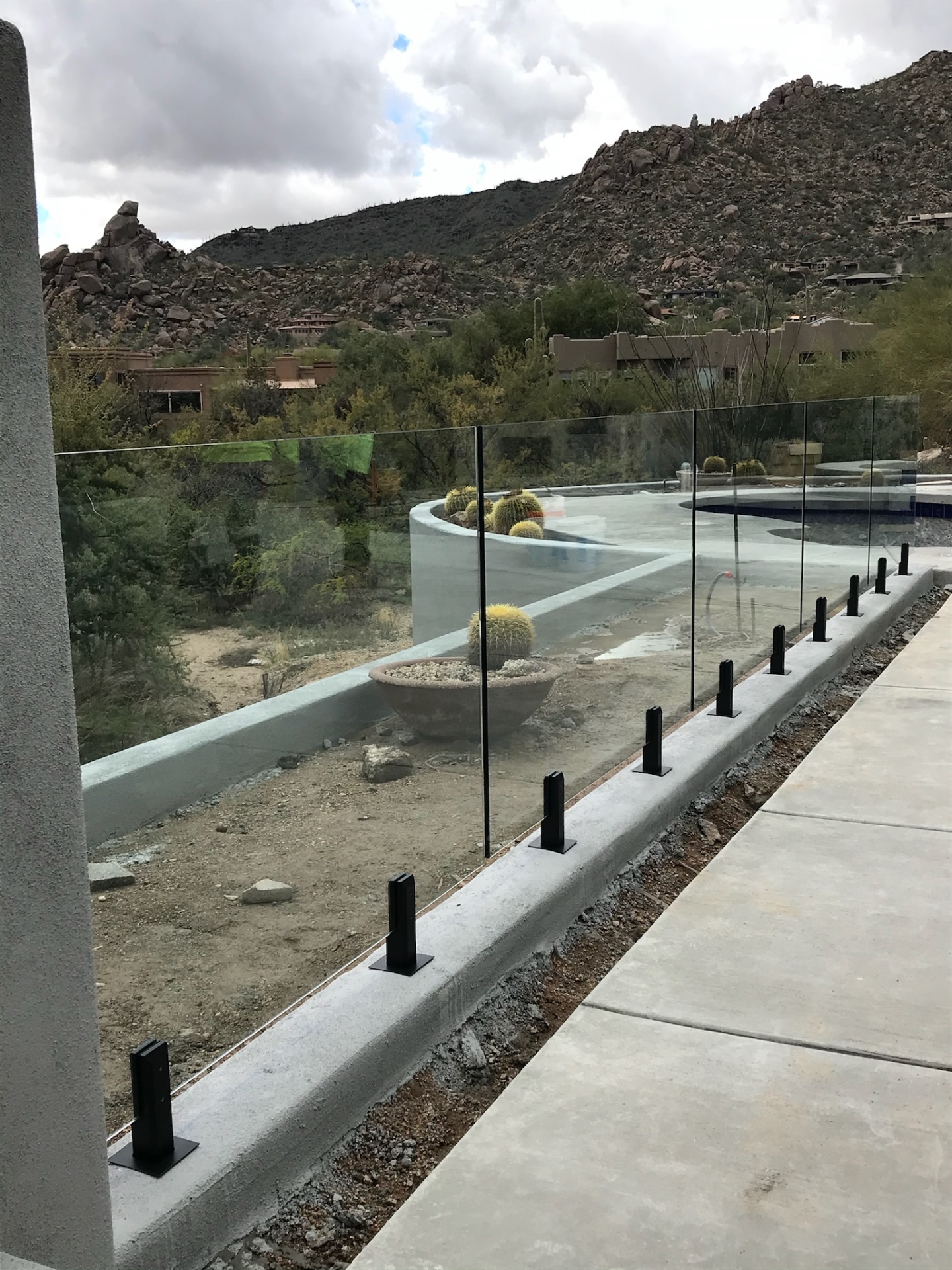
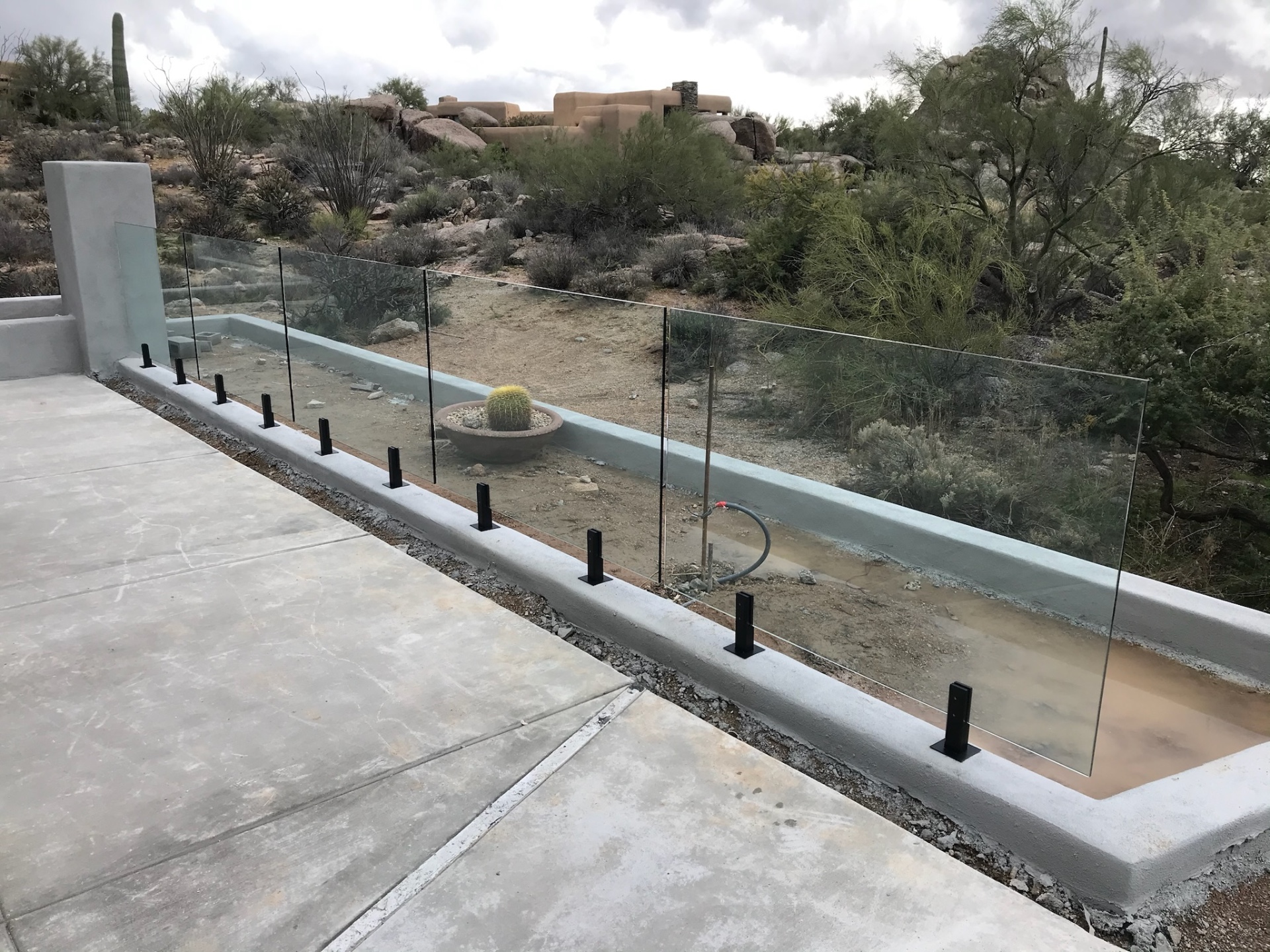
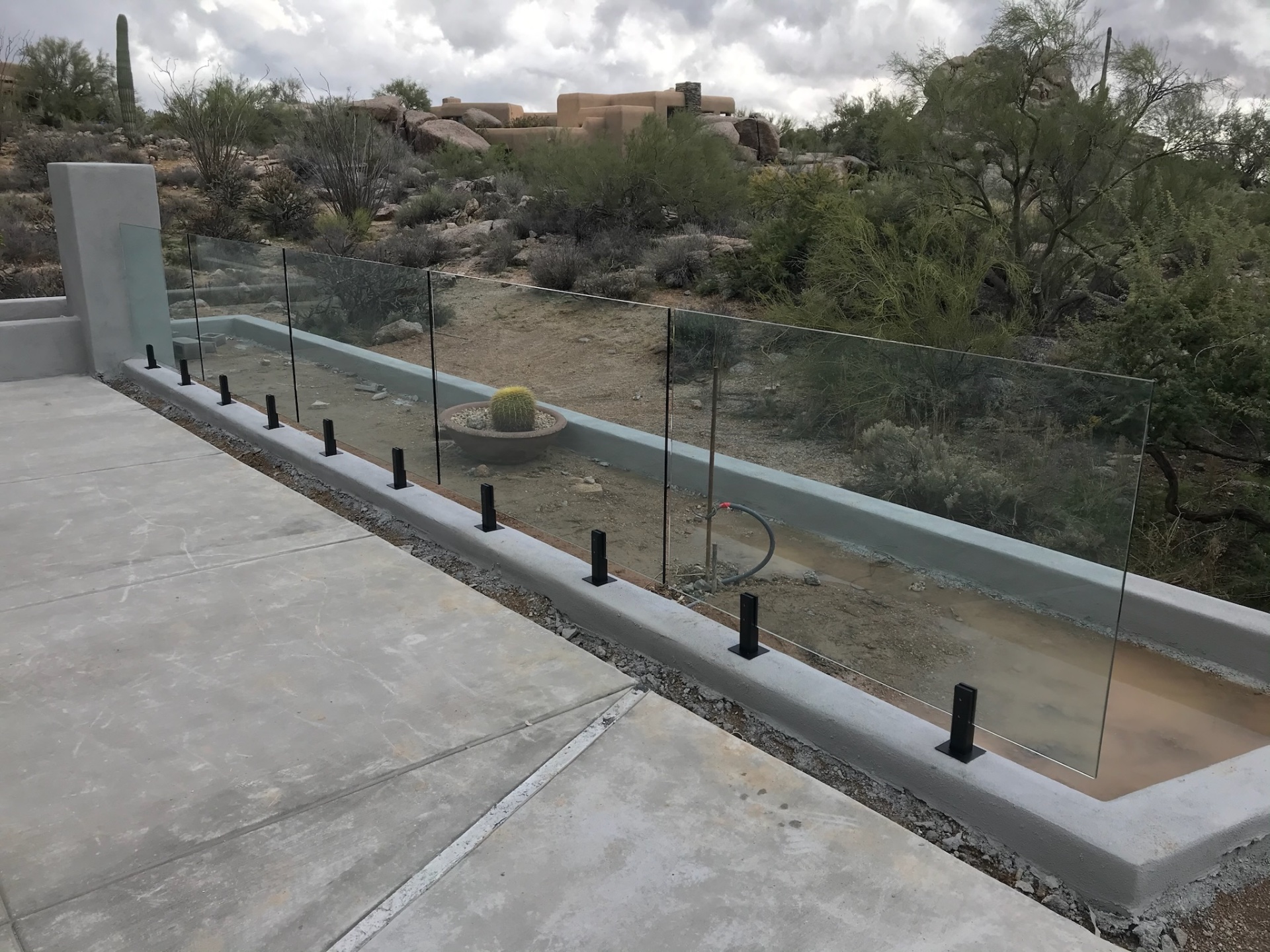
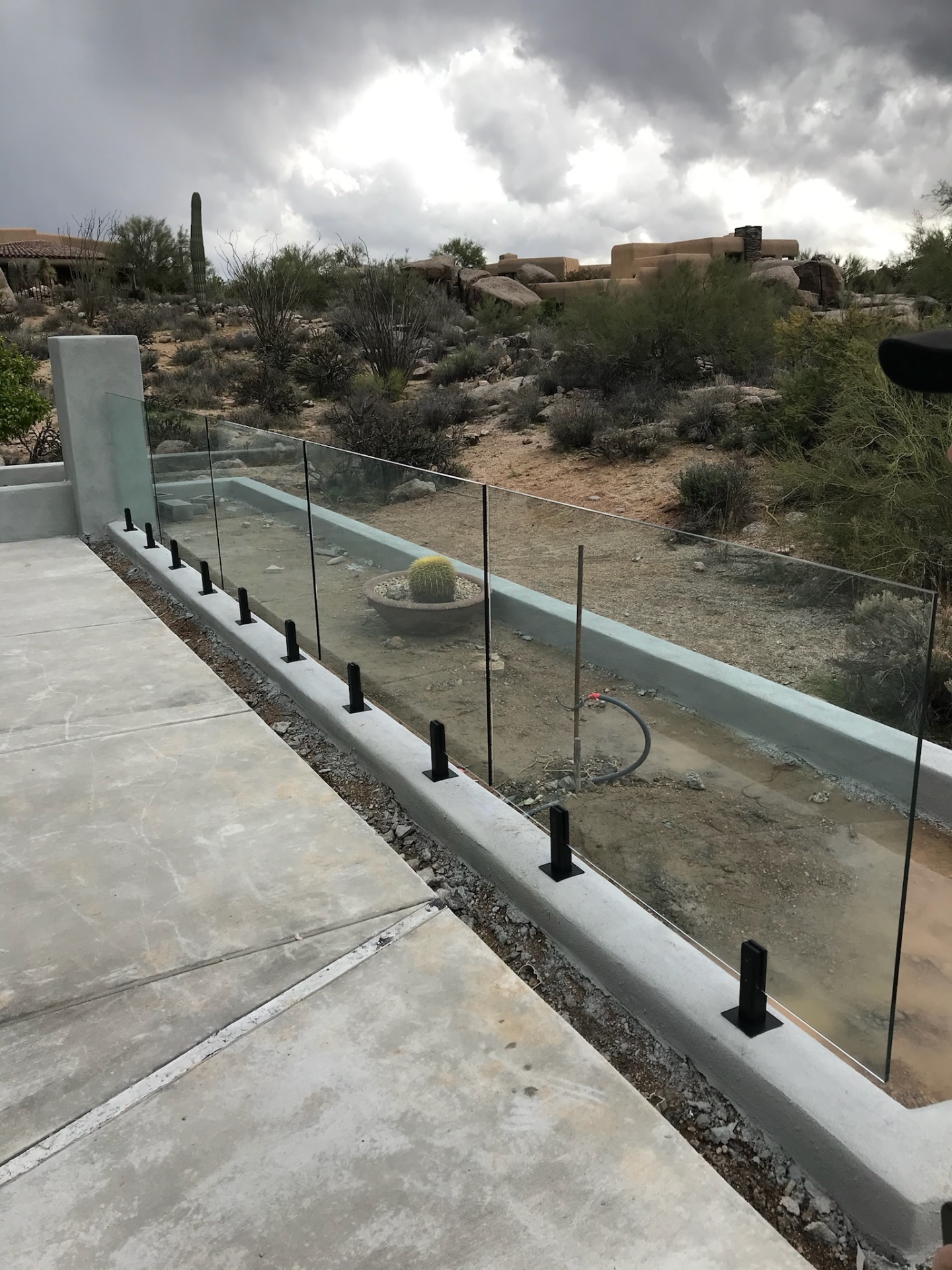
Frameless glass that disappears into the desert.
Curved bond beam, black spigots, frameless tempered glass — planned to support pool-barrier requirements without breaking the view of the Sonoran landscape, granite mountains, and mature saguaros surrounding the property. Recent Sonoran Glass & Fence install in the North Valley.


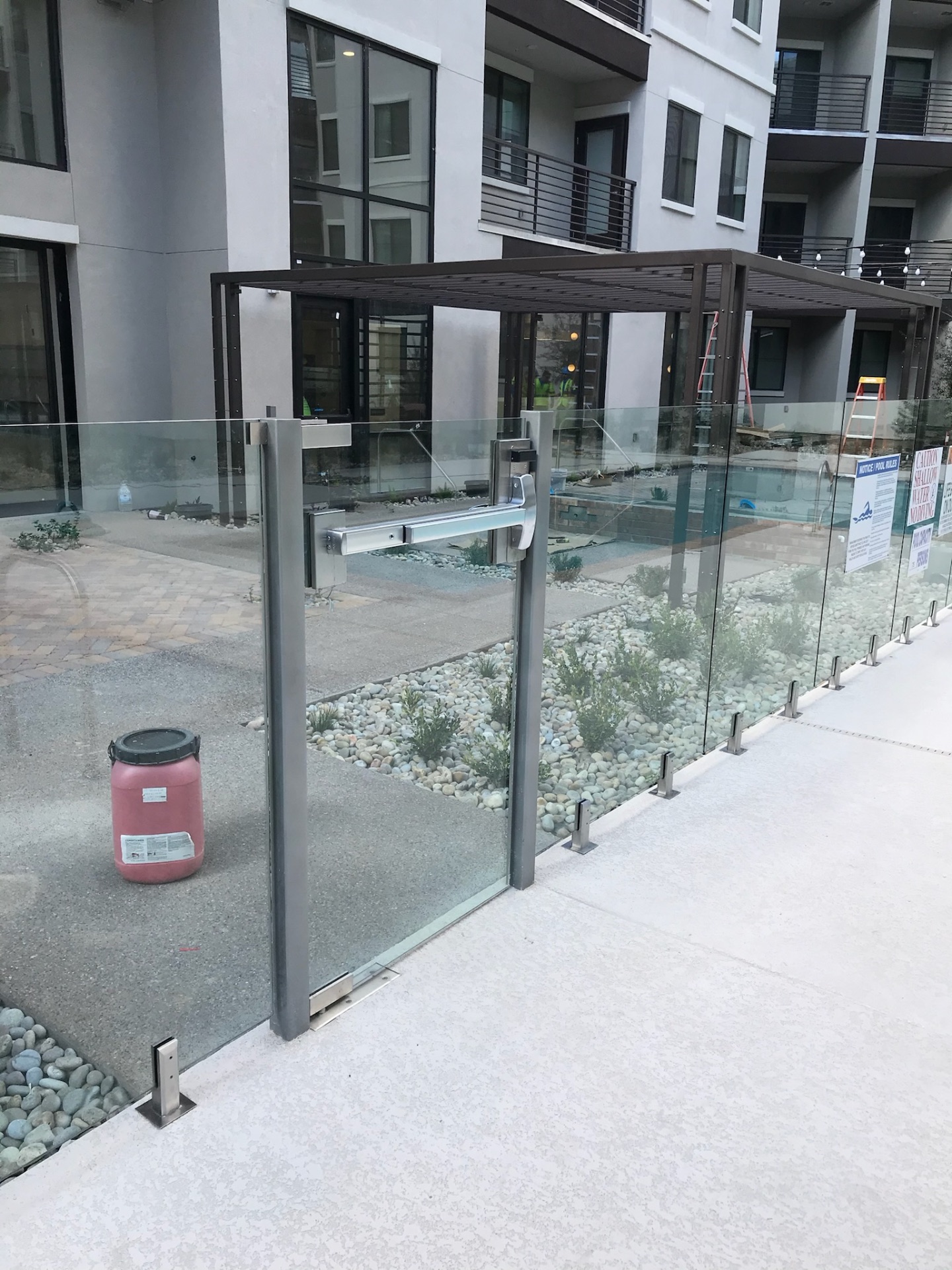
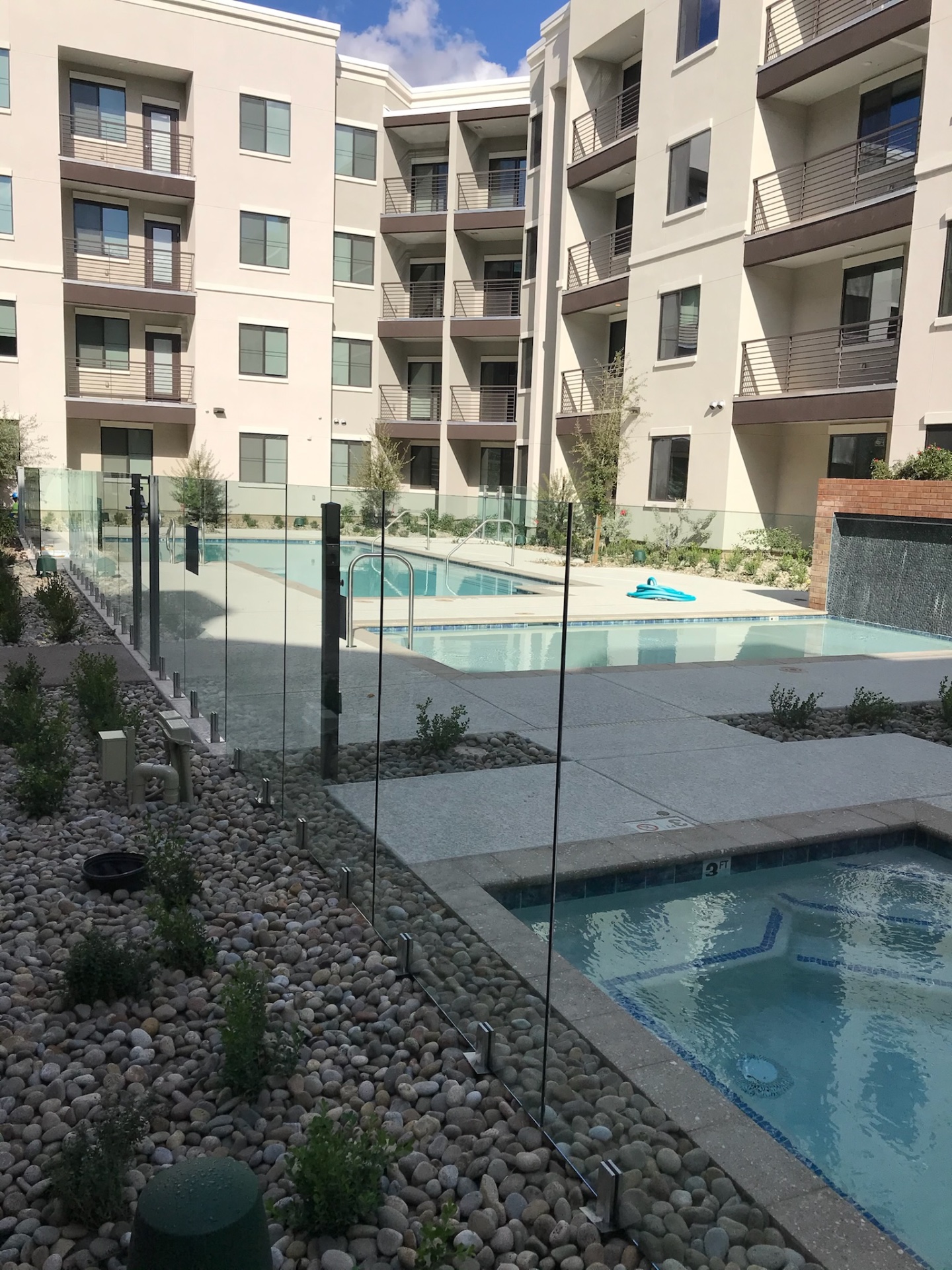
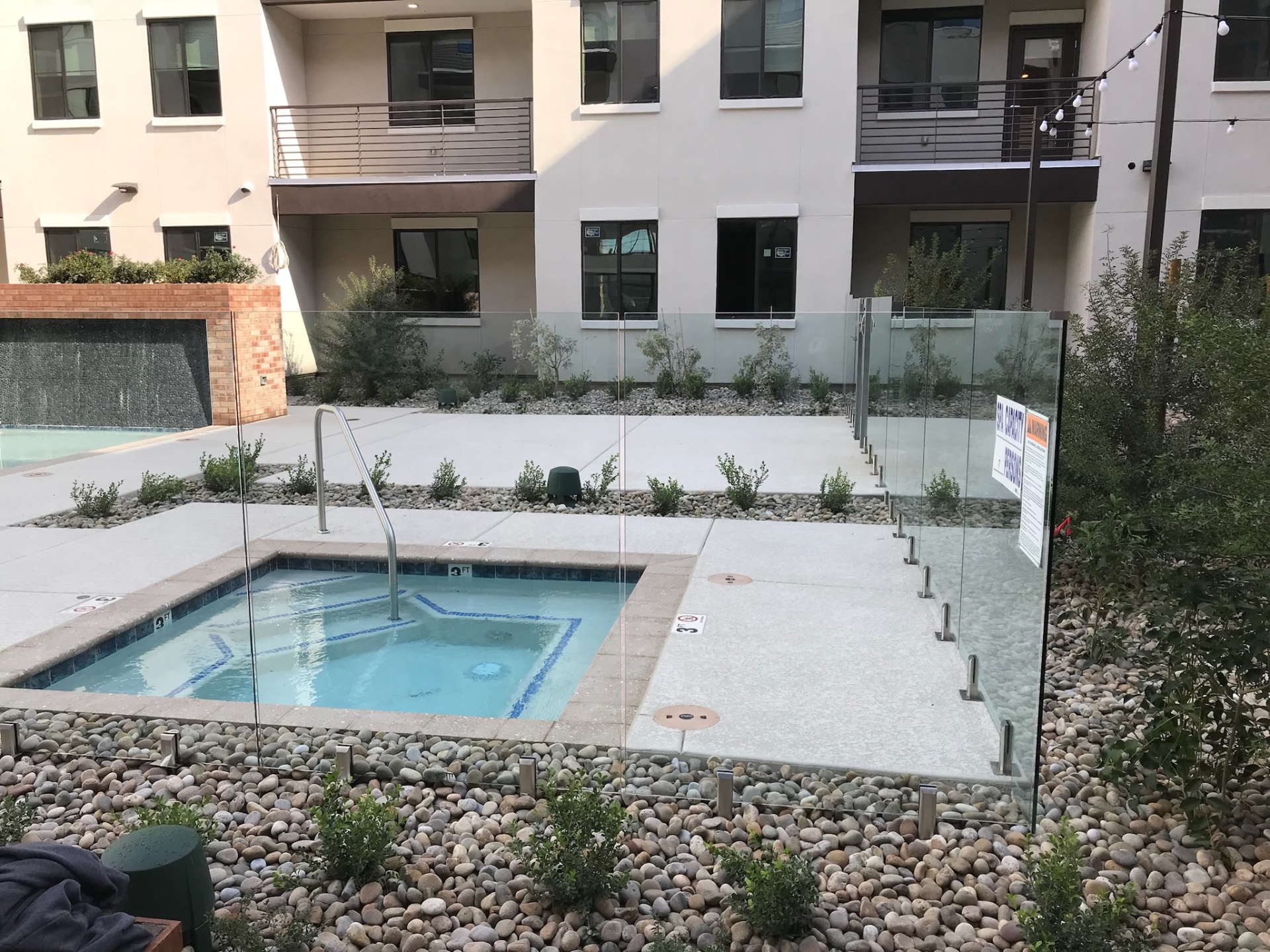
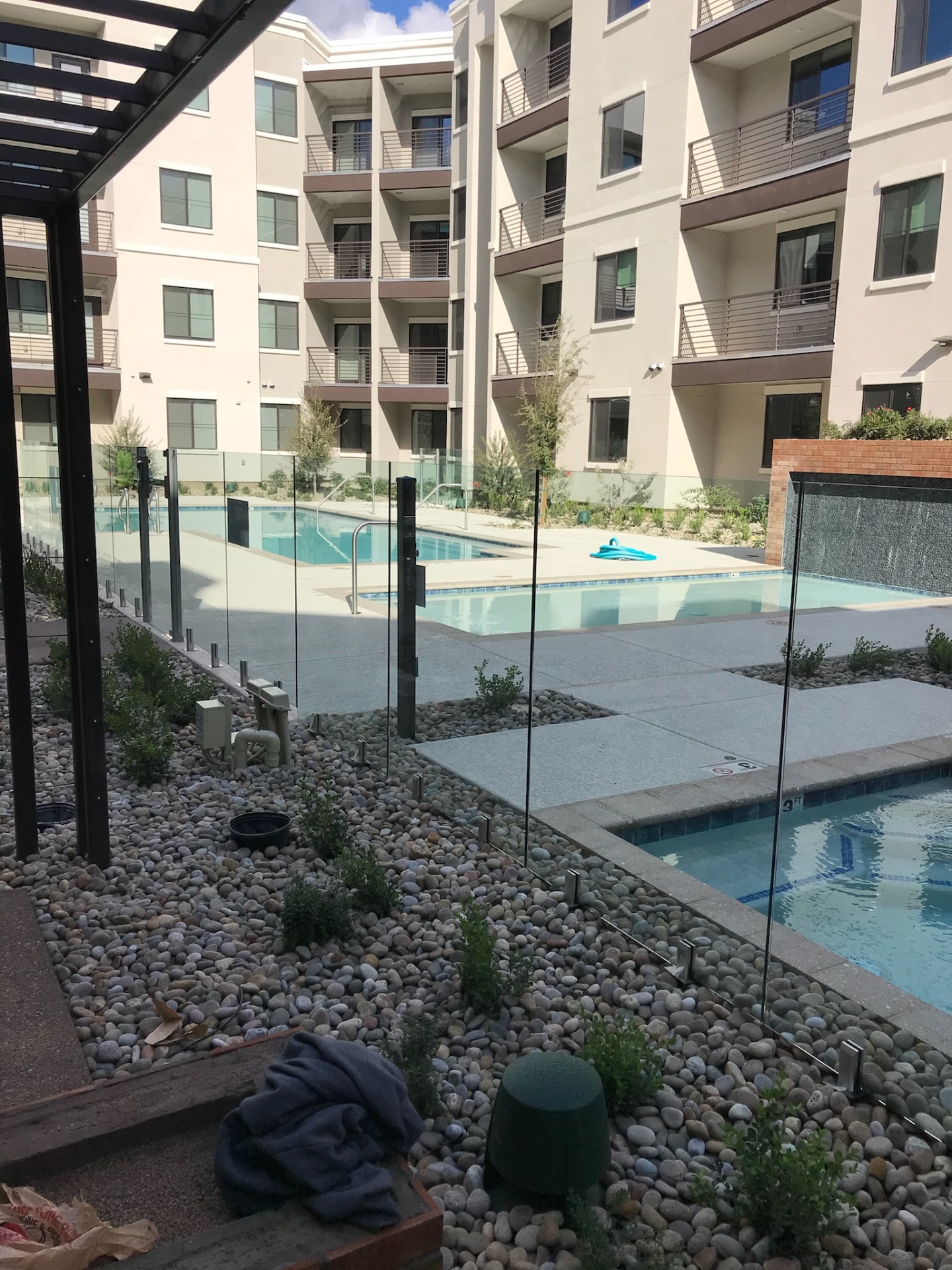
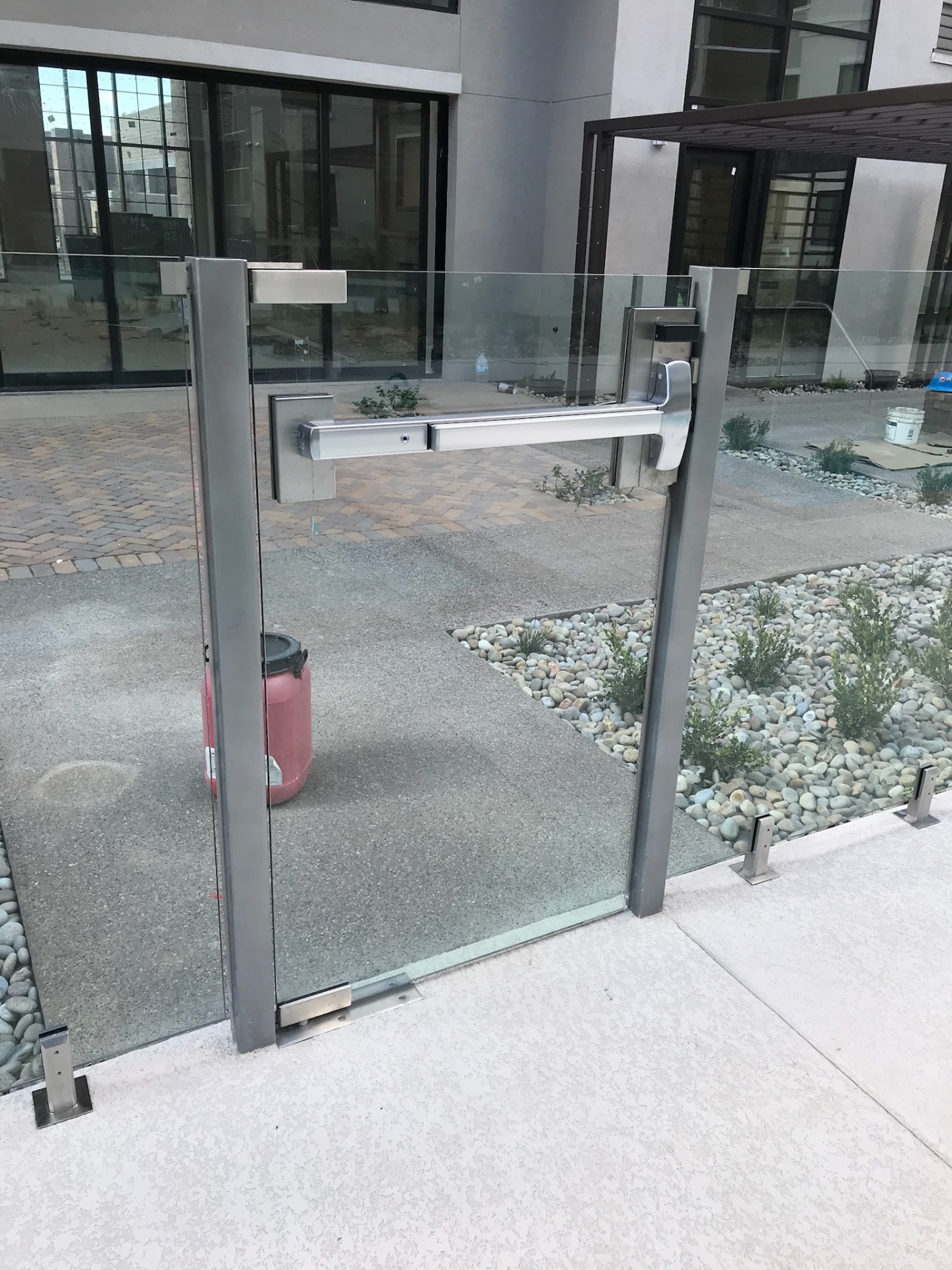
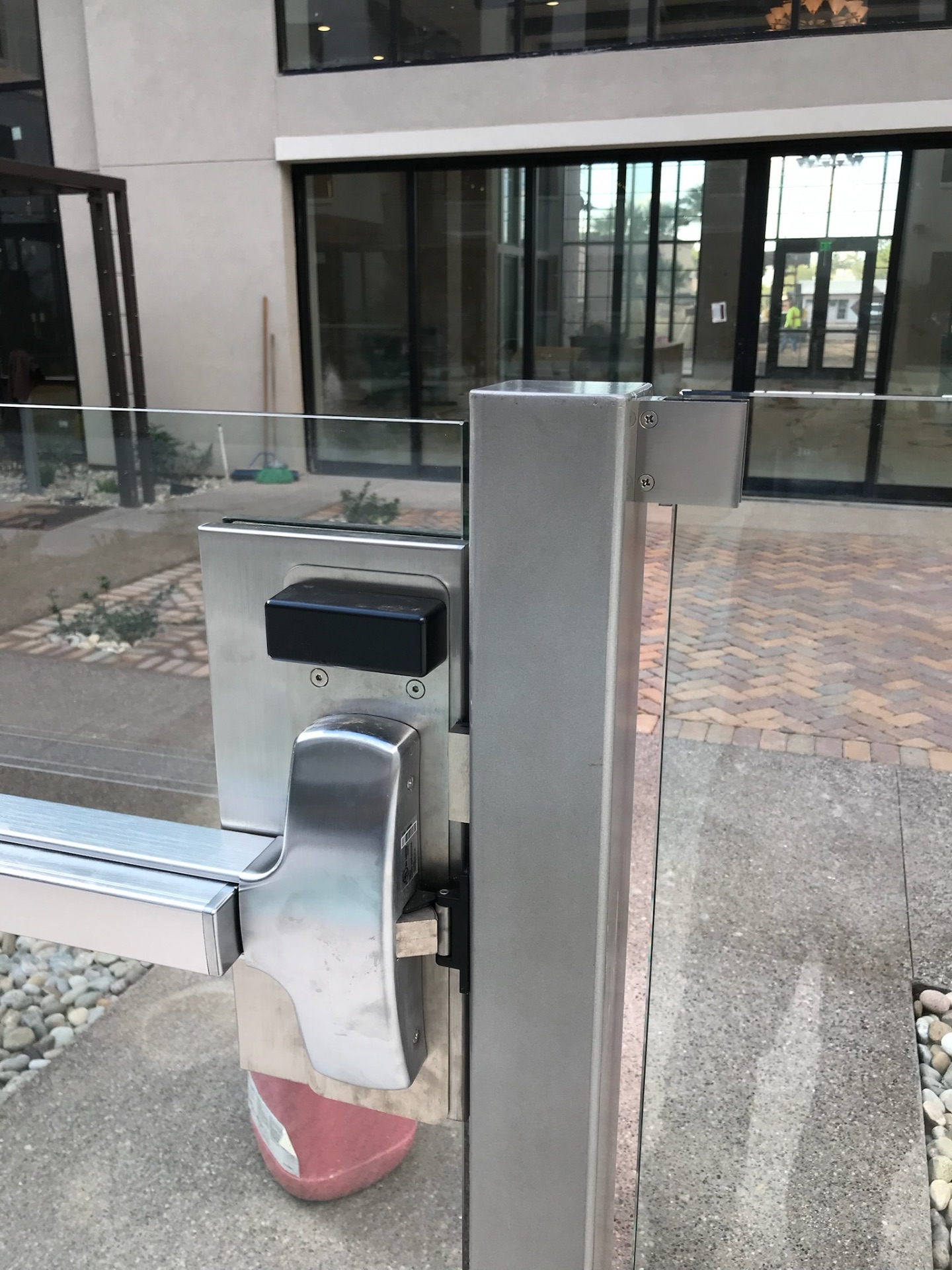
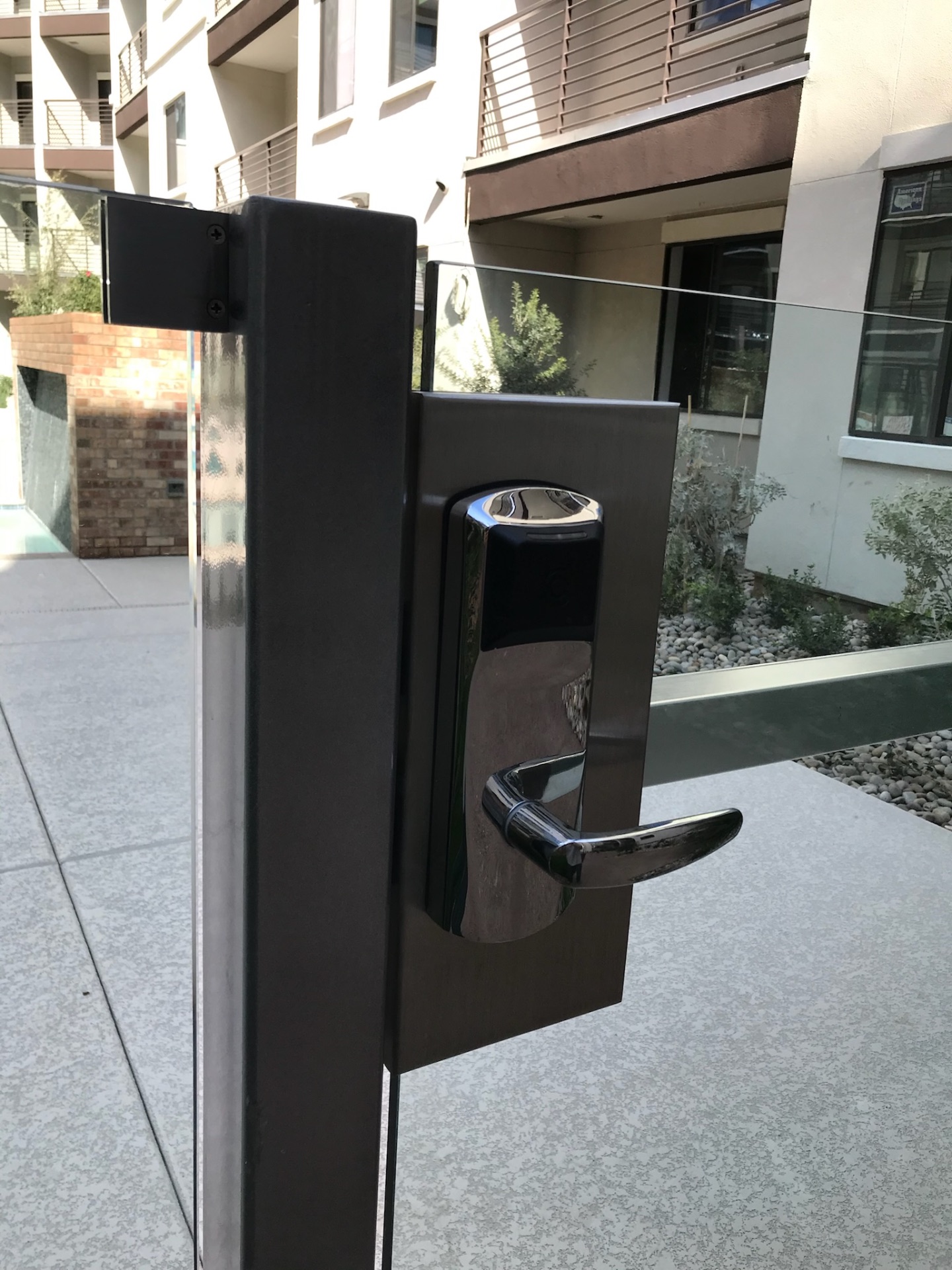
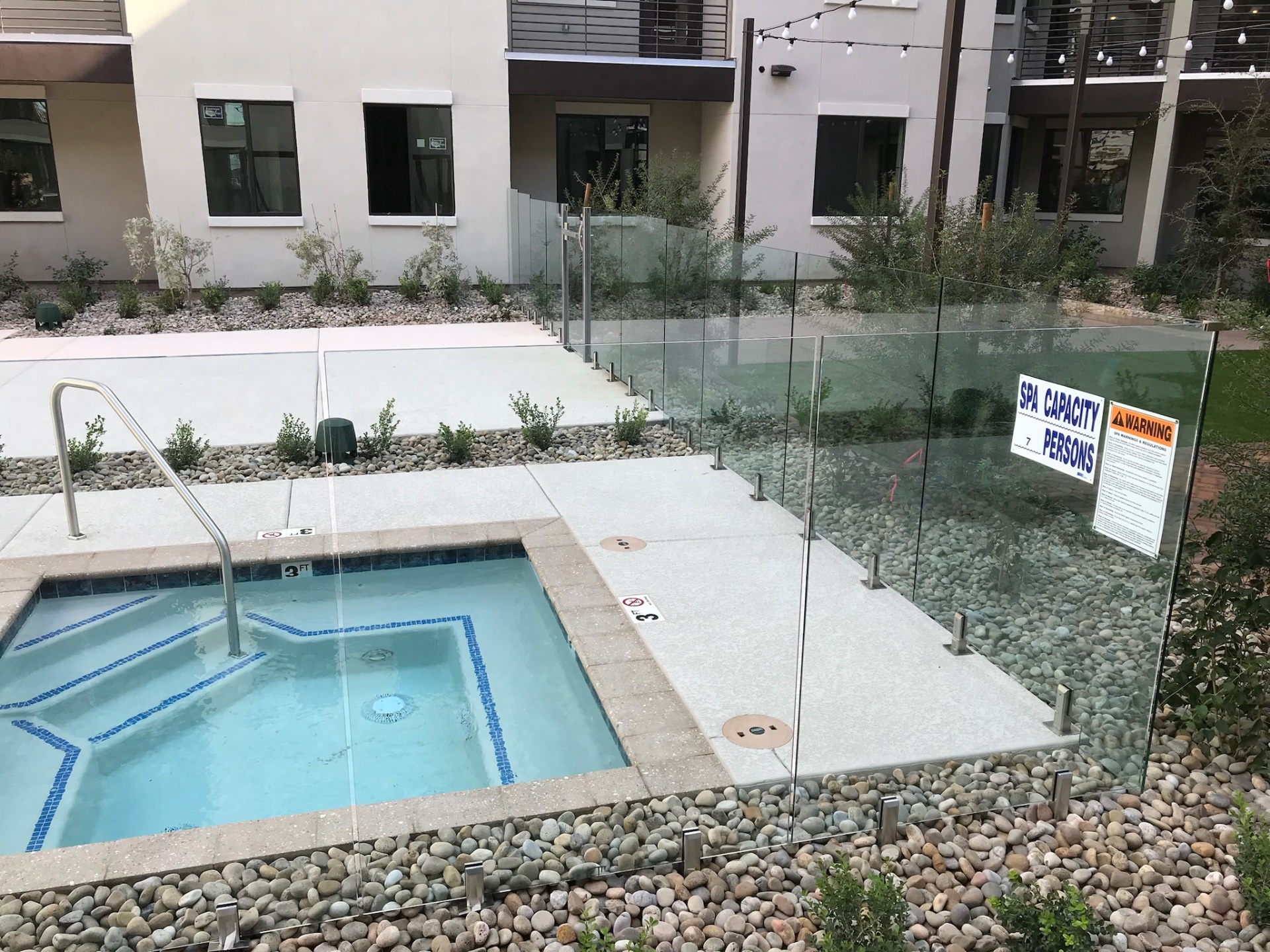
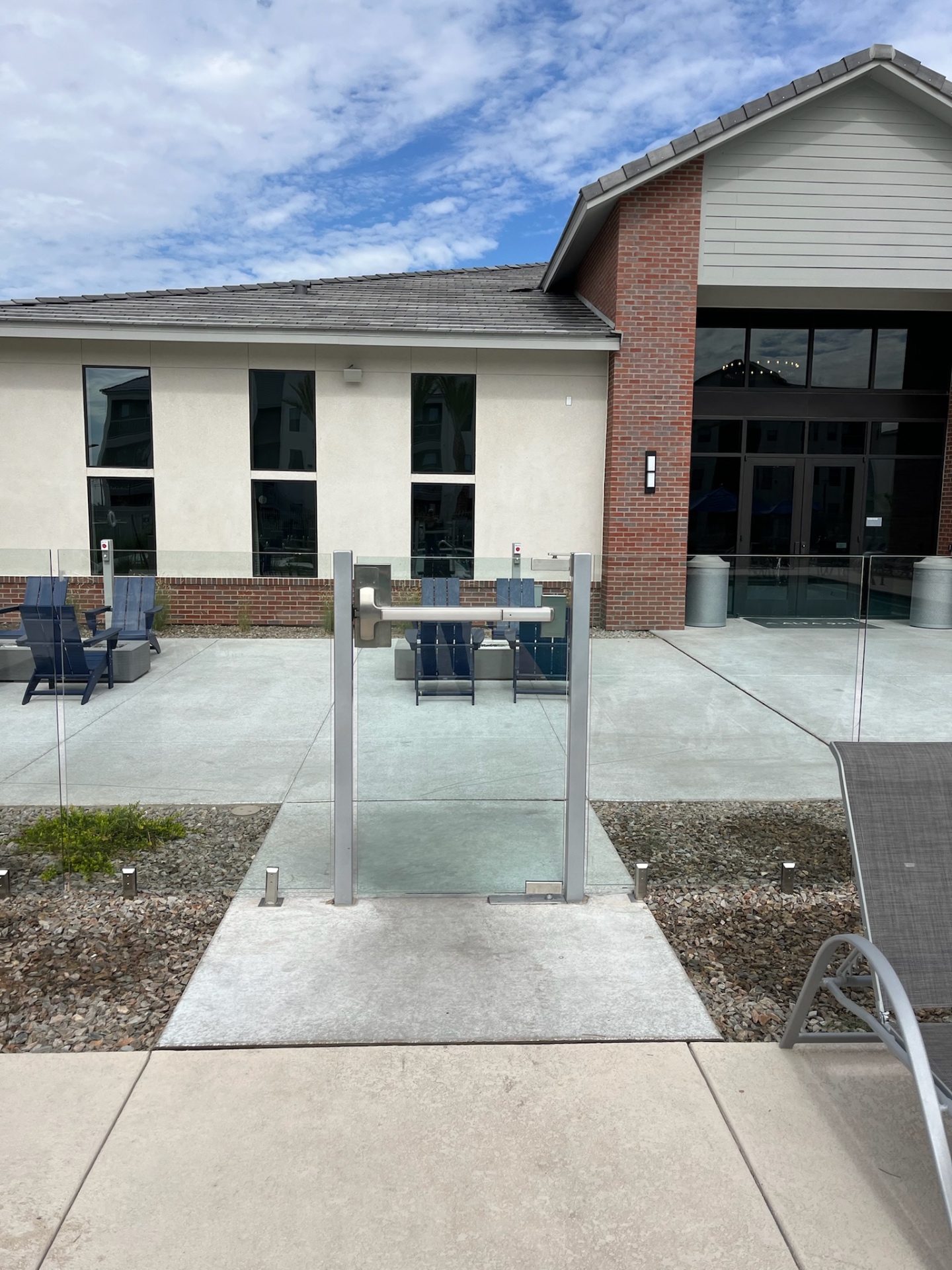
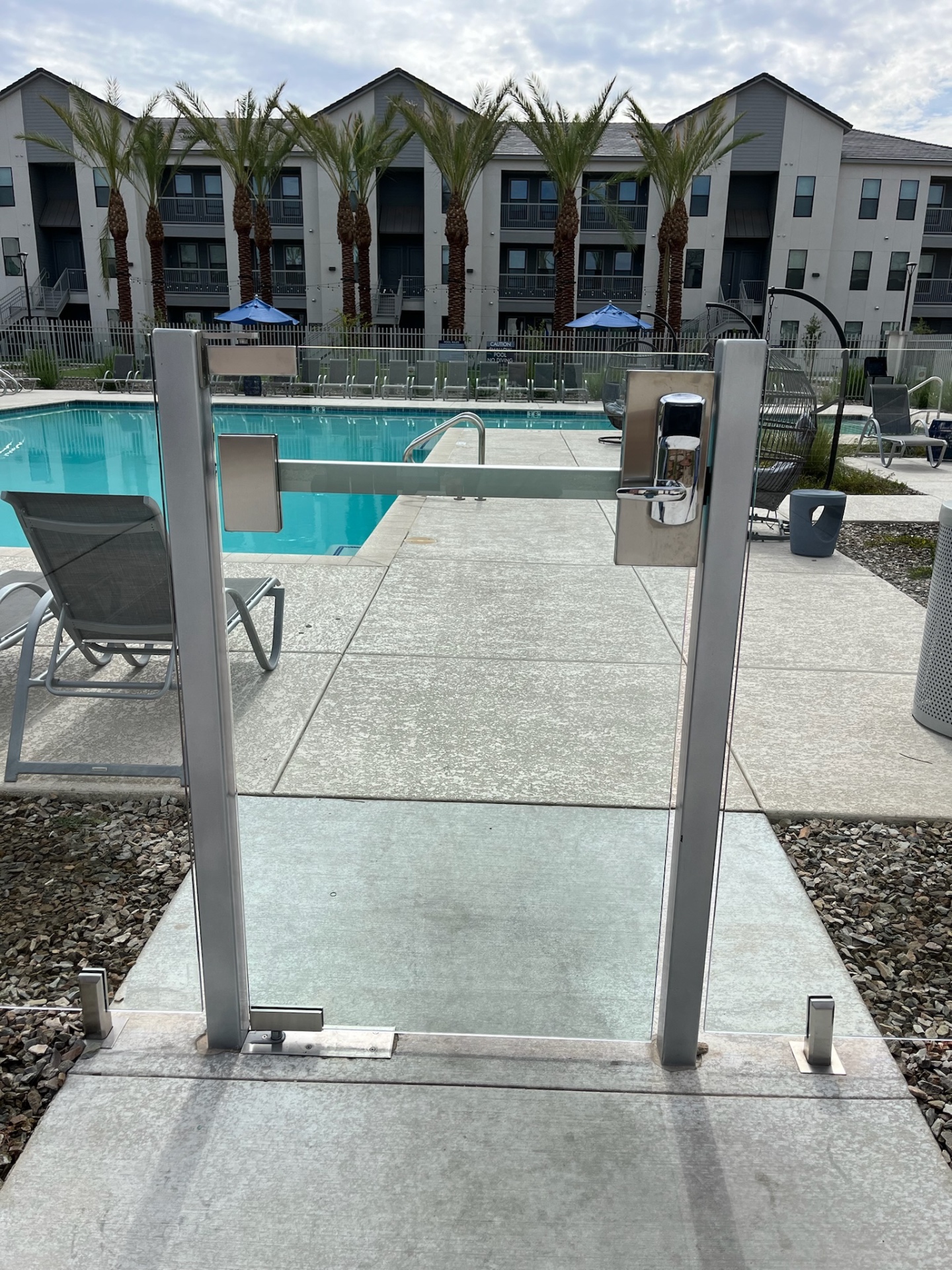
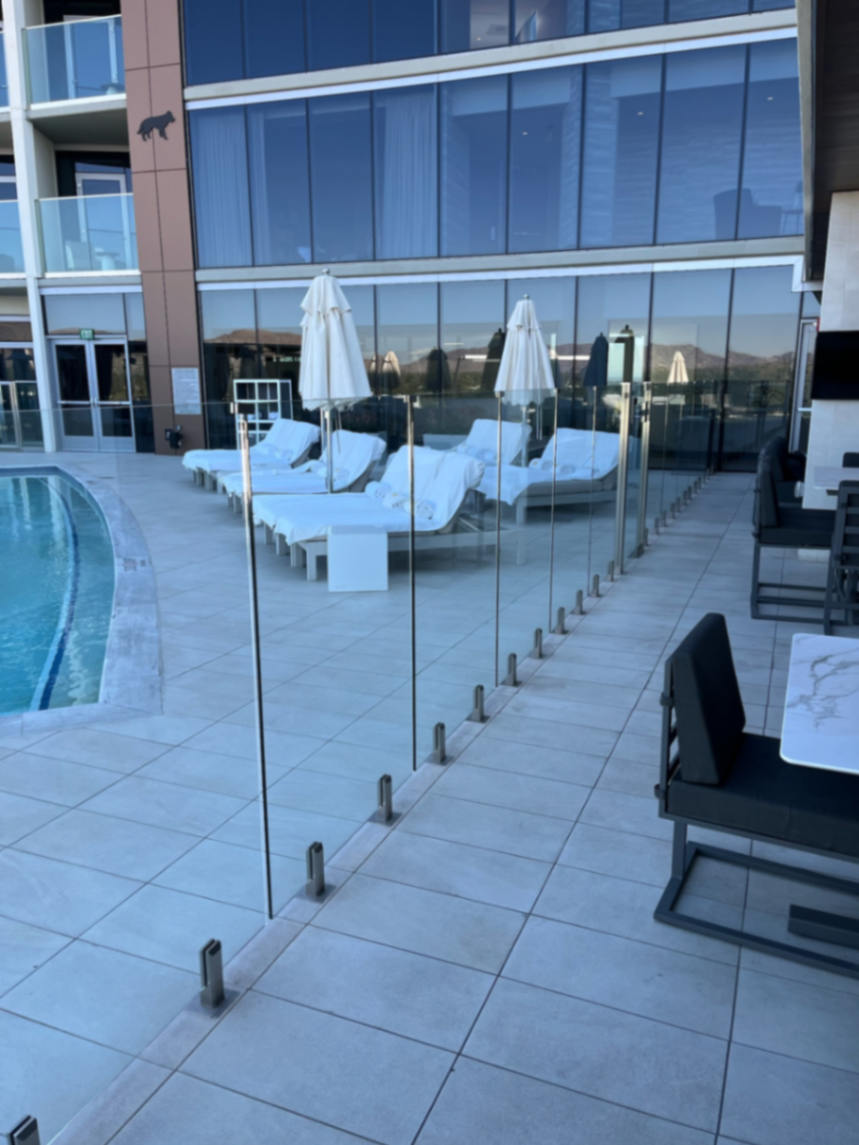
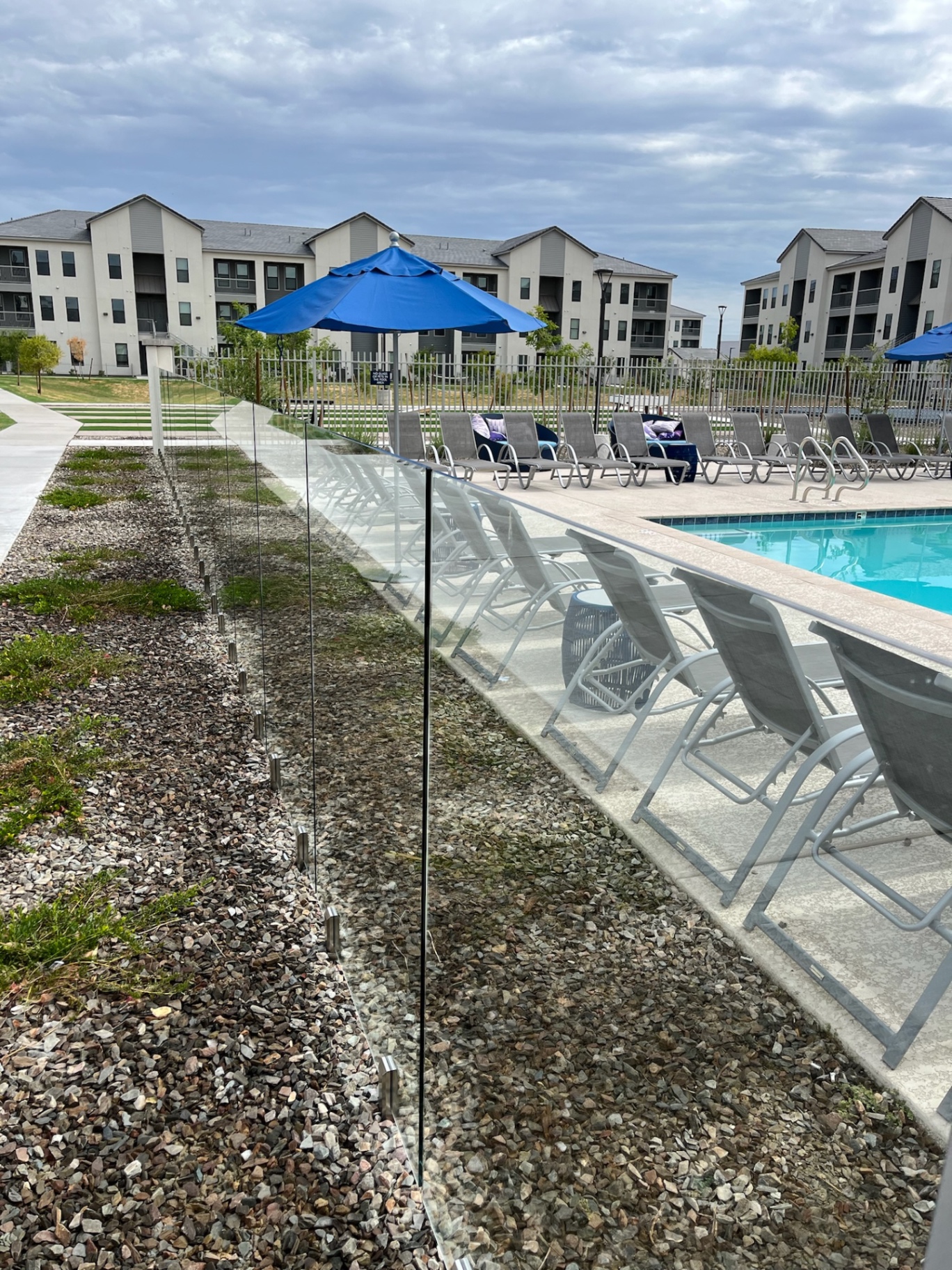
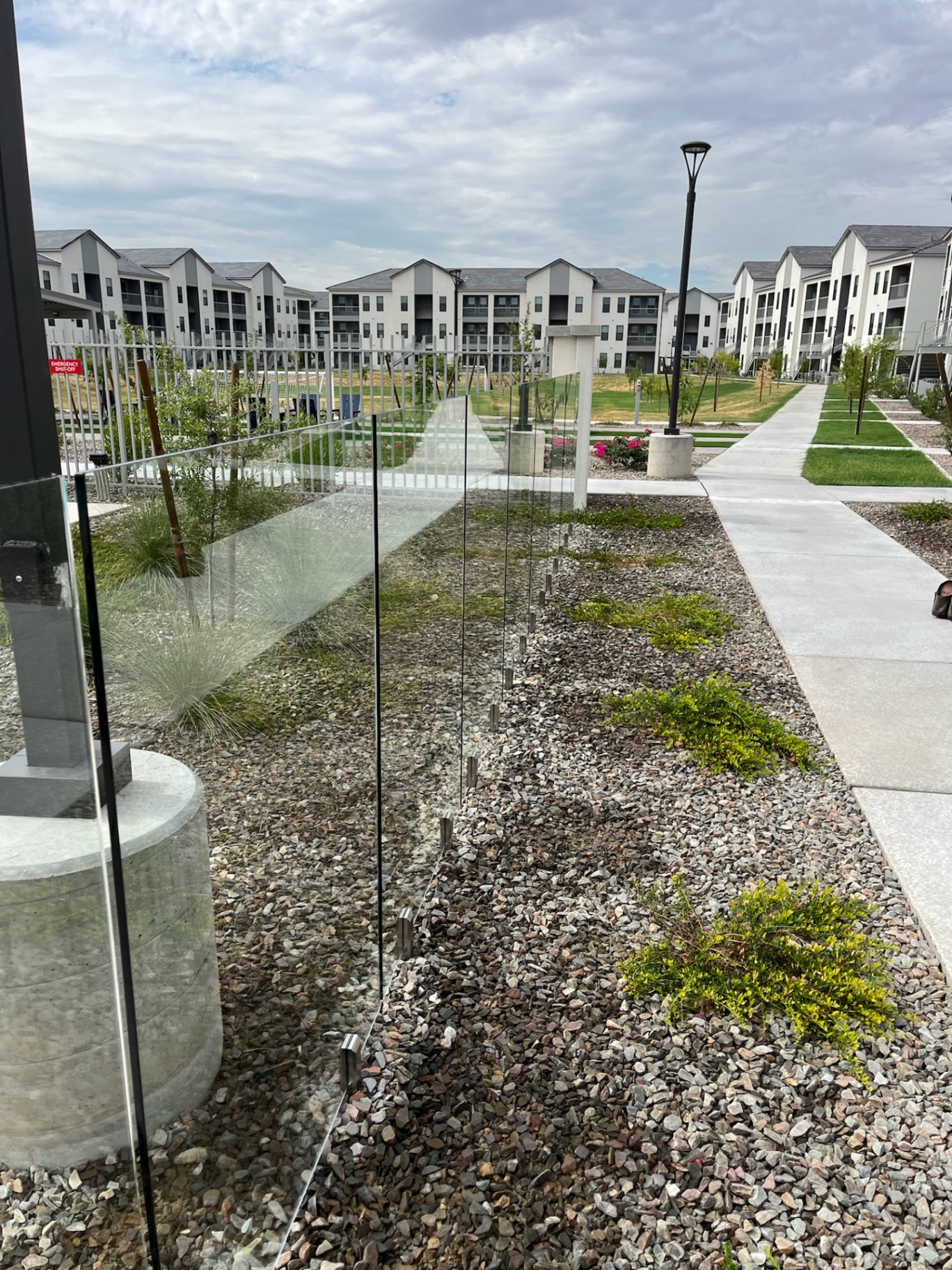
Commercial and multifamily glass fencing, in the field.
Not just custom residential poolscapes. These installs show Sonoran Glass & Fence used on larger amenity environments where clean sightlines, controlled access, durable hardware, panic-bar egress, access devices, and a polished finished edge all matter.


Request a Sonoran Glass estimate
Share your pool layout, gate needs, and mounting surface. Our Sonoran Glass team will reach out to confirm code requirements and the right system before pricing.
Sonoran Glass
Use these first, then send AE the result so we can review your project with better context.
Sonoran Glass is a clear glass fencing system that replaces traditional mesh or wrought iron — and keeps your space open, clean, and high-end.
It's designed to be a true barrier — especially around pools — without killing the view of the project you just spent six figures building. Instead of bars or mesh blocking the sightline, you get a clear separation you can see straight through.
The glass itself is tempered safety glass, the same type used in commercial buildings and high-traffic public spaces. Durable, safe, and long-lasting — not fragile like people sometimes assume.
It's a permanent system. Once installed, it stays for the duration of the project and becomes part of the overall design.
- Approximately 5-foot-high glass pool-fence system
- 1/2-inch tempered safety glass
- Duplex 2205 stainless-steel spigots
- Self-closing self-latching gates selected per project
- Optional add-on: hydrophobic or ceramic coating
- Engineering requirements confirmed per project
The spec sheet most installers won't publish
A glass pool fence is the easiest place in the backyard for an installer to quietly cut corners — wrong glass tint, wrong stainless grade, undersized footings, or gate hardware that is not matched to the layout. AE's standard glass pool-fence system uses approximately 5-foot-high, 1/2-inch tempered safety glass with Duplex 2205 stainless-steel spigots. Final gate hardware, mounting method, finish and project-specific requirements are identified in the written proposal.

1/2-inch tempered safety glass
AE's standard pool-fence system uses approximately 5-foot-high, 1/2-inch tempered safety glass. Low-iron glass may be available as an upgrade when approved for the selected system.
Duplex 2205 stainless-steel spigots
AE's standard spigots are Duplex 2205 stainless steel. Final finish, mounting method and project-specific requirements are identified in the written proposal.
Footings sized per project
Footing diameter, depth, reinforcement and attachment requirements depend on the approved system, mounting surface, engineering, site conditions and applicable code.
Self-closing, self-latching gates
Gate hardware is self-closing and self-latching, selected for the approved layout and gate width. Specific hinge and latch models are confirmed on the written proposal.
Anchored to approved structure
Mounting is confirmed per project against the selected system, surface, engineering requirements, site conditions and signed scope.
Engineering reviewed per project
Panel spans, spigot spacing, footing requirements and wind-load considerations are confirmed for the selected system before fabrication.
Documentation confirmed in proposal
Permitting, inspection, engineering and closeout documentation requirements vary by municipality, HOA, selected system, site conditions and signed scope.
Optional hard-water coating
Hydrophobic or ceramic coatings available as a separate line-item — your choice, never bundled into the base price.
Permitting handled when required
AE holds the ROC license (KA-5 dual pool + R-3 + R-62 + CR-21). Permit responsibilities are confirmed in the written proposal when required for the approved scope.
Specified for the approved pool-fence system.
AE's standard glass pool-fence system uses approximately 5-foot-high, 1/2-inch tempered safety glass with Duplex 2205 stainless-steel spigots. Final glass, hardware, gate, mounting, code, barrier, warranty and installation details depend on site conditions, selected system, applicable requirements, manufacturer documentation, municipality/HOA review and signed scope.
Manufacturer and hardware selections are not promised universally. The written proposal identifies the approved glass, finish, gate hardware, mounting method, engineering requirements, permitting requirements and warranty terms for the specific project.
Approximately 5 feet high for the standard glass pool-fence system.
1/2-inch tempered safety glass is AE's standard pool-fence glass.
Duplex 2205 stainless-steel spigots for the standard pool-fence system.
Final gate hardware, mounting method, finish and project-specific requirements are identified in writing.
What is standard — and what is confirmed per project
AE's standard glass pool-fence system uses approximately 5-foot-high, 1/2-inch tempered safety glass. Final glass requirements are confirmed in the written proposal.
Low-iron glass may be available where approved for the selected system. It is quoted as an upgrade and identified in the written proposal when selected.
1/2-inch tempered safety glass for AE's standard glass pool-fence system.
Tempered safety glass engineered for impact and appropriate pool-fence applications.
Final glass, hardware, mounting, engineering and warranty terms are confirmed in the written proposal.
Manufacturer documentation is reviewed per project where required by the selected system and signed scope.
Spigots & gate hardware selected for the approved layout.
AE's standard glass pool-fence system uses Duplex 2205 stainless-steel spigots. Gate hardware, latch type, hinge type, mounting method, finish and project-specific requirements are selected per site, panel layout, gate width, applicable code, manufacturer documentation and signed scope.
Pool-fence hardware has to handle chlorine, monsoon humidity, and 110°+ summers. Selection is based on panel size, gate width, mounting surface, and the approved layout — not a one-size-fits-all kit.
Surface mount & core drill
Mounting method is confirmed per project based on the selected system, surface, engineering requirements and site conditions.
Selected per gate
Self-closing gate hinges are selected for the approved layout, gate width, weight, finish and code requirements.
Latch specified in proposal
Latch model and finish are identified in the written proposal for the approved gate design.
Exactly what we install — sizes & key notes
Core-drill spigotSpecified per project
- Size / fit
- Fits approved 1/2-inch panel · core-drilled where appropriate
- Material / finish
- Duplex 2205 stainless steel
- Key notes
- Used where the selected system, surface and engineering requirements support core drilling.
Surface-mount spigotSpecified per project
- Size / fit
- Fits approved 1/2-inch panel · base details confirmed by system
- Material / finish
- Duplex 2205 stainless steel
- Key notes
- Used only where the selected system, surface and engineering requirements support surface mounting.
Gate hinge (standard)Specified per project
- Size / fit
- For approved gate size · glass-to-glass or glass-to-post where appropriate
- Material / finish
- Selected finish named in proposal
- Key notes
- Self-closing hardware is selected and adjusted for the approved gate layout and applicable requirements.
Gate hinge (heavy)Specified per project
- Size / fit
- For larger or heavier gate leaves when required
- Material / finish
- Selected finish named in proposal
- Key notes
- Required hinge type depends on gate width, panel weight, use pattern and manufacturer documentation.
Gate latchSpecified per project
- Size / fit
- Sized for the approved gate panel and latch location
- Material / finish
- Selected finish named in proposal
- Key notes
- Latch type, height, locking function and finish are confirmed in the written proposal.
| Component | Product selection | Size / fit | Material / finish | Key notes |
|---|---|---|---|---|
| Core-drill spigot | Specified per project | Fits approved 1/2-inch panel · core-drilled where appropriate | Duplex 2205 stainless steel | Used where the selected system, surface and engineering requirements support core drilling. |
| Surface-mount spigot | Specified per project | Fits approved 1/2-inch panel · base details confirmed by system | Duplex 2205 stainless steel | Used only where the selected system, surface and engineering requirements support surface mounting. |
| Gate hinge (standard) | Specified per project | For approved gate size · glass-to-glass or glass-to-post where appropriate | Selected finish named in proposal | Self-closing hardware is selected and adjusted for the approved gate layout and applicable requirements. |
| Gate hinge (heavy) | Specified per project | For larger or heavier gate leaves when required | Selected finish named in proposal | Required hinge type depends on gate width, panel weight, use pattern and manufacturer documentation. |
| Gate latch | Specified per project | Sized for the approved gate panel and latch location | Selected finish named in proposal | Latch type, height, locking function and finish are confirmed in the written proposal. |
Hardware selected for a Sonoran Glass & Fence project is confirmed in the written proposal. AE's standard glass pool-fence system uses Duplex 2205 stainless-steel spigots; final spigot count, gate hinge selection, latch selection, finish and mounting method are set during measure based on the specific panel layout, gate width, selected system and site conditions.
Final hardware selections are confirmed against manufacturer documentation and the signed proposal.
Clear tempered safety glass vs. low-iron — honest side-by-side
Both options are tempered safety glass. AE's standard glass pool-fence system uses approximately 5-foot-high, 1/2-inch tempered safety glass with Duplex 2205 stainless-steel spigots. Final requirements depend on selected system, site conditions, applicable codes, municipality or HOA requirements, manufacturer documentation, engineering and the signed proposal.
| Spec | Clear tempered safety glass Standard | Low-iron tempered Upgrade |
|---|---|---|
| Appearance | Slight green tint visible on the panel edge and faintly across the face in direct sun. Reads as 'glass' — same look as a commercial storefront. | True water-clear. No green edge tint, no color shift across the panel. Reads as 'invisible' barrier when clean. |
| Pool color behind it | Pool blue reads as pool blue. Most homeowners never notice the tint until shown side-by-side. | Pool color comes through unshifted — useful when you've spec'd a specific waterline tile or pebble color. |
| Safety & code | Tempered safety glass, planned around applicable pool-barrier requirements for the approved system. | Identical safety treatment; final use depends on the approved system and written proposal. |
| Thickness | 1/2-inch for AE's standard glass pool-fence system. | Confirmed in the written proposal when selected as an upgrade. |
| Durability & lifespan | Long-lasting. UV doesn't degrade tempered glass. | Long-lasting. Same base material with reduced iron content. |
| Lead time | Confirmed in the written proposal after final measure and manufacturer review. | Confirmed in the written proposal when selected as an upgrade. |
| Price impact | Frameless glass pool fencing generally ranges from $225–$325 per linear foot installed. | Quoted as a separate line item so you see exactly what it adds. |
| Best use case | Most Valley pools. Family backyards, rental properties, view-fence runs, balcony railings, and any install where the glass is one element of a larger landscape. | High-end frameless installs where the glass IS the design feature: infinity-edge pools, architectural showpieces, dark waterline finishes, projects where you want zero color shift across the view. |
| What AE recommends | Our default. It's what most clients choose and what we install most often. | When you've told us 'I want it to look like nothing is there.' Worth the upgrade in that case. |
We'll show you both panels side-by-side during design so you can decide with your own eyes — not from a brochure.
Built locally, installed Valley-wide.
Sonoran Glass is the in-house glass division of AE Outdoor Living — headquartered in Peoria and serving the full Phoenix metro. Every install is run by AE crews on AE's ROC license, not subcontracted to a glass-only shop with no liability for the rest of your backyard.
KA-5 Dual Pool · R-3 · R-62 · CR-21 — held in AE's own name, not borrowed.
Building outdoor spaces across the Valley since 2005.
David Bell currently serves as President of the Southwest Hardscapes Association.
Handled as required by municipality, HOA, selected system, site conditions and written proposal.
Most Valley municipalities — Phoenix, Scottsdale, Peoria, Glendale, Surprise, Goodyear, Avondale, Litchfield Park, Cave Creek, Paradise Valley — review residential pool barriers around height, self-closing/self-latching gates, panel spacing and related rules. Final permitting, engineering and inspection requirements are confirmed for the approved scope.
Panels are cut to your exact layout. Timing depends on final measure, selected system, glass fabrication, gate hardware, access, permitting requirements, engineering requirements and signed scope. Every detail must be locked before fabrication or submittals move forward.
Three ways to build your fence
A clean glass fence planned around the approved pool-barrier requirements — standard tempered panels at required height with project-selected spigot hardware.
More gate configurations, spigot finish options, and design flexibility — the everyday sweet spot for most Arizona pools.
Custom layouts, premium frameless hardware, and architectural finishes designed to integrate into high-end pools and landscapes.
From layout to last latch
Layout & measurements
We confirm barrier code, gate locations, and panel runs before anything is drilled.
Core drilling & spigots
Precision core drilling into concrete or decking — measured carefully because it's permanent.
Glass panel placement
Tempered panels set, leveled, and locked into spigots with proper isolation pads.
Gates & final adjustment
Self-closing self-latching gates installed, then hinges and latches dialed in.
Why everyone's choosing glass pool fencing
Dive deeper into glass fencing topics
When bolt-down spigots aren't anchored: a failed install
Surface-mount spigots on pavers & uneven panels: another rebuild
Glass Pool Fencing in Arizona
Frameless Glass Railings in Arizona
Glass View Fencing for Arizona Backyards
Glass Pool Fence Cost in Arizona
Glass Pool Fence vs Metal Pool Fence
Glass Fencing Care & Cleaning Guide
Sonoran Glass Project Gallery
Frameless Glass Pool Fencing in Arizona
Glass Pool Gates, Self-Closing Hardware & Pool Barrier Access
Commercial Glass Pool Fencing in Arizona
Glass Pool Fence Maintenance in Arizona
Hard-Water Spots on Glass Pool Fencing
Hydrophobic and Ceramic Coatings for Glass Pool Fencing
Glass Pool Fence on Pavers and Travertine
Glass Pool Fencing in Paradise Valley, AZ
Glass Pool Fencing in Scottsdale, AZ
Glass Pool Fencing in Phoenix, AZ
Glass Pool Fencing in Peoria, AZ
Glass Pool Fencing in Glendale, AZ
Glass Pool Fencing in Surprise, AZ
Glass Pool Fencing in Goodyear, AZ
Glass Pool Fencing in Buckeye, AZ
Glass Pool Fencing in Mesa, AZ
Glass Pool Fencing in Chandler, AZ
Glass Pool Fencing in Gilbert, AZ
Glass Pool Fencing in Queen Creek, AZ
Glass Pool Fencing in Cave Creek, AZ
Glass Pool Fencing in Carefree, AZ
Glass Pool Fencing in Fountain Hills, AZ
Glass Pool Fencing in Tucson, AZ
Glass pool fencing across the Valley.
Sonoran Glass installs are designed, drilled, and set by AE's own ROC-licensed crew — not subbed out to a third-party fencer. We work the cities below regularly, and we know each municipality's pool-barrier review process.
- Glass pool fence Phoenix
- Glass pool fence Scottsdale
- Glass pool fence Paradise Valley
- Glass pool fence Arcadia
- Glass pool fence Chandler
- Glass pool fence Gilbert
- Glass pool fence Mesa
- Glass pool fence Tempe
- Glass pool fence Queen Creek
- Glass pool fence Cave Creek & Carefree
- Glass pool fence Fountain Hills
- Glass pool fence Peoria & Anthem
Installs outside the immediate metro evaluated case-by-case to keep the same AE crew on every panel and gate.
Glass fencing, answered
Does glass pool fencing meet Arizona pool barrier code?+
Sonoran Glass plans pool-fence systems around applicable Arizona pool-barrier requirements, including approximately 5-foot-high glass where required, self-closing/self-latching gate hardware, panel layout, mounting conditions, and local review. Final requirements are confirmed for each project in the written proposal.
Is tempered glass actually safe around kids and pets?+
Tempered safety glass is the same glass used in commercial buildings and storefronts. It's engineered to resist impact, and if it ever does fail it crumbles into small pieces instead of sharp shards.
How much does glass fencing cost?+
Frameless glass pool fencing generally ranges from $225–$325 per linear foot installed. Final pricing depends on total footage, gates, glass selection, hardware, mounting conditions, access, engineering requirements and site conditions. Specialty glass systems, gates, upgraded glass and custom hardware are quoted separately after the layout and specifications are confirmed.
Frameless, semi-frameless, or spigot-mounted?+
Spigot-mounted is popular for Arizona pools because it keeps the look clean while leaving hardware accessible for service. Frameless reads the most luxurious. We walk you through the trade-offs during design.
Will the glass spot from hard water?+
Without routine care, yes — Arizona water is hard. A rinse-and-squeegee routine helps keep panels reading clear. Optional hydrophobic or ceramic coatings may reduce cleaning frequency depending on product, water conditions, exposure and maintenance; coatings are quoted separately when selected.
Are hydrophobic or ceramic coatings included in the price?+
No — coatings are priced separately from the base fence installation. Hydrophobic and ceramic coatings are optional add-ons quoted as a line item by linear footage, so you only pay for the coating if you choose to add it.
How long does installation take?+
Installation and fabrication timing depend on measured layout, selected system, glass fabrication, gate hardware, access, permitting requirements, engineering requirements and signed scope. Core drilling into existing concrete or pavers is permanent, so layout is locked before drilling starts.
How long from signed order to install on a typical glass job?+
Plan roughly 6–8 weeks from custom order to install. Design and final measure runs 1–2 weeks, fabrication runs 4–6 weeks, and the on-site install is usually 1–3 days depending on run length and gate count.
Can you rush an install for a specific date?+
Often yes, on the right scope. Rush usually costs a bit more (expedited glass, priority freight, reshuffled crew scheduling), and it depends on the fabricator's queue that week. We'll quote standard and rush side-by-side in writing.
What causes delays after the order is placed?+
Special-order glass (low-iron, tinted, oversized), custom notches or radius edges, delayed hardware shipments, or last-minute layout changes are the most common. City inspection windows can also affect projects where the fence ties into a pool barrier permit.
Why not skip the second measure to move faster?+
Because glass is cut to your exact opening. A measurement error can't be un-fabricated — the panels come back wrong and the whole timeline resets. The measure step is where a rushed job quietly becomes a slow job.
What's the realistic lead time from signed contract to install?+
Lead time is confirmed in the written proposal after final measure, selected system, glass requirements, gate hardware, access, permitting needs, engineering needs and manufacturer documentation are reviewed.
Do you pull the permit, or does the homeowner?+
Permitting requirements vary by municipality, HOA, project type, selected system and mounting condition. When permitting, engineering or documentation is required for the approved scope, those responsibilities are identified in the written proposal.
Clear tempered safety glass vs. the low-iron upgrade — what's the difference?+
AE's standard glass pool-fence system uses approximately 5-foot-high, 1/2-inch tempered safety glass with Duplex 2205 stainless-steel spigots. Low-iron tempered is an available upgrade where approved for the selected system; it reduces the faint green edge tint visible in standard tempered glass. Final glass, finish and project-specific requirements are identified in the written proposal.
What does maintenance actually look like?+
Day-to-day maintenance usually means routine rinsing, squeegeeing, and visual checks of spigots, hinges and latches. Optional coatings and professional service are quoted separately when selected. Final maintenance expectations depend on water conditions, exposure, hardware selection, coatings and the written proposal.
What's actually covered under warranty?+
Final warranty terms — including workmanship coverage, glass panel coverage, hardware finish coverage and mechanical coverage — are confirmed in the written project proposal and any applicable manufacturer documentation.
Do you install glass pool fence in Scottsdale and Paradise Valley?+
Yes — Scottsdale and Paradise Valley are core service areas for Sonoran Glass. We review municipal and HOA requirements during planning and identify any permitting, engineering or submittal responsibilities in the written proposal.
What cities does Sonoran Glass cover across the Phoenix metro?+
Phoenix, Scottsdale, Paradise Valley, Arcadia, Chandler, Gilbert, Mesa, Tempe, Queen Creek, Cave Creek, Carefree, Fountain Hills, Peoria, Glendale, Surprise, and Anthem. Installs outside the immediate metro are evaluated case-by-case — we keep the radius tight so the same AE crew that designs the install is the one drilling, setting panels, and dialing in the gates.
How does Sonoran Glass compare to other glass pool fence installers in Phoenix?+
Two things separate us. First, Sonoran Glass is installed in-house under AE's own ROC license — not subbed out to a third-party fencer. Second, AE's president David Bell is the current President of the Southwest Hardscapes Association (13 years on the board, 15 years involved), so code, drilling standards, and pool-deck integration aren't afterthoughts. We also publish honest per-linear-foot planning ranges instead of 'call for quote' — see the cost FAQ above.
Do you install glass fence panels around patios and view lines, not just pools?+
Yes. Tempered glass fence panels can also work as balcony railings, second-story view fences, deck edges, and patio wind screens when the system is designed for that application. Panel thickness, spigot spacing, mounting method and post/gate hardware are specified to the approved use, code requirements, engineering requirements and signed scope.
Is glass fencing a good fit for Arizona sun, monsoon wind, and hard water?+
Yes, when it's specified for the climate. AE's standard glass pool-fence system uses approximately 5-foot-high, 1/2-inch tempered safety glass with Duplex 2205 stainless-steel spigots. Final gate hardware, mounting method, finish and project-specific requirements are identified in the written proposal.
How long a Sonoran Glass install actually takes
From custom order to install is usually 6–8 weeks depending on the job scope. Panels, gates, hardware, and any notched or radius edges are fabricated to your exact layout — none of it is stock. If you're working against a tight deadline we can often push a project up; that typically costs a bit more and depends on the fabricator's queue.
- Phase 1
Design & final measure
— 1–2 weeksOn-site layout, panel plan, gate placement, hardware selection, and confirmation of mounting method against your deck, coping, or substrate.
- Phase 2
Fabrication
— 4–6 weeksCustom tempered panels cut to your layout, edge work, drilled or notched details, and hardware kitted for install. Low-iron and specialty glass extend this window.
- Phase 3
Install
— 1–3 days on-siteSet spigots or base channel, hang panels, hang gates, tune latches and hinges, and clean the finished run.
Rush timelines are possible on select scopes but they aren't free — expedited glass, priority freight, and schedule reshuffling all carry real cost. We'll quote both options in writing so you can choose.
Anything measured wrong at the front end cannot be un-fabricated. That's why AE won't shortcut the measure step, even when the deadline is tight.
Timing FAQ
How long from signed order to install on a typical glass job?
Plan roughly 6–8 weeks from custom order to install. Design and final measure runs 1–2 weeks, fabrication runs 4–6 weeks, and the on-site install is usually 1–3 days depending on run length and gate count.
Can you rush an install for a specific date?
Often yes, on the right scope. Rush usually costs a bit more (expedited glass, priority freight, reshuffled crew scheduling), and it depends on the fabricator's queue that week. We'll quote standard and rush side-by-side in writing.
What causes delays after the order is placed?
Special-order glass (low-iron, tinted, oversized), custom notches or radius edges, delayed hardware shipments, or last-minute layout changes are the most common. City inspection windows can also affect projects where the fence ties into a pool barrier permit.
Why not skip the second measure to move faster?
Because glass is cut to your exact opening. A measurement error can't be un-fabricated — the panels come back wrong and the whole timeline resets. The measure step is where a rushed job quietly becomes a slow job.
Typical timing depends on design, selections, access, site conditions, materials, weather, approvals, inspections, engineering, product availability, and current schedule. On-site install time is different from the full project timeline — preconstruction, approvals, materials, and coordination happen before visible field work begins.
Why everyone is choosing glass pool fencing.
The shift in Phoenix backyards from wrought iron and mesh to frameless glass — why homeowners upgrade, what it changes visually, and the hardware spec that decides whether it lasts.
Recent Sonoran Glass installations
Owner-verified AE project records. Each card links directly to the full project page.
Actual AE ProjectA frameless glass pool fence around a freeform travertine pool deck in Scottsdale — surface-mount stainless spigots into the travertine, engineered panel layout that keeps every sightline to the pool, ramada, and shade trees open.
Actual AE ProjectA commercial frameless glass pool barrier on the resort deck at Caesars Republic Scottsdale — engineered for hospitality traffic, code-compliant self-closing gate, and a matching glass vestibule return, all installed on the finished porcelain deck without disturbing daily operations.
Ready to clear the view?
Tell us about your pool or balcony and we'll come measure, talk options, and price it transparently.
Prefer to talk? Contact us or call (623) 300-2589.
Watch
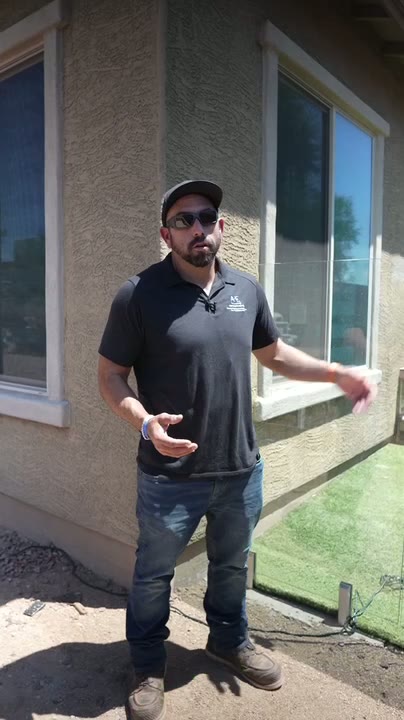
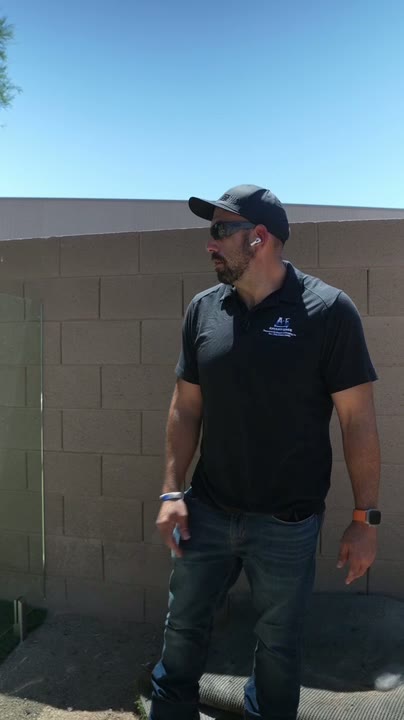
Glass vs wrought iron — in David's words