

Willow Acacia
Acacia salicina
Willow Acacia brings an upright, open canopy and soft pendulous foliage, but its roughly 15-ft width still needs real space. Structural training, litter and reseeding deserve a place in the design.
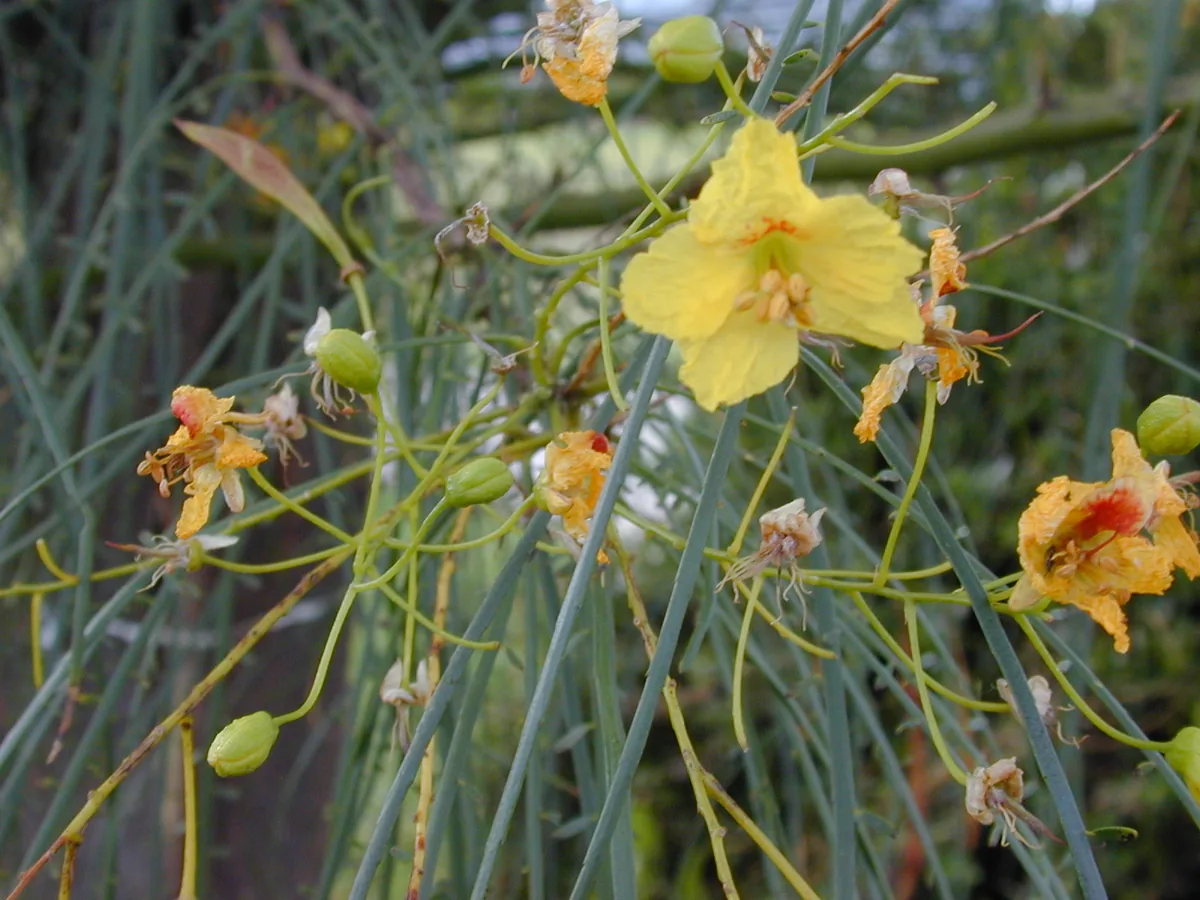
Mark Marathon / Wikimedia Commons / CC BY-SA 3.0 — license
Not sure if this plant belongs near your pool, wall, pavers, or foundation?
AE reviews microclimate, root intrusion risk, and soil compatibility.
Schedule: Deep, infrequent — typically every 10–21 days mature, more often in summer establishment.
Emitters: Multiple large emitters or bubblers placed out at the drip line, not at the trunk.
Encourages deep roots and long-term tree stability. AE designs irrigation to expand as the tree matures.
Arizona yards have very different microclimates. West-facing walls, glass, artificial turf, pavers, travertine, porcelain, and pool decking all increase reflected heat. AE considers these before confirming placement.
- Mind clearance from pool deck
- Mind clearance from walls
AE verifies pool deck, paver, foundation, wall, and utility clearances before final planting.
Quick Facts
- Plant type
- Tree
- Mature size
- About 30 ft tall by 15 ft wide
- Growth rate
- Fast
- Sun
- Full sun
- Water use
- Low
- Bloom season
- Mainly spring
- Flower color
- Cream puffballs
- Foliage
- Green, pendulous willow-like phyllodes
- Evergreen / Deciduous
- Semi-evergreen
- Thorns / spines
- None
- Litter level
- Medium
- Pool area
- Avoid nearby
- Pet/kid placement
- Use with care
- Maintenance
- Seasonal pruning
- Privacy value
- Low
- Shade value
- Medium
- Native
- Desert-adapted
About Willow Acacia
Acacia salicina is Australian, nonnative and low-desert adapted. It is not a true willow: its willow-like foliage consists of pendulous phyllodes. Plan about 30 ft tall by 15 ft wide, with fast growth and an upright, open habit. Evergreen foliage may become briefly semi-evergreen with cold or drought. Cream puffball flowers appear mainly in spring, followed by pods. Moderate litter includes phyllodes, flowers, pods and sometimes seedlings. It can reseed readily in irrigated landscapes, a management risk rather than evidence of an Arizona legal or invasive listing. Thornless stems do not make the tree universally suitable beside people, pets or pools.
Best uses: An upright tree in open landscape beds with room for the full 15-ft canopy and root zone
AE Designer Opinion
Design Uses
- Upright form in a broad landscape bed
- Soft pendulous texture away from circulation routes
- An open-canopy accent with space for structural maintenance
Care & Maintenance
- Plant in full sun; establish with deep irrigation and allow dry-down rather than turf-style shallow watering.
- Low water needs apply after establishment; expand emitters toward the canopy edge as roots develop.
- Preserve one sound leader or a deliberately spaced multi-trunk framework; remove competing or crossing attachments early.
- Avoid topping and repeated shearing; manage excessive end weight selectively with a qualified arborist.
- Monitor seedlings in irrigated beds and remove unwanted volunteers before they establish.
- Collect phyllodes, flowers and pods and reassess irrigation after cold or drought-related leaf loss.
Common Homeowner Mistakes
- Treating an upright canopy as permission to plant in a narrow side yard
- Ignoring early competing or crossing branches
- Using lawn irrigation or leaving emitters beside the trunk
- Allowing seedlings to establish in adjacent watered beds
Placement Warnings
⚠ AMWUA lists roughly 20°F hardiness, but cold duration, tree maturity, drought and exposure affect injury. Fast growth and dense end weight can increase wind damage when training is neglected; structural care is not storm-proofing. Flower and pollen exposure, seedlings and litter are site-specific concerns, not grounds for an absolute allergen or safety claim. Keep children and pets from chewing plant material; thornless does not establish ingestion safety.
- Site beyond the mature canopy from roofs, walls, pools and neighboring property.
- Exclude narrow side yards, gates and utility or service corridors that cannot accommodate the full canopy and root zone.
- Keep litter out of pool water and circulation areas; assess pollen exposure for sensitive occupants.
- Allow open root space and inspect moist trenches or hardscape conflicts rather than assuming roots are harmless.
AE reviews final placement based on sun, irrigation, drainage, mature size, and overall design.
Pairs Well With
- Desert Willow
- Jojoba
- Brittlebush
More Arizona Plants Like This


Ready to Build Your AE Plant Wishlist?
Add Willow Acacia and your other favorites to your wishlist, then send it to the AE design team for the final plant palette.