

Chilean Mesquite
Prosopis chilensis
Broad filtered shade for a genuinely large Phoenix planting area; nursery genetics, variable thorns and monsoon structure matter more than speed.
Not sure if this plant belongs near your pool, wall, pavers, or foundation?
AE reviews microclimate, root intrusion risk, and soil compatibility.
Schedule: Deep, infrequent — typically every 10–21 days mature, more often in summer establishment.
Emitters: Multiple large emitters or bubblers placed out at the drip line, not at the trunk.
Encourages deep roots and long-term tree stability. AE designs irrigation to expand as the tree matures.
Arizona yards have very different microclimates. West-facing walls, glass, artificial turf, pavers, travertine, porcelain, and pool decking all increase reflected heat. AE considers these before confirming placement.
- Mind clearance from pool deck
- Mind clearance from walls
AE verifies pool deck, paver, foundation, wall, and utility clearances before final planting.
Quick Facts
- Plant type
- Tree
- Mature size
- 20–40 ft tall, 30–40 ft wide; genetics dependent
- Growth rate
- Fast
- Sun
- Full sun
- Water use
- Low
- Bloom season
- Spring
- Flower color
- Light yellow
- Foliage
- Light blue-green, fine textured
- Evergreen / Deciduous
- Semi-deciduous
- Thorns / spines
- Mild
- Litter level
- High
- Pool area
- Avoid nearby
- Maintenance
- Seasonal pruning
- Privacy value
- Medium
- Shade value
- High
- Native
- Desert-adapted
About Chilean Mesquite
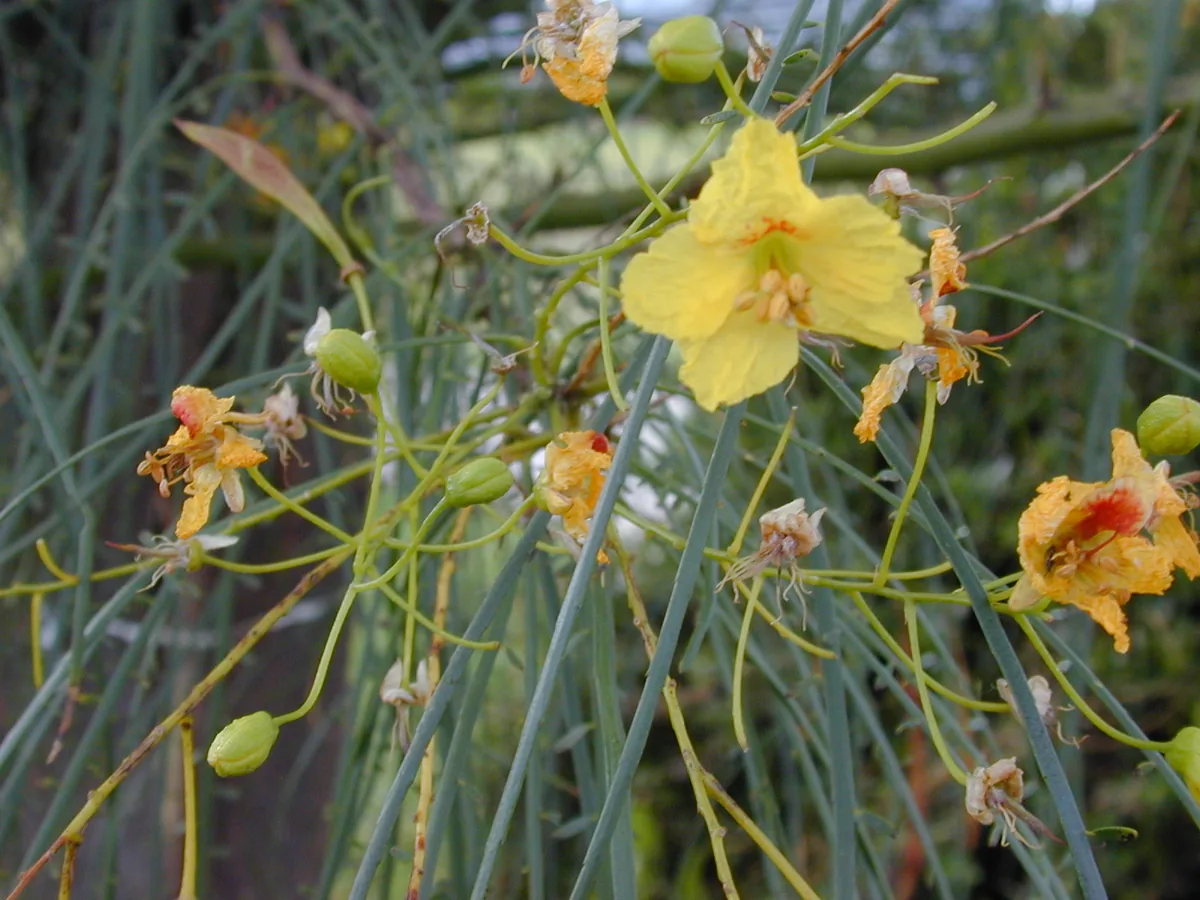
Chilean mesquite brings lacy filtered shade and fast growth, but it is not a small-yard shortcut. Prosopis chilensis is South American, not Arizona native. Nursery material sold under this name is often hybrid trade stock involving P. chilensis, P. alba and/or P. velutina; pure seed-grown identity is uncommon. Plan generally for 20–40 feet of height and a broad 30–40 foot crown, with cultivar and hybrid parentage affecting the result. Fine light blue-green foliage, light-yellow flowers and flat pods give the tree its seasonal character. Short winter dormancy and leaf drop are possible in the low desert; some South American selections retain leaves until the spring flush. Full sun and reflected heat suit it, and alkaline, low-fertility desert soil can work when drainage and establishment are sound. Cold tolerance around 10–15°F is a cautious range, not a universal promise: genetics and site exposure matter.
Best uses: Large-lot filtered shade with a broad irrigated root zone and room for seasonal cleanup
AE Designer Opinion
Design Uses
- Filtered shade on large residential lots.
- Broad desert garden canopy.
- Informal multi-trunk specimen away from circulation.
- Shade beyond a patio with room for branch development.
- Large landscape transition between irrigated and desert areas.
Care & Maintenance
- Establish with deep, wide irrigation and allow the soil to dry between waterings.
- Move irrigation outward toward the canopy/root-zone perimeter as the tree grows.
- Avoid daily shallow watering and wetting only the trunk area.
- Limit excess water and nitrogen; an over-thinned, top-heavy canopy raises monsoon windthrow risk.
- Establish durable scaffold branches early; retain balanced low branches where appropriate.
- Do not top or lion-tail; have structural concerns assessed before monsoon storms.
Common Homeowner Mistakes
- Choosing this fast tree as a small-yard shortcut.
- Daily shallow watering or emitters clustered at the trunk.
- Excess water or nitrogen that encourages a top-heavy canopy.
- Topping, lion-tailing or repeated aggressive thinning.
- Assuming a generic nursery label guarantees thornless genetics.
Placement Warnings
⚠ Thorn presence varies with nursery genetics. Where contact safety matters, specify a clonally propagated, verified thornless selection. Pods, fine leaves, flowers and pollen create cleanup and allergen potential; this is a poor zero-litter pool-deck choice.
- Reserve a roughly 30–40 ft canopy/root zone, not just a small tree well.
- Set back from pool coping and paving where pods and leaf litter accumulate.
- Plan meaningful clearance from roofs, walls and foundations as the crown expands.
- Locate utilities before planting and keep maintenance access outside tight side yards.
- Variable thorns and pollen warrant a site-specific contact and sensitivity assessment.
AE reviews final placement based on sun, irrigation, drainage, mature size, and overall design.
Pairs Well With
- Brittlebush
- Creosote Bush
- Desert Spoon
More Arizona Plants Like This


Ready to Build Your AE Plant Wishlist?
Add Chilean Mesquite and your other favorites to your wishlist, then send it to the AE design team for the final plant palette.