

Tipu Tree / Pride of Bolivia
Tipuana tipu
Tipu delivers broad shade at a genuinely large scale. Its fast growth, surface roots and seasonal cleanup make generous open ground—not an ordinary small backyard—the starting requirement.
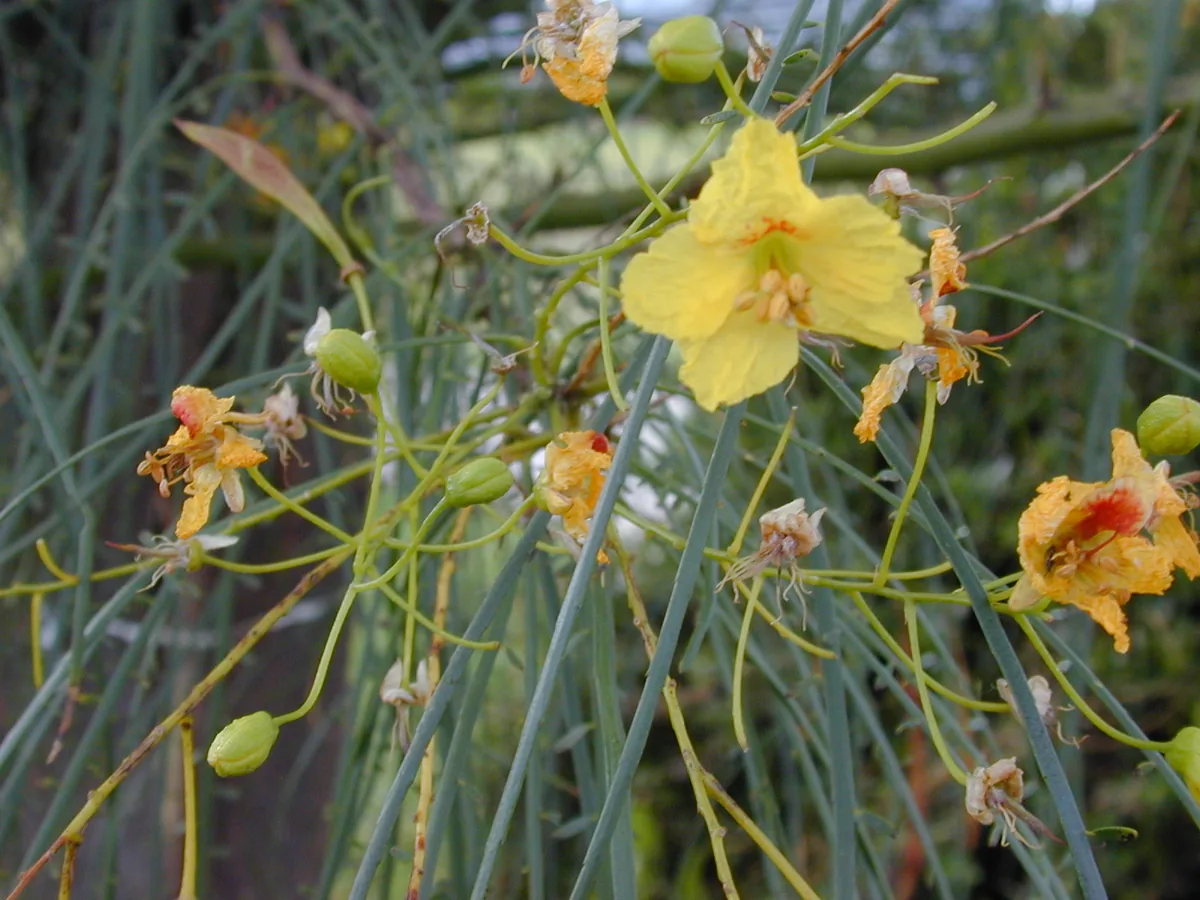
Bageense / Wikimedia Commons / CC BY-SA 4.0 — license
Not sure if this plant belongs near your pool, wall, pavers, or foundation?
AE reviews microclimate, root intrusion risk, and soil compatibility.
Schedule: Deep, infrequent — typically every 10–21 days mature, more often in summer establishment.
Emitters: Multiple large emitters or bubblers placed out at the drip line, not at the trunk.
Encourages deep roots and long-term tree stability. AE designs irrigation to expand as the tree matures.
Arizona yards have very different microclimates. West-facing walls, glass, artificial turf, pavers, travertine, porcelain, and pool decking all increase reflected heat. AE considers these before confirming placement.
- Mind clearance from pool deck
- Mind clearance from walls
AE verifies pool deck, paver, foundation, wall, and utility clearances before final planting.
Quick Facts
- Plant type
- Tree
- Mature size
- 30–50 ft tall by 40–60 ft wide; older favorable specimens can exceed this
- Growth rate
- Fast
- Sun
- Full sun
- Water use
- Moderate
- Bloom season
- Late spring to early summer
- Flower color
- Yellow
- Foliage
- Light green, compound foliage
- Evergreen / Deciduous
- Semi-deciduous
- Thorns / spines
- None
- Litter level
- High
- Pool area
- Avoid nearby
- Pet/kid placement
- Use with care
- Maintenance
- Seasonal pruning
- Privacy value
- Low
- Shade value
- High
- Native
- Desert-adapted
About Tipu Tree / Pride of Bolivia
Tipuana tipu, also called Pride of Bolivia, is native to South America, not Arizona. It is low-desert adapted, but a conservative Phoenix design range is 30–50 ft tall and 40–60 ft wide; older trees in favorable conditions can exceed that. The broad spreading canopy carries compound light-green foliage, yellow pea-family flowers in late spring and early summer, then one-seeded winged pods. Winter temperatures and irrigation influence whether the tree is semi-deciduous or deciduous, so it is not dependable year-round privacy. Flowers, leaflets and large winged pods produce substantial seasonal cleanup. Where that material reaches pool water or decking, this is a poor fit.
Best uses: Broad shade on genuinely large lots with open soil and room beyond the full mature canopy
AE Designer Opinion
Design Uses
- Broad shade over open landscape soil on large lots
- A spreading canopy where seasonal litter is manageable
- A distant shade backdrop outside pool and hardscape conflict zones
Care & Maintenance
- Establish in full sun with deep irrigation over a broad, outward-expanding watering footprint.
- Low-to-moderate water after establishment does not eliminate irrigation during Phoenix establishment or extreme heat; allow soil dry-down and adjust to conditions.
- Avoid daily shallow watering, which encourages poor rooting; move emitters outward as the canopy grows.
- Work with an ISA-qualified arborist to establish one durable trunk/leader and well-spaced branches while young.
- Avoid topping, lion-tailing and repeated end-weight growth; inspect attachments after damaging wind.
- Monitor volunteers from wind-dispersed seed and remove them where unwanted; collect seasonal flowers, leaflets and pods.
Common Homeowner Mistakes
- Buying quick shade for an ordinary small backyard
- Keeping irrigation at the trunk or watering shallowly every day
- Topping or lion-tailing instead of early structural training
- Assuming drought tolerance means no irrigation in extreme heat
Placement Warnings
⚠ Large surface roots can lift or conflict with hardscape and exploit existing moisture or defects; this does not mean they break every sound pipe or foundation. Fast growth and poor branch attachments can increase wind failure risk, without making every Tipu structurally unsafe. Cold guidance around 25°F is conditional on event duration, maturity and microclimate, not a survival guarantee. It has invasive or weed status in some climates outside Arizona; that is not a universal Arizona invasive classification. Monitor wind-dispersed seed and volunteers where they occur. No ingestion safety is established here for children or pets.
- Keep generous setbacks from pools, slabs, walls and narrow streetscapes; design for roots as well as crown spread.
- Keep sewer and water lines, septic systems and neighboring property outside foreseeable conflicts; evaluate existing defects and moisture sources.
- Leave roofs, gates, utilities and maintenance access clear of the mature canopy; obtain project-specific clearance requirements.
- Keep flowers, leaflets and winged pods away from pool water and decking.
AE reviews final placement based on sun, irrigation, drainage, mature size, and overall design.
Pairs Well With
- Desert Willow
- Jojoba
- Brittlebush
More Arizona Plants Like This


Ready to Build Your AE Plant Wishlist?
Add Tipu Tree / Pride of Bolivia and your other favorites to your wishlist, then send it to the AE design team for the final plant palette.