

Sweet Acacia
Vachellia farnesiana
Sweet Acacia offers fragrant golden flowers and a natural vase-shaped framework. Small paired thorns, pollen sensitivity and pod cleanup mean it belongs away from narrow walks and active-use edges.
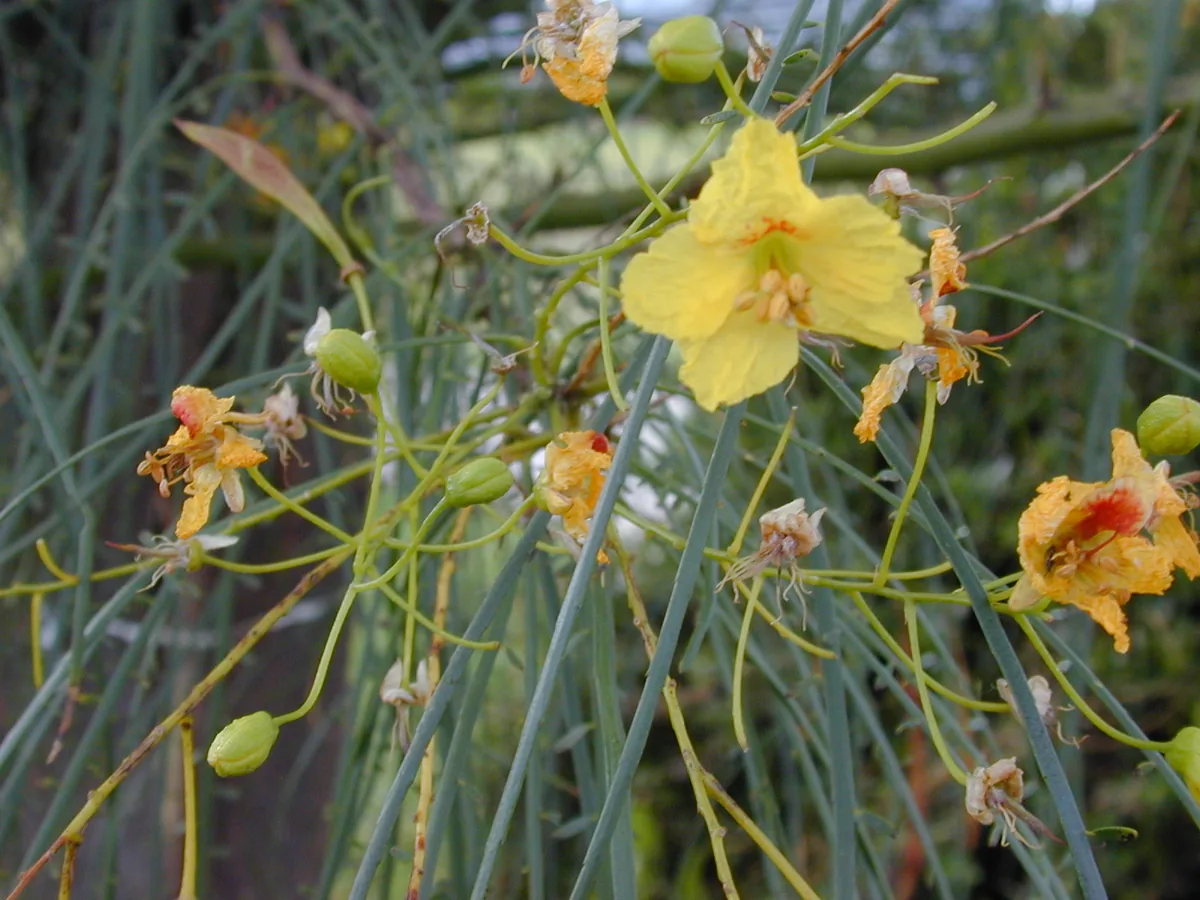
Zeynel Cebeci / Wikimedia Commons / CC BY-SA 4.0 — license
Not sure if this plant belongs near your pool, wall, pavers, or foundation?
AE reviews microclimate, root intrusion risk, and soil compatibility.
Schedule: Deep, infrequent — typically every 10–21 days mature, more often in summer establishment.
Emitters: Multiple large emitters or bubblers placed out at the drip line, not at the trunk.
Encourages deep roots and long-term tree stability. AE designs irrigation to expand as the tree matures.
Arizona yards have very different microclimates. West-facing walls, glass, artificial turf, pavers, travertine, porcelain, and pool decking all increase reflected heat. AE considers these before confirming placement.
- Mind clearance from pool deck
- Mind clearance from walls
AE verifies pool deck, paver, foundation, wall, and utility clearances before final planting.
Quick Facts
- Plant type
- Tree
- Mature size
- About 20 ft tall by 20 ft wide
- Growth rate
- Moderate
- Sun
- Full sun
- Water use
- Low
- Bloom season
- Late winter through spring
- Flower color
- Golden-yellow puffballs
- Foliage
- Fine-textured green
- Evergreen / Deciduous
- Semi-evergreen
- Thorns / spines
- Sharp
- Litter level
- Medium
- Pool area
- Avoid nearby
- Pet/kid placement
- Use with care
- Maintenance
- Seasonal pruning
- Privacy value
- Low
- Shade value
- Medium
- Native
- Desert-adapted
About Sweet Acacia
Vachellia farnesiana is the accepted name; Acacia farnesiana remains a widely encountered synonym. Nursery names A. smallii and A. minuta can reflect taxonomic or regional treatment: verify the plant identity and provenance rather than silently equating those labels. Its native range extends from the southern US through tropical America. It is regionally native, but every nursery selection should not be treated as identical Sonoran provenance. Plan roughly 20 ft tall by 20 ft wide, vase-shaped and often multi-trunked. Fine-textured foliage is evergreen to semi-evergreen depending on cold and drought. Fragrant golden-yellow puffballs are strongest in late winter through spring, with bees and other wildlife using the flowers when conditions support them. Dark pods and leaf and flower drop create moderate cleanup.
Best uses: Naturalistic open landscape beds with a full 20-ft spread and separation from contact routes
AE Designer Opinion
Design Uses
- A vase-shaped accent in an open naturalistic bed
- Seasonal golden flowers away from sensitive circulation edges
- Fine-textured canopy with room for selective pruning
Care & Maintenance
- Plant in full sun and deeply establish before relying on low water needs.
- Widen the irrigation footprint as the tree grows; allow dry-down between deep waterings.
- Preserve the natural vase-shaped multi-trunk character through selective structural pruning.
- Avoid shearing, topping, trunk stripping or over-raising into a fragile lollipop.
- Use protective gloves around paired thorns and collect fallen pods from accessible areas.
- Confirm nursery identity and regional provenance before final selection; monitor cold and drought response.
Common Homeowner Mistakes
- Assuming every nursery label means identical Sonoran provenance
- Planting thorns beside a pet route or gate
- Over-raising or stripping trunks to force a lollipop shape
- Confusing wildlife use with established ingestion safety
Placement Warnings
⚠ Small but real paired thorns can puncture or scratch at contact points. Fragrance and pollen can bother sensitive people. AMWUA hardiness around 10°F is guidance, not a guarantee; event duration, maturity and exposure govern injury. Wildlife value is conditional, not a promise. Keep fallen pods and seed away from livestock, pets and children unless a qualified source has established safety; this is not an edibility recommendation.
- Keep paired thorns away from narrow walks, play zones, pet routes, gates, pool coping and maintenance access.
- Allow the full 20-ft canopy and root space beyond walls, paving, utilities and neighboring property; verify clearances for the site.
- Avoid pool-adjacent placements where thorns, pods, flowers and foliage enter water or circulation areas.
- Locate fragrance away from sensitive occupants and keep fallen seed and pods inaccessible to livestock, pets and children.
AE reviews final placement based on sun, irrigation, drainage, mature size, and overall design.
Pairs Well With
- Desert Willow
- Jojoba
- Brittlebush
More Arizona Plants Like This


Ready to Build Your AE Plant Wishlist?
Add Sweet Acacia and your other favorites to your wishlist, then send it to the AE design team for the final plant palette.