
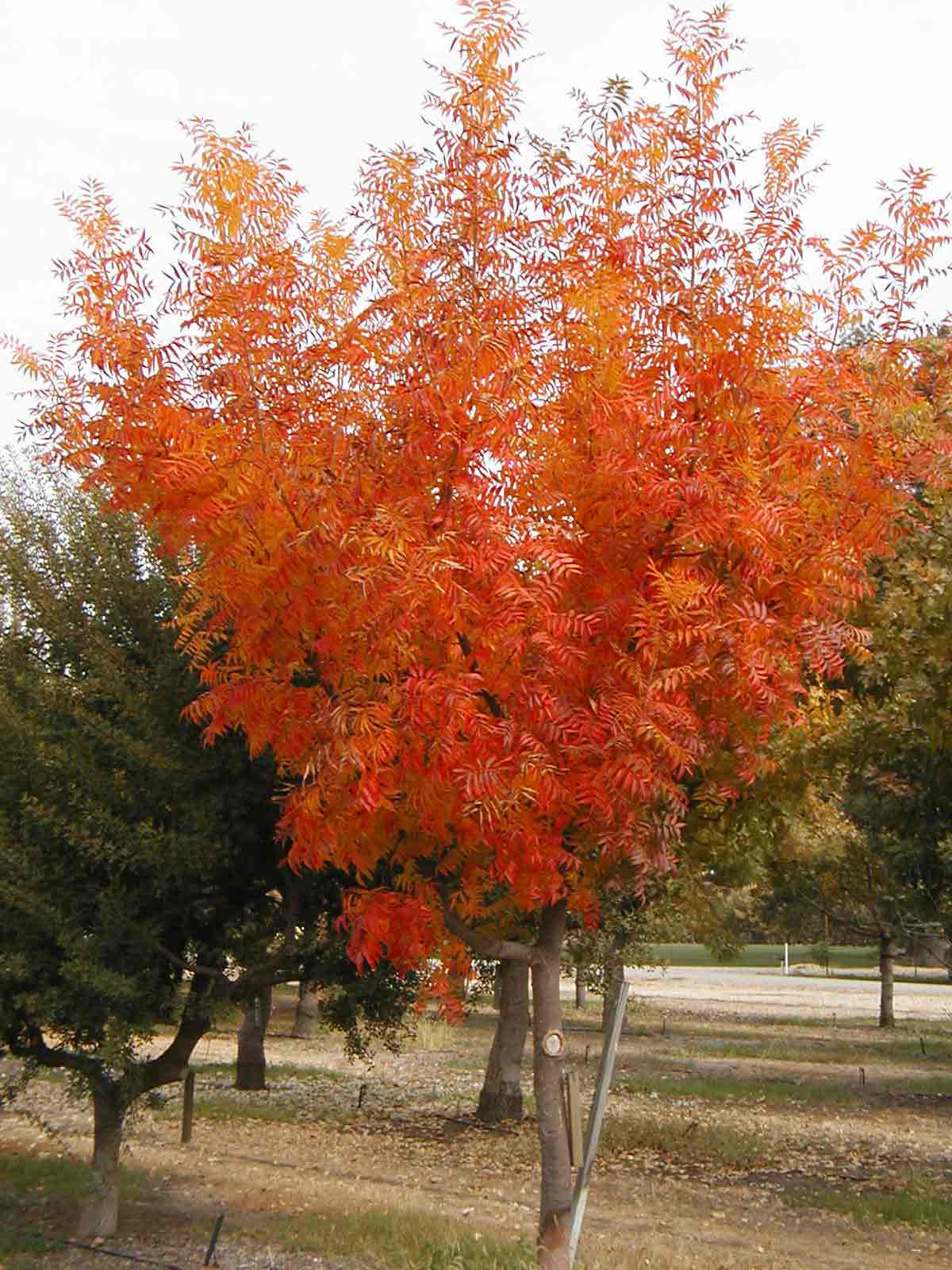
Chinese Pistache
Pistacia chinensis
The best fall color available to a Phoenix yard, on a thornless 40-foot shade tree — as long as you can give it more water than a desert native and the room for a 35-foot crown.
Not sure if this plant belongs near your pool, wall, pavers, or foundation?
AE reviews microclimate, root intrusion risk, and soil compatibility.
Schedule: Deep, infrequent — typically every 10–21 days mature, more often in summer establishment.
Emitters: Multiple large emitters or bubblers placed out at the drip line, not at the trunk.
Encourages deep roots and long-term tree stability. AE designs irrigation to expand as the tree matures.
Arizona yards have very different microclimates. West-facing walls, glass, artificial turf, pavers, travertine, porcelain, and pool decking all increase reflected heat. AE considers these before confirming placement.
- Mind clearance from pool deck
- Mind clearance from walls
AE verifies pool deck, paver, foundation, wall, and utility clearances before final planting.
Quick Facts
- Plant type
- Tree
- Mature size
- 40 ft tall, 35 ft wide
- Growth rate
- Moderate
- Sun
- Full sun
- Water use
- Moderate
- Bloom season
- Spring
- Flower color
- Green (nonshowy)
- Foliage
- Dark green, strong fall color
- Evergreen / Deciduous
- Deciduous
- Thorns / spines
- None
- Litter level
- Medium
- Pool area
- Use with care
- Maintenance
- Seasonal pruning
- Privacy value
- Medium
- Shade value
- High
- Native
- Desert-adapted
About Chinese Pistache
Chinese Pistache is a non-native adapted landscape tree, and it is honest to say so up front: AMWUA places its origin in China and the Philippines, not the Sonoran Desert. What it offers in exchange is a rounded 40-foot-tall, 35-foot-wide canopy of dark-green foliage that turns genuinely brilliant in fall, then drops to let winter sun reach the house and patio. It is thornless, moderate-growing, and hardy to about 10°F, so frost is not a concern here. The cost side is water and cleanup. This tree wants moderate irrigation — meaningfully more than a mesquite or palo verde — so it belongs in a zone that is already being watered, not dropped onto a very-low-water valve. Male trees carry allergenic pollen, female trees carry red fruit that ends up on whatever is below, and the autumn leaf drop is a real seasonal task. Sited with room and water, it is one of the few trees that gives a desert yard a four-season feel.
Best uses: Large deciduous shade tree for turf-adjacent and higher-water zones, fall color in front yards and park-like back yards, summer canopy over patios with winter sun let back in
AE Designer Opinion
Design Uses
- Primary shade canopy for park-like back yards
- Fall color feature in a front yard or entry lawn area
- Summer shade over a patio that benefits from winter sun
- Turf-adjacent and moderate-water planting zones
- Large-property street-side or driveway shade
- Seasonal-interest planting for homeowners who miss four seasons
Care & Maintenance
- Provide moderate, deep irrigation — more than a native desert tree needs
- Deep-soak on a consistent schedule through establishment, then widen intervals
- Invest in structural pruning while young to build a balanced rounded crown
- Prune in the dormant season, not in peak summer heat
- Plan an annual fall leaf cleanup, plus fruit cleanup under female trees
- Keep emitters out toward the drip line and expand them as the canopy grows
Common Homeowner Mistakes
- Treating it like a desert tree and underwatering it into thin, stressed growth
- Planting it where a 40-foot tree will collide with a roof, wall or power line
- Ignoring structural pruning in the early years of a broad rounded crown
- Putting it directly over a pool or spa and battling autumn leaves in the water
- Expecting evergreen screening from a tree that is bare for part of the year
Placement Warnings
⚠ Uses moderate water — noticeably more than very-low-water native trees. Male trees produce allergenic pollen; female trees can carry red fruit that drops. Expect a full deciduous leaf cleanup each fall and allow a 35-foot mature spread.
- Allow the full 35-foot canopy spread — not a side-yard or narrow-bed tree
- Plan for a heavy deciduous leaf drop every fall over whatever sits beneath it
- Female trees can carry red fruit that stains and litters hardscape
- Male pollen is allergenic; weigh that near patios, entries and bedroom windows
- Set back from pools — leaf and fruit drop mean recurring water cleanup
- Needs moderate irrigation; do not place it on a very-low-water native valve
AE reviews final placement based on sun, irrigation, drainage, mature size, and overall design.
Pairs Well With
- Arizona Rosewood
- Trailing Rosemary
- Damianita
- Brittlebush
More Arizona Plants Like This


Ready to Build Your AE Plant Wishlist?
Add Chinese Pistache and your other favorites to your wishlist, then send it to the AE design team for the final plant palette.