
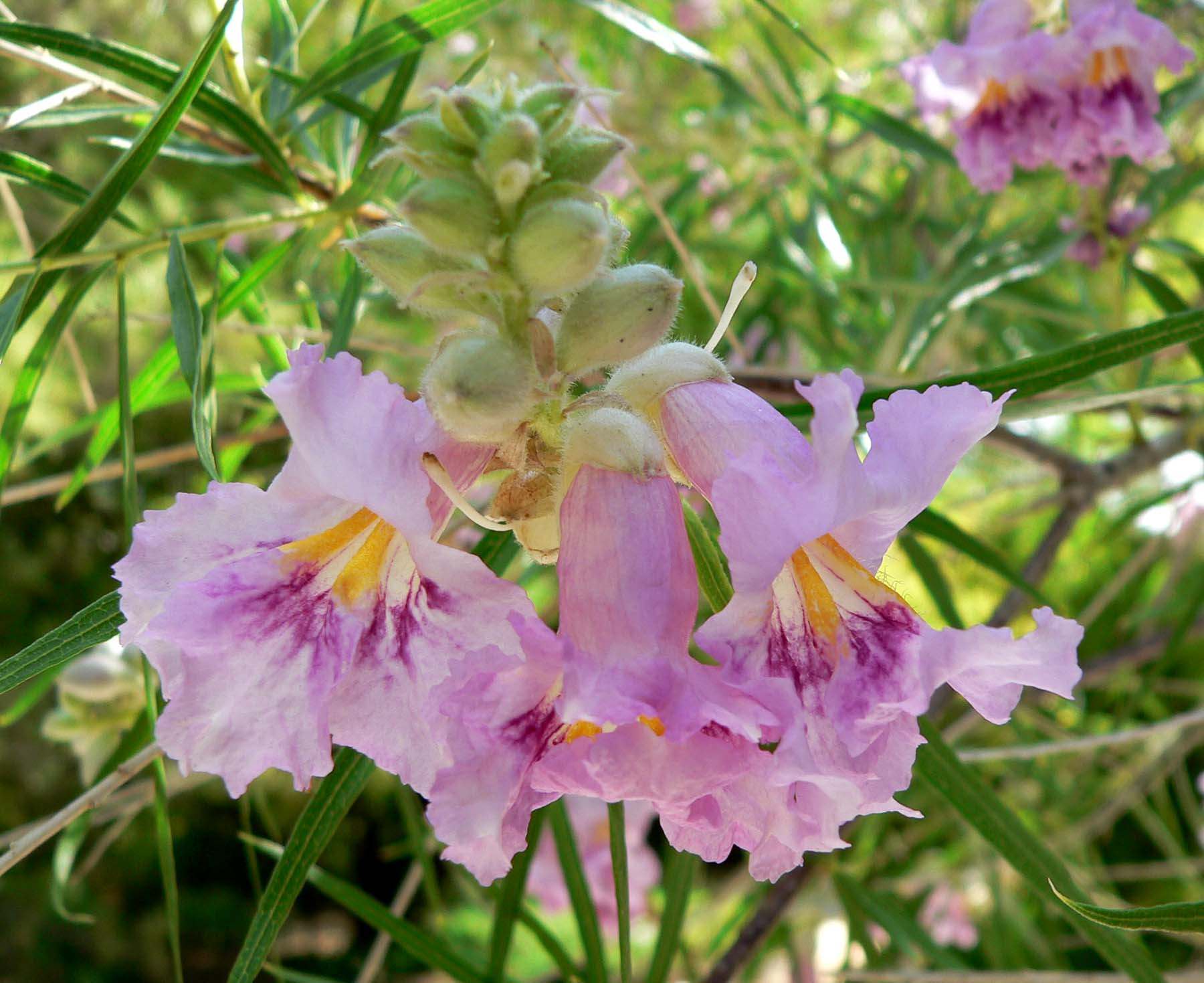
Desert Willow
Chilopsis linearis
Desert Willow is a soft-looking flowering desert tree that works well when homeowners want seasonal color, lighter texture, and a less harsh desert appearance.
Stan Shebs / Wikimedia Commons / CC BY-SA 3.0 — license
Not sure if this plant belongs near your pool, wall, pavers, or foundation?
AE reviews microclimate, root intrusion risk, and soil compatibility.
Schedule: Deep, infrequent — typically every 10–21 days mature, more often in summer establishment.
Emitters: Multiple large emitters or bubblers placed out at the drip line, not at the trunk.
Encourages deep roots and long-term tree stability. AE designs irrigation to expand as the tree matures.
Arizona yards have very different microclimates. West-facing walls, glass, artificial turf, pavers, travertine, porcelain, and pool decking all increase reflected heat. AE considers these before confirming placement.
- Mind clearance from pool deck
- Mind clearance from walls
AE verifies pool deck, paver, foundation, wall, and utility clearances before final planting.
Quick Facts
- Plant type
- Tree
- Mature size
- Small to medium tree (15–25 ft tall, 10–15 ft wide)
- Growth rate
- Moderate
- Sun
- Full sun
- Water use
- Low
- Bloom season
- Spring through summer depending on variety and conditions
- Flower color
- Pink, lavender, burgundy, or white depending on variety
- Foliage
- Green
- Evergreen / Deciduous
- Deciduous
- Thorns / spines
- None
- Litter level
- Medium
- Pool area
- Good with placement
- Care
- Low
- Privacy value
- Low
- Shade value
- Medium
- Native
- Southwest native
About Desert Willow
A graceful flowering tree that brings color and pollinators into desert landscapes. Deciduous, so plan for a seasonal bare period.
Best uses: Patio accent, front yard feature, backyard color, soft desert landscape, courtyards, pollinator-friendly designs, around boulders, transitional areas
AE Designer Opinion
Design Uses
- Patio accent
- Front yard feature
- Backyard color
- Soft desert landscape
- Courtyards
- Pollinator-friendly designs
- Around boulders
- Transitional areas
Care & Upkeep
- Low water once established
- Light structural pruning in winter
- Plan for seasonal flower and seed pod cleanup
- Generally durable, but seasonal appearance varies
Common Homeowner Mistakes
- Expecting it to act as a privacy screen — it's deciduous
- Planting in a tight space without room for mature canopy
- Overwatering once established
Placement Warnings
- Deciduous appearance
- Seasonal flower and seed litter
- Not a dense privacy screen
- Allow room for mature canopy
AE reviews final placement based on sun, irrigation, drainage, mature size, and overall design.
Pairs Well With
- Red Yucca
- Deer Grass
- Damianita
- Blue Agave
- Golden Barrel Cactus
- Texas Sage
- Lantana
More Arizona Plants Like This
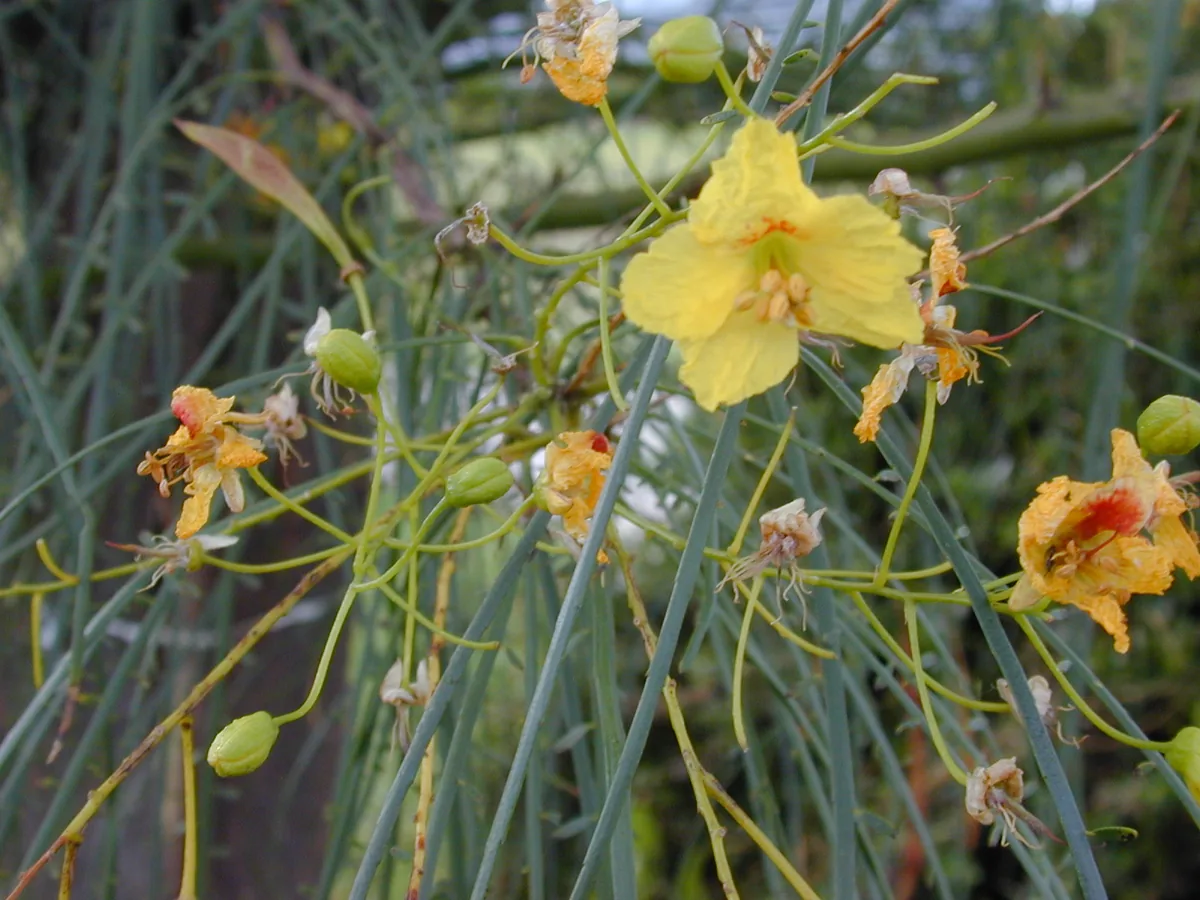


What to know about planting desert willow
Desert willow is a Southwest native flowering tree for homeowners who want seasonal color and a softer desert look. It grows into a small to medium tree, takes full sun and low water, has no thorns, and blooms in pink, lavender, burgundy or white depending on the variety. It is deciduous, so plan for a seasonal bare period, and it drops a medium amount of litter. Use it as an accent tree, not as a privacy hedge.
Placement is where it succeeds or struggles. Its root concern is moderate, so mind clearances from the pool deck and walls; AE verifies pool deck, paver, foundation, wall and utility clearances before final planting. Reflected heat from west-facing walls, glass, turf, pavers and pool decking changes how a tree performs, so AE checks the microclimate before confirming where it goes. Water deeply and infrequently, with emitters or bubblers out at the drip line rather than at the trunk, and plan irrigation to expand as the tree matures.
Good uses include a patio accent, a front-yard feature, courtyards, around boulders and pollinator-friendly beds. For a tree with a different shape or evergreen habit nearby, compare willow acacia and desert museum palo verde. For a sculptural low accent under or beside it, desert spoon adds soft texture with low care.
FAQ
Is desert willow evergreen?
No. It is deciduous, so expect a seasonal bare period.
Can it go near a pool?
Yes, with placement; mind clearances from the deck and walls and expect some litter.
How should I water it?
Deeply and infrequently, at the drip line rather than the trunk.
Is it a good privacy tree?
No. Use it as an accent tree.
Ready to Build Your AE Plant Wishlist?
Add Desert Willow and your other favorites to your wishlist, then send it to the AE design team for the final plant palette.