

Cascalote
Tara cacalaco
An evergreen feature tree that throws fragrant yellow flower spikes when the rest of the yard is asleep — vase-shaped, 20 by 20 feet, and genuinely thorny.
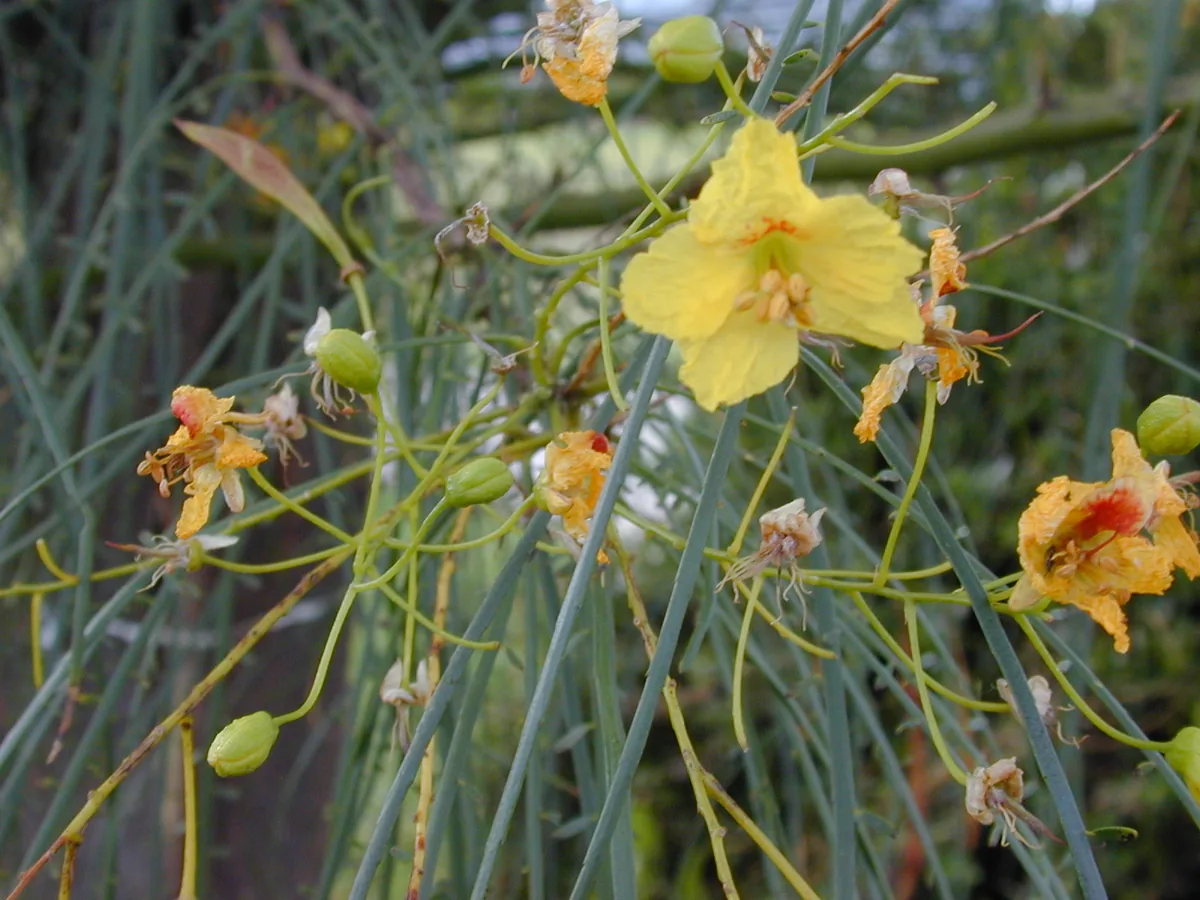
Dick Culbert / Wikimedia Commons / CC BY 2.0 — license
Not sure if this plant belongs near your pool, wall, pavers, or foundation?
AE reviews microclimate, root intrusion risk, and soil compatibility.
Schedule: Deep, infrequent — typically every 10–21 days mature, more often in summer establishment.
Emitters: Multiple large emitters or bubblers placed out at the drip line, not at the trunk.
Encourages deep roots and long-term tree stability. AE designs irrigation to expand as the tree matures.
Arizona yards have very different microclimates. West-facing walls, glass, artificial turf, pavers, travertine, porcelain, and pool decking all increase reflected heat. AE considers these before confirming placement.
- Mind clearance from pool deck
- Mind clearance from walls
AE verifies pool deck, paver, foundation, wall, and utility clearances before final planting.
Quick Facts
- Plant type
- Tree
- Mature size
- 20 ft tall, 20 ft wide
- Growth rate
- Slow to moderate
- Sun
- Full sun
- Water use
- Low
- Bloom season
- Winter–spring
- Flower color
- Yellow
- Foliage
- Dark green
- Evergreen / Deciduous
- Evergreen
- Thorns / spines
- Sharp
- Litter level
- Medium
- Pool area
- Use with care
- Maintenance
- Moderate
- Privacy value
- Medium
- Shade value
- Medium
- Native
- Desert-adapted
About Cascalote
Cascalote does something very few Phoenix trees do: it puts on a real show in winter. Tall, fragrant yellow flower spikes rise above dark-green foliage from winter into spring, on an evergreen tree that holds a clean vase shape to roughly 20 feet tall and 20 feet wide. Water use is low and AMWUA rates it hardy to about 20°F, which covers most West Valley winters with occasional attention in a hard freeze. It is native to central and southern Mexico rather than the Sonoran Desert, so it reads a little lusher and more ornamental than a palo verde. Two things decide whether you will love it: the medium thorns along the branches, and the seasonal pod and flower drop after the bloom. Placed as a viewed feature — in a courtyard, off an entry, framed by a wall — it is spectacular. Placed along a narrow walk or at a pool edge, it becomes something you manage instead of something you enjoy.
Best uses: Winter and early-spring color as a courtyard or entry feature tree, evergreen structure in a low-water bed, focal planting where the flower spikes can be seen from indoors
AE Designer Opinion
Design Uses
- Courtyard feature tree with winter color
- Entry and front-yard focal planting viewed from inside
- Evergreen structure in a low-water desert bed
- Framed accent against a stucco or block wall
- Seasonal-color planting for properties that are occupied in winter
- Statement tree in a gravel-and-boulder composition
Care & Maintenance
- Deep, infrequent watering; low water use once established
- Deep-soak on a regular cycle through the first summer, then taper
- Lift low branches early so thorny growth sits above head height
- Prune after bloom rather than during the flowering window
- Clean up spent flower spikes and pods from hardscape, turf and pool decks
- Wear gloves and eye protection when pruning
- Watch tender growth during hard freezes and protect young trees if needed
Common Homeowner Mistakes
- Using it as a patio or walkway tree and discovering the thorns the hard way
- Planting it in a narrow side yard that cannot hold a 20-foot canopy
- Letting low branches stay unlifted so the thorns sit at face and arm height
- Overwatering it like a lawn tree instead of running deep, infrequent cycles
- Assuming the bloom is fall color — it is a winter-to-spring flowering tree
Placement Warnings
⚠ Medium thorns on the branches. Expect seasonal pod and spent-flower litter after bloom. Mature spread reaches about 20 feet.
- Thorny branches — never plant along narrow walkways, gates or brush-past routes
- Keep away from play areas and anywhere children run a shortcut
- Set back from pool coping; flower and pod drop lands in the water
- Allow the full 20-foot vase-shaped spread in the bed layout
- Plan for seasonal cleanup under the canopy after the winter-to-spring bloom
- Cold snaps below its roughly 20°F tolerance can damage tender growth
AE reviews final placement based on sun, irrigation, drainage, mature size, and overall design.
Pairs Well With
- Little Leaf Cordia
- Baja Fairy Duster
- Trailing Rosemary
- Damianita
More Arizona Plants Like This


Ready to Build Your AE Plant Wishlist?
Add Cascalote and your other favorites to your wishlist, then send it to the AE design team for the final plant palette.