

Whale's Tongue Agave
Agave ovatifolia
A solitary, non-offsetting blue-gray agave with broad cupped leaves — the widest-footprint rosette AE plants, and a one-bloom lifecycle.
Not sure if this plant belongs near your pool, wall, pavers, or foundation?
AE reviews microclimate, root intrusion risk, and soil compatibility.
Schedule: Very infrequent — often monthly or less once established. None when soil is cool and damp.
Emitters: Single low-flow emitter offset from base, or hand-watering only.
Overwatering is the #1 cause of cactus and agave loss. AE designs cactus zones on their own valve.
Arizona yards have very different microclimates. West-facing walls, glass, artificial turf, pavers, travertine, porcelain, and pool decking all increase reflected heat. AE considers these before confirming placement.
- Low root impact
AE verifies pool deck, paver, foundation, wall, and utility clearances before final planting.
Quick Facts
- Plant type
- Agave
- Mature size
- 2–5 ft tall, 3–7 ft wide; plan for a 6–8 ft footprint
- Growth rate
- Moderate
- Sun
- Full sun
- Water use
- Low
- Bloom season
- Once, at maturity
- Flower color
- Greenish-yellow
- Foliage
- Blue-gray
- Evergreen / Deciduous
- Evergreen
- Thorns / spines
- Sharp
- Litter level
- Low
- Pool area
- Use with care
- Pet/kid placement
- Use with care
- Maintenance
- Low
- Privacy value
- Low
- Shade value
- Low
- Native
- Desert-adapted
About Whale's Tongue Agave
Whale’s Tongue Agave comes from high-elevation northeastern Mexico and behaves differently from most agaves in a Valley landscape: it stays solitary and does not offset, so what you plant is the plant you keep. San Marcos Growers lists a mature size of 3 to 5 feet tall by 6 to 8 feet wide, full sun, low water, and unusual cold hardiness for an agave — commonly cited in the 0 to 10°F range and demonstrated by the source around 4 to 5°F. Design-relevant ranges run about 2 to 5 feet tall and 3 to 7 feet wide depending on age and conditions, but residential planning should reserve the broad 6 to 8 foot footprint. The broad, short, deeply cupped blue-gray leaves carry small marginal teeth and an approximately one-inch dark terminal spine. At maturity the plant sends a greenish-yellow stalk roughly 10 to 14 feet tall, and that bloom is a one-time lifecycle event for the solitary rosette.
Best uses: A single large blue-gray focal rosette in a major open space with the full 6–8 ft footprint, service access and stalk clearance reserved
AE Designer Opinion
Design Uses
- Dominant focal rosette in a wide gravel forecourt
- End-of-sightline anchor in a large desert bed
- Broad wall-side composition with boulders
- Commercial or estate-scale modern planting
- Single specimen in an open decomposed-granite panel
Care & Maintenance
- Plant in full sun with fast-draining soil
- Water deeply and infrequently with a complete dry-down between cycles
- Keep drip emitters and organic mulch away from the crown
- Remove damaged leaves with tools and eye protection
- Expect exceptional cold tolerance for an agave in Valley winters
- Plan a replacement specimen after the rosette blooms
Common Homeowner Mistakes
- Planting it in a courtyard or narrow bed it will outgrow
- Expecting pups to replace the rosette — it does not offset
- Spacing to the nursery container instead of the mature width
- Keeping the root zone wet with frequent irrigation
- Trimming leaf tips instead of designing clearance
- Treating the once-in-a-lifetime bloom as routine seasonal color
Placement Warnings
⚠ Small marginal teeth and an approximately one-inch dark terminal spine make this a no-contact plant. Keep the full mature footprint back from walks, gates, seating, play areas, pet routes, pool traffic and hand-level planters.
- Reserve a 6–8 ft mature footprint plus maintenance access
- Keep marginal teeth and terminal spines away from walks and gates
- Keep away from seating, play areas, pet routes and pool traffic
- Do not use it at hand height in a raised planter
- Allow overhead clearance for a 10–14 ft flower stalk
- Avoid chronically wet or frequently irrigated beds
AE reviews final placement based on sun, irrigation, drainage, mature size, and overall design.
Pairs Well With
- Brittlebush
- Damianita
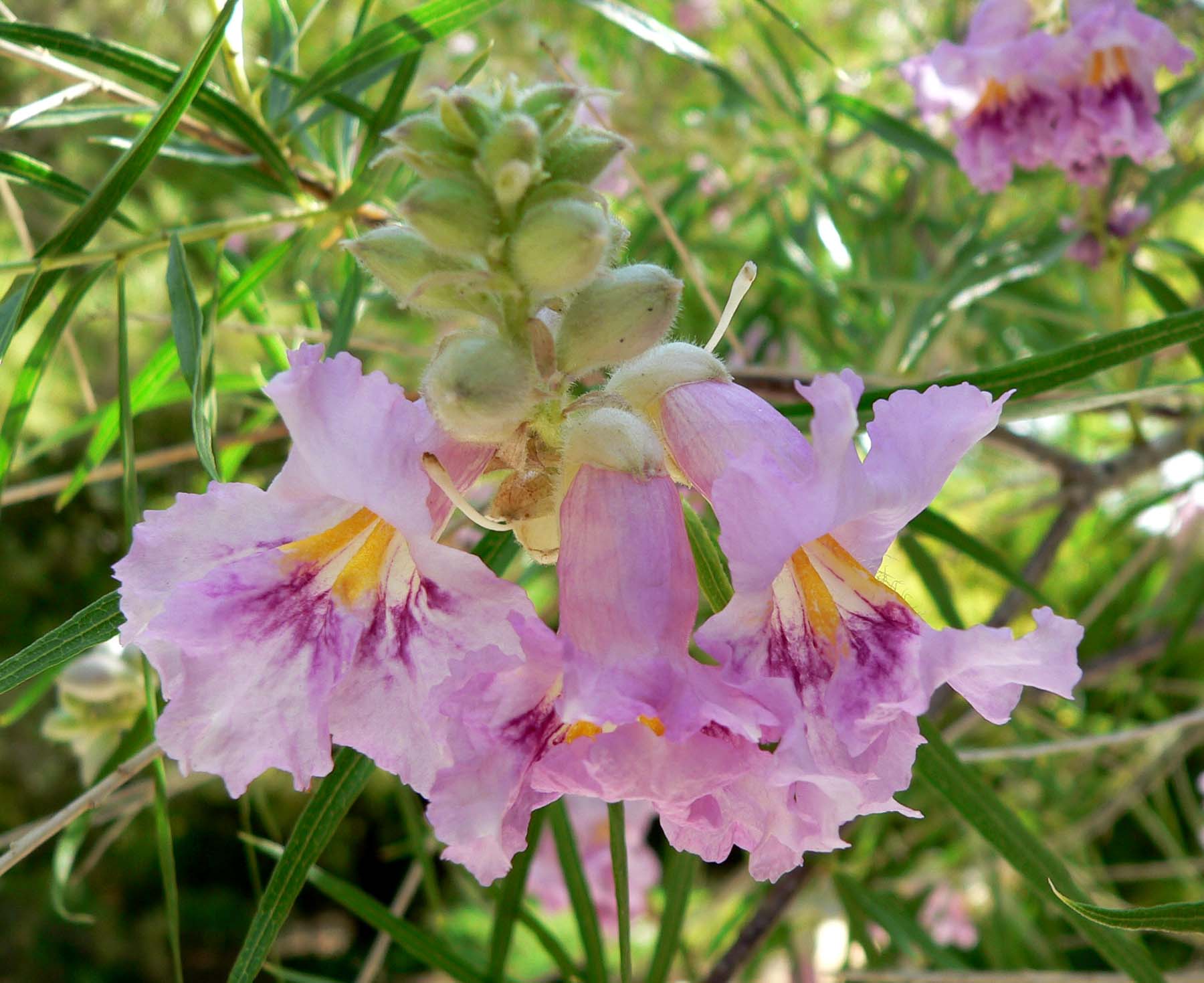
- Desert Willow
- Golden Barrel Cactus
More Arizona Plants Like This


Ready to Build Your AE Plant Wishlist?
Add Whale's Tongue Agave and your other favorites to your wishlist, then send it to the AE design team for the final plant palette.