

Texas Mountain Laurel
Dermatophyllum secundiflorum
A slow, dense evergreen small tree — still widely sold as Sophora secundiflora — that hangs grape-scented purple flower clusters over a courtyard every spring.
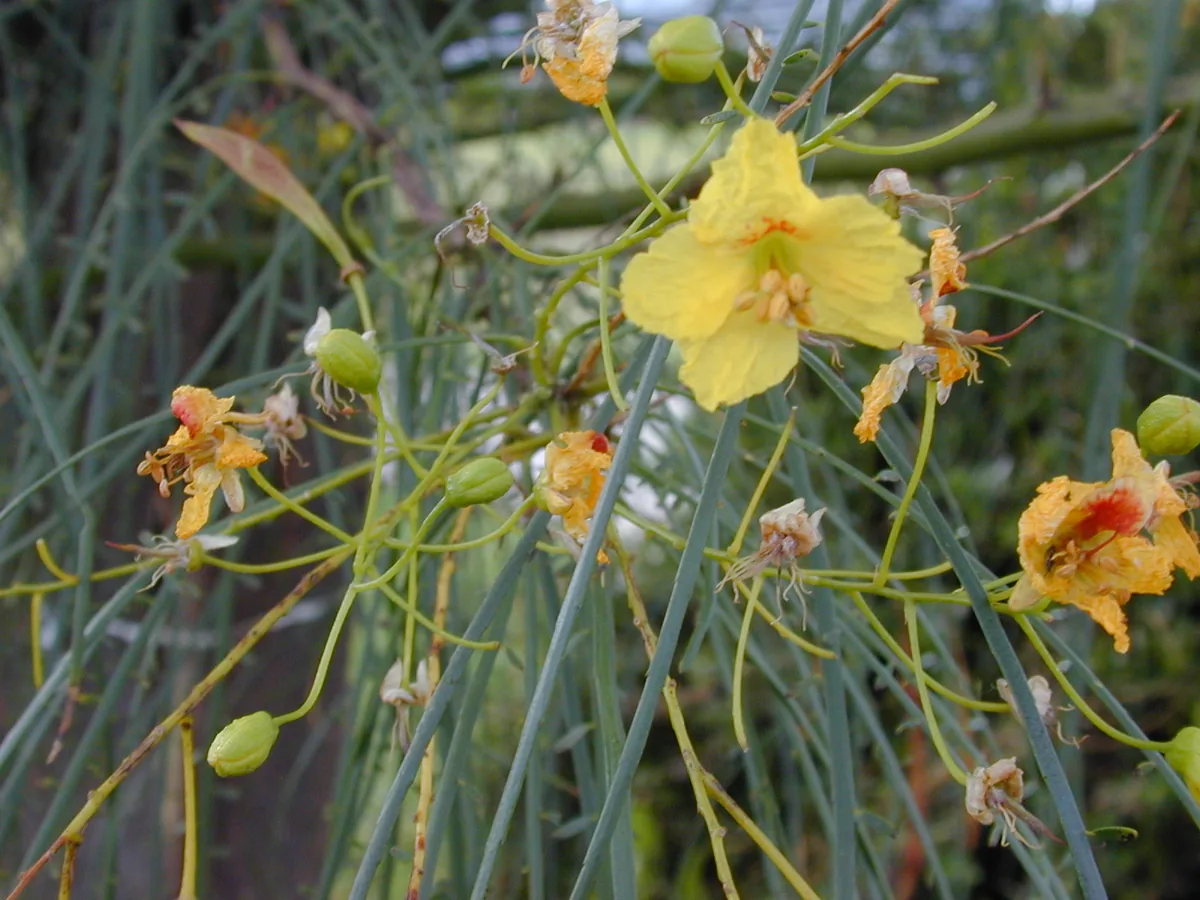
Kretyen at Flickr / Wikimedia Commons / CC BY 2.0 — license
Not sure if this plant belongs near your pool, wall, pavers, or foundation?
AE reviews microclimate, root intrusion risk, and soil compatibility.
Schedule: Deep, infrequent — typically every 10–21 days mature, more often in summer establishment.
Emitters: Multiple large emitters or bubblers placed out at the drip line, not at the trunk.
Encourages deep roots and long-term tree stability. AE designs irrigation to expand as the tree matures.
Arizona yards have very different microclimates. West-facing walls, glass, artificial turf, pavers, travertine, porcelain, and pool decking all increase reflected heat. AE considers these before confirming placement.
- Mind clearance from pool deck
- Mind clearance from walls
AE verifies pool deck, paver, foundation, wall, and utility clearances before final planting.
Quick Facts
- Plant type
- Tree
- Mature size
- 10 ft tall, 8 ft wide
- Growth rate
- Slow
- Sun
- Full sun
- Water use
- Low
- Bloom season
- Spring
- Flower color
- Purple
- Foliage
- Dark green
- Evergreen / Deciduous
- Evergreen
- Thorns / spines
- None
- Litter level
- Low
- Pool area
- Good with placement
- Maintenance
- Low
- Privacy value
- Medium
- Shade value
- Medium
- Native
- Desert-adapted
About Texas Mountain Laurel
Texas Mountain Laurel is one of the few plants that gives a Phoenix yard glossy evergreen structure, a memorable flower and a genuinely small footprint. The currently accepted botanical name is Dermatophyllum secundiflorum, though nurseries and older references still list it as Sophora secundiflora. AMWUA describes it as hardy to about 5°F, low in water use, slow growing, and maturing near 10 feet tall and 8 feet wide with an upright, dense form, dark green evergreen foliage and purple spring flower clusters that pollinators work. Litter is low, there are no thorns, and AMWUA flags it as rabbit resistant. One fact belongs in every conversation before it goes in the ground: the seeds inside the woody pods are poisonous if eaten. That is a placement consideration, not a reason to avoid the plant — we simply keep it away from play areas and dog runs and remove pods where small children use the yard. The other honest limit is patience: slow growth means you buy the size you want rather than waiting for it.
Best uses: Slow-growing evergreen flowering small tree for courtyards, entries and narrow front-yard beds that need year-round structure
AE Designer Opinion
Design Uses
- Evergreen flowering accent in courtyards and entry alcoves
- Small specimen tree for narrow front-yard beds
- Year-round green structure in low-water desert plantings
- Spring color and fragrance near a patio, set back from seating
- Low-litter evergreen backdrop for perennials and groundcovers
- Pollinator planting in HOA-facing front yards
Care & Maintenance
- Low water once established; deep soakings spaced well apart
- Plant in well-drained soil and never on a lawn or high-water valve
- Prune minimally — only to lift the canopy or remove crossing wood
- Remove seed pods where children or pets are present
- Avoid heavy fertilization; slow steady growth is normal
- Water through the first two summers to establish the root system
Common Homeowner Mistakes
- Planting it in a play yard or dog run without accounting for the poisonous seeds
- Putting it on a turf or high-water valve and losing it to wet roots
- Pruning it into a formal lollipop and destroying the dense natural form
- Expecting fast screening from a genuinely slow grower
- Assuming Sophora secundiflora and Dermatophyllum secundiflorum are different plants
Placement Warnings
⚠ The seeds inside the pods are poisonous if eaten — place it away from play areas and dog runs, and remove fallen pods where small children use the yard. Growth is slow, so plant the size you want.
- Seeds are poisonous if eaten — keep it out of play areas, dog runs and edible gardens
- Remove fallen seed pods where toddlers or chewing dogs use the space
- Slow growth — buy near the size you need instead of waiting years
- Needs good drainage; it resents heavy, poorly drained or overwatered soil
- Allow the full 8-foot spread rather than crowding it against a wall or walkway
AE reviews final placement based on sun, irrigation, drainage, mature size, and overall design.
Pairs Well With
- Texas Sage
- Damianita
- Angelita Daisy
- Trailing Rosemary
More Arizona Plants Like This


Ready to Build Your AE Plant Wishlist?
Add Texas Mountain Laurel and your other favorites to your wishlist, then send it to the AE design team for the final plant palette.