
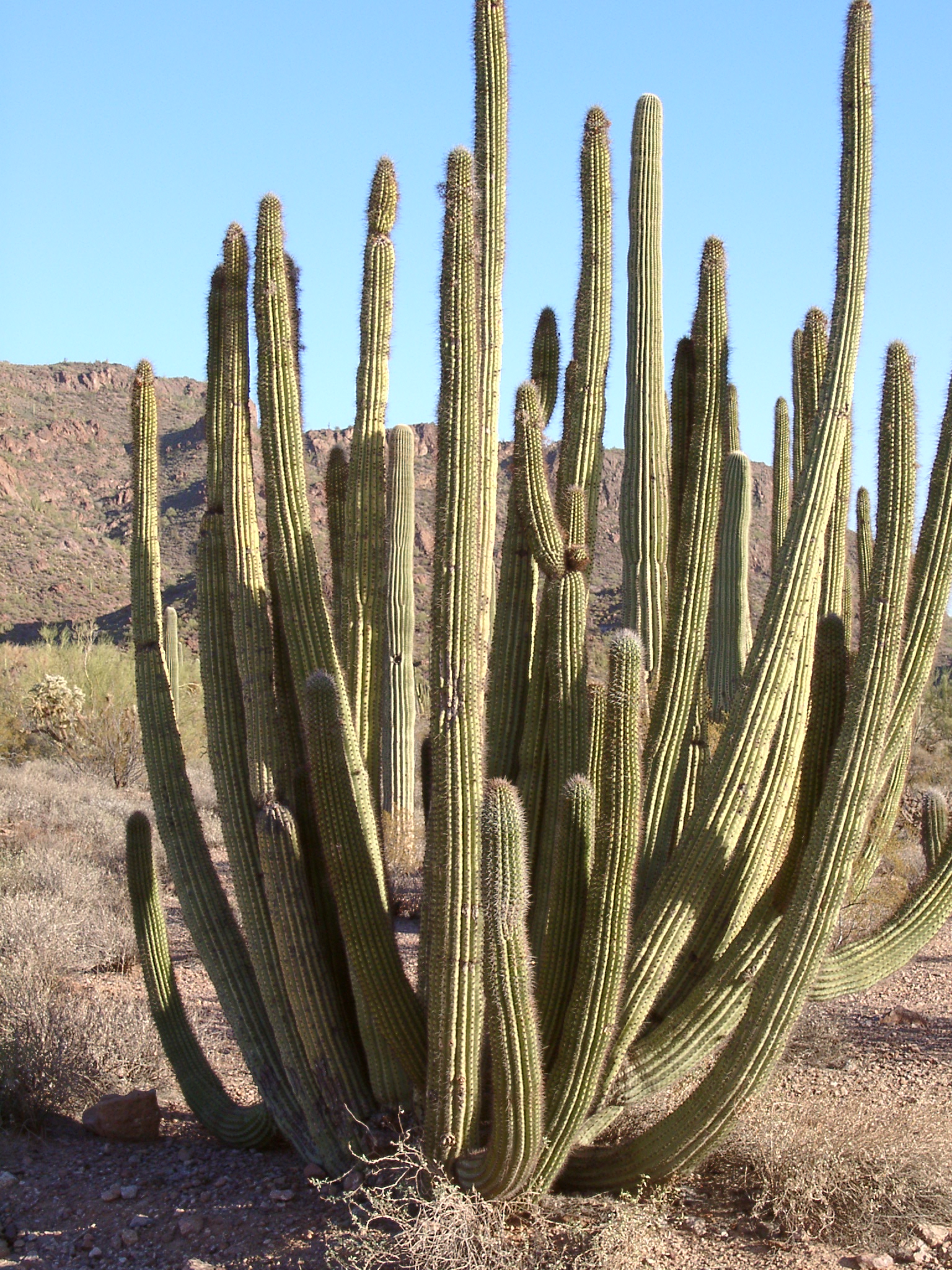
Organ Pipe Cactus
Stenocereus thurberi
A slow, multi-stem Sonoran native with creamy nocturnal flowers, red summer fruit and a commanding mature footprint that demands warm placement and permanent clearance.
The original uploader was Pretzelpaws at English Wikipedia. / Wikimedia Commons / CC BY-SA 3.0 — license
Not sure if this plant belongs near your pool, wall, pavers, or foundation?
AE reviews microclimate, root intrusion risk, and soil compatibility.
Schedule: Very infrequent — often monthly or less once established. None when soil is cool and damp.
Emitters: Single low-flow emitter offset from base, or hand-watering only.
Overwatering is the #1 cause of cactus and agave loss. AE designs cactus zones on their own valve.
Arizona yards have very different microclimates. West-facing walls, glass, artificial turf, pavers, travertine, porcelain, and pool decking all increase reflected heat. AE considers these before confirming placement.
- Low root impact
AE verifies pool deck, paver, foundation, wall, and utility clearances before final planting.
Quick Facts
- Plant type
- Cactus
- Mature size
- 16–20 ft tall, 11–15 ft wide
- Growth rate
- Slow — about 2.5 inches per year in native habitat
- Sun
- Full sun
- Water use
- Very low
- Bloom season
- May–June
- Flower color
- Creamy white
- Foliage
- Green stems
- Evergreen / Deciduous
- Evergreen
- Thorns / spines
- Severe
- Litter level
- Low
- Pool area
- Avoid nearby
- Pet/kid placement
- Avoid near play areas
- Maintenance
- Very low
- Privacy value
- Medium
- Shade value
- Low
- Native
- Sonoran native
About Organ Pipe Cactus
Organ Pipe Cactus is a major architectural plant, not a narrow accent for a tight side yard. University of Arizona guidance places its landscape size around 16–20 feet tall and 11–15 feet wide, while the National Park Service describes native giants in the roughly 10–20-foot range. In native habitat it may add only about 2.5 inches a year, form its first side stem near 30 years, flower near 35 years and live beyond 150 years. Creamy white flowers open at night in May and June; lesser long-nosed bats are the principal nighttime pollinator, and red fruit ripens before summer rains. Large natural U.S. stands are concentrated at Organ Pipe Cactus National Monument, with the range continuing into Mexico. The fruit also has longstanding O’odham cultural and food importance; that context deserves respect, not casual harvest advice. For Phoenix landscapes, the limiting issue is cold. UA lists approximate semi-hardiness near 25°F, and young stem tissue is especially vulnerable, so this is a warm-microclimate selection rather than a broadly freeze-proof cactus.
Best uses: A large Sonoran statement specimen in a warm, open desert composition with generous permanent clearance and exceptionally fast drainage
AE Designer Opinion
Design Uses
- Large native desert focal point
- Warm south- or west-facing boulder composition
- Open Sonoran habitat garden
- Long-view architectural specimen
- Night-pollinator garden with safe setbacks
Care & Maintenance
- Provide full sun and a warm, open microclimate
- Plant in exceptionally fast-draining soil with the crown kept dry
- Water deeply but very infrequently after establishment
- Keep off regular lawn and shrub irrigation
- Protect young tissue during unusually hard freezes
- Inspect spacing as stems develop; never create a contact route through the plant
Common Homeowner Mistakes
- Treating the young plant as a narrow column and ignoring its eventual multi-stem mass
- Running it on a regularly watered shrub valve
- Planting in compacted or poorly drained soil
- Assuming a Sonoran native is freeze-proof throughout metro Phoenix
- Placing it beside a walkway or pool where severe spines become a permanent conflict
- Planning around rapid growth when native growth can be only a few inches per year
Placement Warnings
⚠ Severe spines, an eventual 11–15-foot spread and frost-sensitive young tissue require a warm, open location away from people, structures and regular irrigation.
- Keep well away from walks, gates, play zones, pet routes and pool traffic
- Allow 11–15 feet of mature width plus safe maintenance access
- Do not place beneath eaves, utility lines or tight against walls
- Avoid low frost pockets; young stems are particularly cold-sensitive near the species’ limits
- Use sharply drained soil and keep irrigation emitters away from the crown
- Do not place where fallen fruit could create a traffic or cleanup issue
AE reviews final placement based on sun, irrigation, drainage, mature size, and overall design.
Pairs Well With
- Creosote Bush
- Brittlebush
- Ocotillo
- Compass Barrel
More Arizona Plants Like This


Ready to Build Your AE Plant Wishlist?
Add Organ Pipe Cactus and your other favorites to your wishlist, then send it to the AE design team for the final plant palette.