

Creosote Bush
Larrea tridentata
The plant that makes the desert smell like rain: a thornless, evergreen 6-by-6-foot native that asks for almost no water and reads as pure Sonoran character.
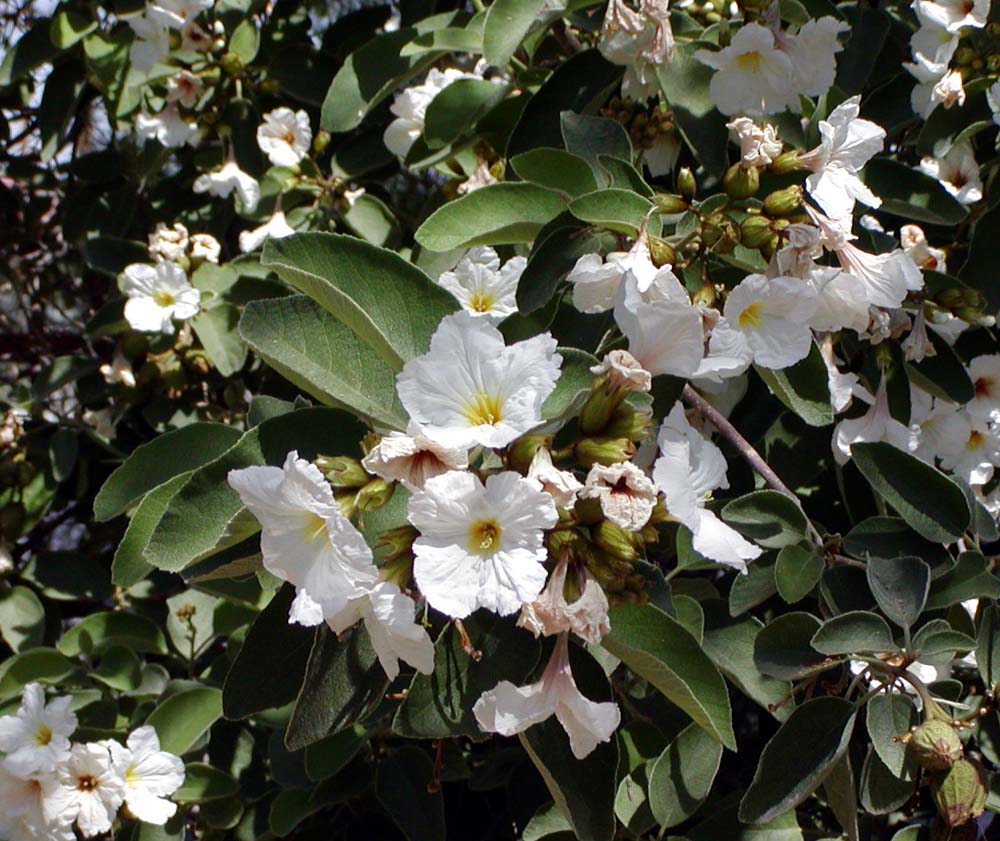
Eric in SF / Wikimedia Commons / CC BY-SA 3.0 — license
Not sure if this plant belongs near your pool, wall, pavers, or foundation?
AE reviews microclimate, root intrusion risk, and soil compatibility.
Schedule: Weekly to twice-weekly in summer, less in cooler months.
Emitters: 1–2 emitters per shrub adjusted seasonally.
Most desert-adapted shrubs prefer drying out between waterings.
Arizona yards have very different microclimates. West-facing walls, glass, artificial turf, pavers, travertine, porcelain, and pool decking all increase reflected heat. AE considers these before confirming placement.
- Low root impact
AE verifies pool deck, paver, foundation, wall, and utility clearances before final planting.
Quick Facts
- Plant type
- Shrub
- Mature size
- 6 ft tall, 6 ft wide
- Growth rate
- Moderate
- Sun
- Full sun
- Water use
- Very low
- Bloom season
- Spring through fall
- Flower color
- Yellow
- Foliage
- Dark green
- Evergreen / Deciduous
- Evergreen
- Thorns / spines
- None
- Litter level
- Low
- Pool area
- Great
- Maintenance
- Very low
- Privacy value
- Medium
- Shade value
- Low
- Native
- Sonoran native
About Creosote Bush
Creosote Bush is the most widespread shrub in the American Southwest for a reason — it is native across the Chihuahuan, Mojave and Sonoran deserts, evergreen, thornless, and content on very little water. AMWUA rates it hardy to about 5°F, with moderate growth to roughly 6 feet tall and 6 feet wide, dark-green fine foliage and small yellow flowers that appear from spring through fall, followed by fuzzy white seed capsules. Bees and other pollinators work the flowers steadily. What most Valley homeowners know it for is the smell: after a monsoon rain, the resin on the leaves releases the scent people mean when they say the desert smells like rain. In a designed landscape it does the quiet work — an open, angular silhouette that fills the middle layer of a native bed, softens a wall without looking clipped, and provides cover and forage for desert wildlife. Litter is low and there are no thorns, so it sits comfortably near pool decks and seating. The pollen is on the allergenic side, which is worth weighing for sensitive households. Two rules keep it looking right: do not shear it into a ball, and do not water it like a nursery shrub.
Best uses: Authentic native structure and informal screening in low-water beds, desert restoration areas, wash edges and naturalistic backyard borders
AE Designer Opinion
Design Uses
- Authentic native and desert-restoration planting
- Informal, naturalistic screening along walls and property lines
- Middle-layer structure in decomposed-granite and boulder beds
- Wash, dry-riverbed and transition-zone planting
- Thornless, low-litter massing near pool decks and seating areas
- Wildlife and pollinator habitat in low-water yards
Care & Maintenance
- Water deeply and infrequently while establishing, then step down to very low irrigation
- Keep it on a desert valve separate from turf and higher-water shrubs
- Do not shear; make selective cuts at the branch only when clearance requires it
- Allow the open, angular silhouette to develop naturally
- Ensure sharp drainage — avoid low spots that hold runoff
- Rinse dust off the foliage occasionally in long dry stretches to keep the color clean
Common Homeowner Mistakes
- Shearing it into a ball or hedge and destroying the natural open structure
- Overwatering it on a lawn or shrub valve, which produces weak growth
- Expecting solid, dense screening from an open-branched desert shrub
- Planting it in a low spot that collects runoff and stays wet
- Crowding it against a wall so the silhouette can never be seen
- Replacing it after a dry, sparse-looking summer instead of letting it recover with the next rains
Placement Warnings
⚠ Pollen is considered allergenic, which matters for sensitive households. Do not shear it — the open form does not recover — and do not run it on a high-frequency irrigation zone.
- Plan for a 6-foot mature spread; the open form needs room to read correctly
- Allergenic pollen — weigh placement near main seating, windows and doorways for sensitive households
- Do not place it inside a sheared-hedge row; it will not hold a clipped shape
- Keep it on a very-low-water zone, away from turf and high-frequency valves
- Not a dense privacy screen on its own — it screens informally, with gaps
- Avoid poorly drained, consistently wet soil pockets
AE reviews final placement based on sun, irrigation, drainage, mature size, and overall design.
Pairs Well With
- Brittlebush
- Ocotillo
- Blackfoot Daisy
- Parry's Penstemon
More Arizona Plants Like This




Ready to Build Your AE Plant Wishlist?
Add Creosote Bush and your other favorites to your wishlist, then send it to the AE design team for the final plant palette.