
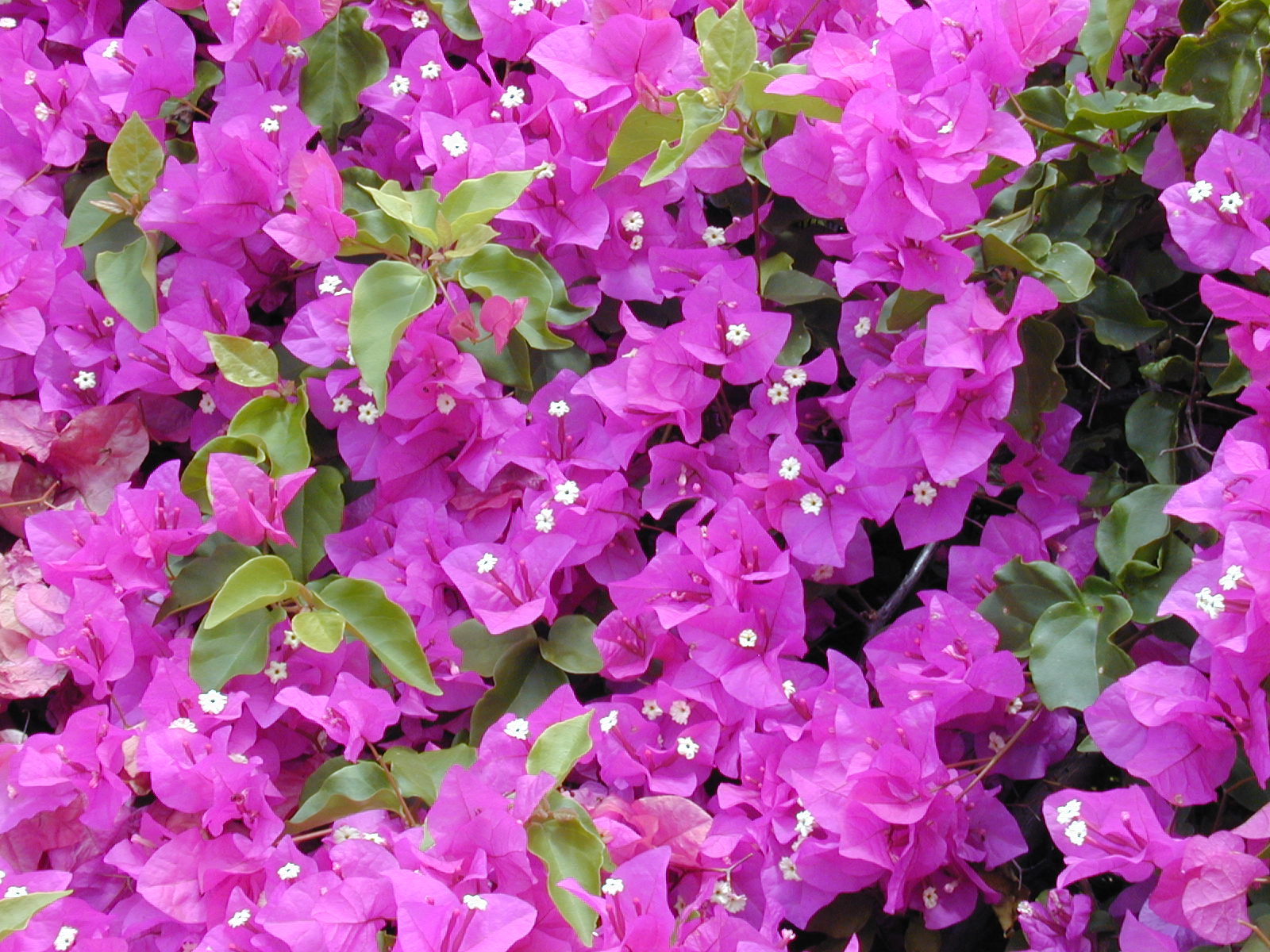
Bougainvillea (Selection Guide)
Bougainvillea spp.
This is a selection guide rather than a single plant. Phoenix nursery bougainvillea spans species, hybrids and named cultivars whose mature sizes and habits are not interchangeable.
Forest & Kim Starr / Wikimedia Commons / CC BY 3.0 — license
Why AE uses caution: Hidden long thorns, heavy bract litter (especially near pools), and frost dieback that can look rough every winter.
See the full AE Use With Care libraryNot sure if this plant belongs near your pool, wall, pavers, or foundation?
AE reviews microclimate, root intrusion risk, and soil compatibility.
Schedule: Twice-weekly in summer, weekly in shoulder seasons.
Emitters: 1–2 emitters per plant, monitored during heat waves.
Flowering perennials, citrus, and lush accents need more attention than true desert plants.
Arizona yards have very different microclimates. West-facing walls, glass, artificial turf, pavers, travertine, porcelain, and pool decking all increase reflected heat. AE considers these before confirming placement.
- Verify attachment surface
AE verifies pool deck, paver, foundation, wall, and utility clearances before final planting.
Quick Facts
- Plant type
- Vine
- Mature size
- Selection-dependent: compact patio forms roughly 3-6 ft; vigorous landscape vines exceed 15-30 ft of supported reach
- Growth rate
- Fast
- Sun
- Full sun
- Water use
- Low
- Bloom season
- Repeating cycles in warm weather; the color comes from papery bracts, not petals
- Flower color
- Magenta, red, orange, pink and white bracts surrounding small true flowers
- Foliage
- Green
- Evergreen / Deciduous
- Semi-evergreen
- Thorns / spines
- Sharp
- Litter level
- High
- Pool area
- Use with care
- Pet/kid placement
- Use with care
- Maintenance
- Seasonal pruning
- Privacy value
- Medium
- Shade value
- Low
- Native
- Desert-adapted
About Bougainvillea (Selection Guide)
Bougainvillea spp. is deliberately treated here as a genus and selection guide, because Phoenix nursery material spans species, hybrids and named cultivars with very different mature sizes and habits. The genus is South American in origin and nonnative to Arizona, and the showy magenta, red, orange, pink and white display comes from papery bracts surrounding small true flowers. Size is selection-dependent: compact patio forms may hold around 3-6 ft with maintenance, while vigorous landscape vines can exceed 15-30 ft of supported reach with comparable lateral spread. Verify the cultivar and design to the label, not to the nursery-can size. Give it full sun and heat for the best bloom, with excellent drainage. Water use is low once the plant is deeply rooted, but new plants and containers need deliberate establishment irrigation; allow dry-down, avoid chronically wet soil, and avoid high-nitrogen overfeeding that drives foliage at the expense of bloom. It is frost sensitive. Near-freezing and below-freezing events can defoliate or kill stems, and survival depends on duration, cultivar, maturity and a protected microclimate, so wait until frost risk passes and living tissue is clearly visible before major cleanup; recovery is not guaranteed. This is a scrambling woody plant that must be tied and trained to a suitable support, because it is not self-clinging. Long sharp thorns and vigorous canes rule it out beside narrow walks, play areas, pet routes, gates, pool coping and service paths.
Best uses: Trained wall and fence color on a real support; Large planters and containers with deliberate irrigation; Big sunny masses well away from circulation
AE Designer Opinion
Design Uses
- Trained wall and fence color on a real support
- Large planters and containers with deliberate irrigation
- Big sunny masses well away from circulation
- Resort-style color against block, stucco or steel
- Compact named selections in raised planters where size is controlled
Care & Maintenance
- Verify the cultivar and design to the label, not the nursery-can size.
- Tie and train it to a suitable support; it is not self-clinging.
- Establish new plants and containers deliberately, then allow dry-down.
- Avoid chronically wet soil and high-nitrogen overfeeding.
- Wait until frost risk passes and living tissue is clear before major cleanup.
- Prune selectively between bloom cycles; wear gloves and eye protection.
Common Homeowner Mistakes
- Buying an unlabeled plant and assuming it will stay small
- Expecting it to climb on its own
- Cleaning up freeze damage before living tissue is clear
- Overfeeding with nitrogen and getting foliage instead of bract color
- Shearing constantly to hold a vigorous cultivar in a small space
Placement Warnings
⚠ Long sharp thorns and vigorous canes make placement the safety decision on this plant; keep it away from narrow walks, play areas, pet routes, gates, pool coping and service paths. Mature size depends entirely on the selection, so an unverified cultivar is a planning risk. It is frost sensitive: near-freezing and below-freezing events can defoliate or kill stems, and survival depends on duration, cultivar, maturity and microclimate, so recovery is not guaranteed. Papery bracts and leaves create seasonal litter, and the plant is not automatically pool friendly. Sap and contact can irritate some people, so use gloves and eye protection when pruning.
- Keep thorns away from narrow walks, gates and pool coping.
- Do not plant it beside play areas, pet routes or service paths.
- Tie it to a real support; it will not hold itself up.
- Plan bract and leaf litter near water features and skimmers.
- Design to the verified cultivar size, not the nursery can.
AE reviews final placement based on sun, irrigation, drainage, mature size, and overall design.
Pairs Well With
- Red Bird of Paradise
- Lantana
- Texas Sage
More Arizona Plants Like This



Ready to Build Your AE Plant Wishlist?
Add Bougainvillea (Selection Guide) and your other favorites to your wishlist, then send it to the AE design team for the final plant palette.