
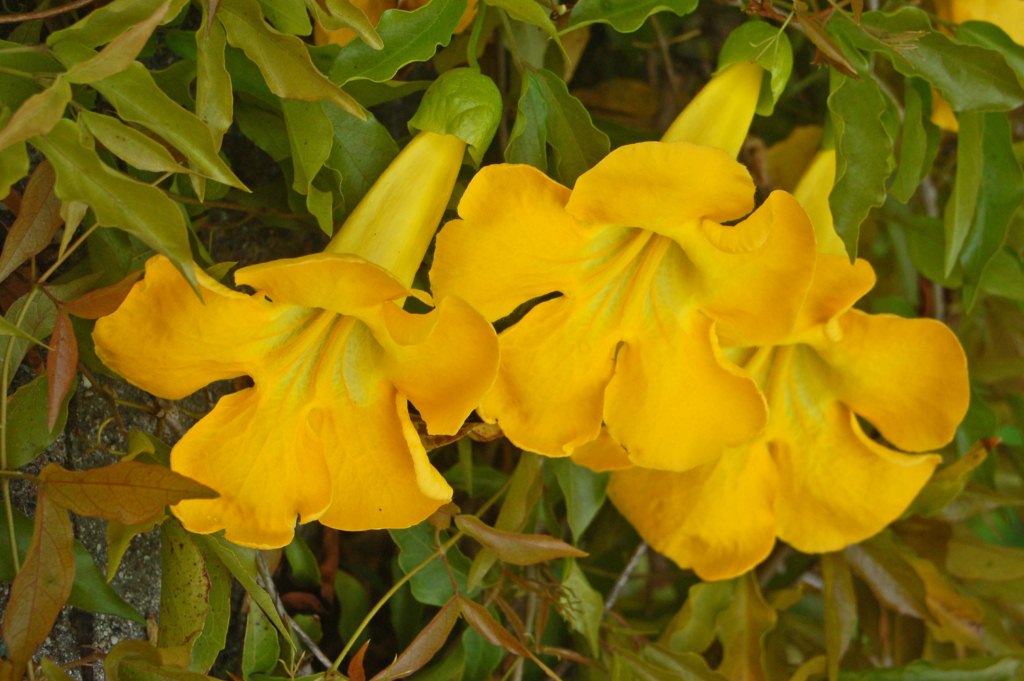
Cat's Claw Vine
Dolichandra unguis-cati
Cat's Claw Vine is a vigorous 25–100 ft woody climber with clawlike tendrils, yellow spring flowers, wind-dispersed seed and persistent underground reserves; containment is the design decision.
Hectonichus / Wikimedia Commons / CC BY-SA 3.0 — license
Why AE uses caution: Aggressive climber that attaches with claw-like tendrils. Damages stucco, paint, and mortar. Spreads underground.
See the full AE Use With Care libraryNot sure if this plant belongs near your pool, wall, pavers, or foundation?
AE reviews microclimate, root intrusion risk, and soil compatibility.
Schedule: Twice-weekly in summer, weekly in shoulder seasons.
Emitters: 1–2 emitters per plant, monitored during heat waves.
Flowering perennials, citrus, and lush accents need more attention than true desert plants.
Arizona yards have very different microclimates. West-facing walls, glass, artificial turf, pavers, travertine, porcelain, and pool decking all increase reflected heat. AE considers these before confirming placement.
- Avoid near pool decks
- Avoid near pavers
- Avoid near foundations
- Avoid near walls & utilities
AE verifies pool deck, paver, foundation, wall, and utility clearances before final planting.
Quick Facts
- Plant type
- Vine
- Mature size
- Can climb roughly 25–100 ft where support and climate permit
- Growth rate
- Fast and vigorous
- Sun
- Full sun
- Water use
- Low
- Bloom season
- Briefly around late March to early April in Phoenix
- Flower color
- Yellow trumpet flowers followed by long seed pods
- Foliage
- Green leaves with three-forked clawlike tendrils
- Evergreen / Deciduous
- Semi-evergreen
- Thorns / spines
- Mild
- Litter level
- High
- Pool area
- Avoid nearby
- Pet/kid placement
- Use with care
- Maintenance
- Seasonal pruning
- Privacy value
- High
- Shade value
- Medium
- Native
- Desert-adapted
About Cat's Claw Vine
Dolichandra unguis-cati is also widely listed in older Arizona and nursery references as Macfadyena unguis-cati; these are botanical synonyms, not separate landscape plants. It is native to tropical and subtropical portions of the Americas and nonnative to Arizona. This is a vigorous woody climber rather than a modest evergreen screen. Mature stems can climb roughly 25–100 feet where support and climate permit. Three-forked clawlike tendrils, tuberous underground reserves, yellow trumpet flowers and long seed pods identify it. In Phoenix the flower event is generally brief around late March or early April, not season-long. Pods can approach about 12 inches and release wind-dispersed seed. Full sun and low-desert heat suit established vines, while establishment and acceptable canopy appearance still require irrigation. Use deep, infrequent water with dry-down; drought tolerance does not prevent root spread, canopy stress or structural loading. Winter foliage behavior varies with microclimate and frost, so evergreen cover and severe-freeze recovery are not guaranteed. A genuinely strong, durable support and active containment are mandatory. Heavy growth can become top-heavy, pull from weak masonry or wood, cover roofs and trees, enter joints and resist eradication because underground reserves persist. Do not use it on stucco, rooflines, utility corridors, small walls, neighboring trees or property lines without a defensible long-term containment plan. It is documented invasive in humid regions, including a Florida Category I listing; that is not a claim of formal Arizona invasive designation. Seed dispersal and vegetative persistence still create escape risk, so avoid new planting near washes, canals, riparian corridors, natural open space or any site where containment cannot be sustained.
Best uses: A deliberately contained woody climber on a freestanding engineered support, away from buildings, trees, utilities, property lines and natural drainage corridors
AE Designer Opinion
Design Uses
- Contained climber on a freestanding heavy-duty support
- Large managed site with pod removal access
- Specialist vertical cover away from buildings and natural corridors
Care & Maintenance
- Water deeply through establishment, then use infrequent irrigation with full dry-down.
- Prune after flowering and repeatedly during active growth when containment requires it.
- Remove pods before seed dispersal where practical and monitor outside the intended footprint.
- Inspect the support and keep tendrils away from joints, roofs, trees and utilities.
- Expect repeated follow-up during removal; seek site-specific professional control advice rather than casual herbicide use.
Common Homeowner Mistakes
- Treating Dolichandra and Macfadyena as different vines
- Sizing from a young nursery plant instead of 25–100 ft potential
- Allowing tendrils into stucco joints, roofs or adjacent trees
- Calling drought tolerance proof of harmless roots or light structural load
- Assuming one cut permanently removes tuberous underground reserves
Placement Warnings
⚠ Flowers, pods, leaves, bees, wind-dispersed seed, heavy woody growth, tendrils and persistent roots make pool, courtyard, neighbor-edge and fire-feature placement conditional. Removal can require repeated follow-up because underground reserves resprout. No one-cut cure, universal structural safety or noninvasive promise is appropriate.
- Keep off stucco, rooflines, weak walls, trees, utility corridors and service equipment.
- Use only a durable freestanding support sized for mature woody load and maintenance access.
- Avoid washes, canals, riparian corridors, natural open space and unmanaged property edges.
- Maintain setbacks from pools, fire features, neighboring property and places where wind-dispersed seed creates conflict.
AE reviews final placement based on sun, irrigation, drainage, mature size, and overall design.
Pairs Well With
- Texas Sage
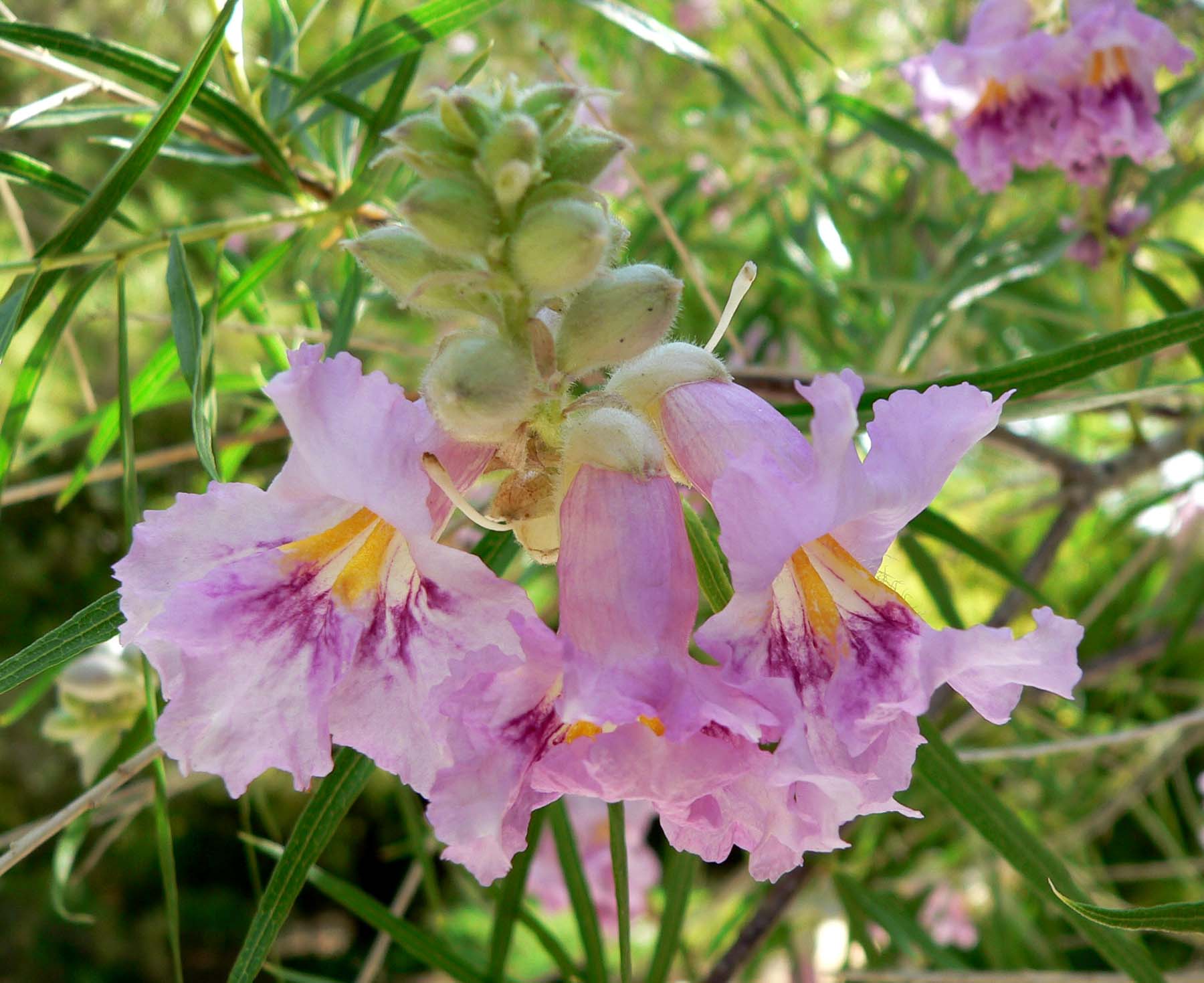
- Desert Willow
More Arizona Plants Like This



Ready to Build Your AE Plant Wishlist?
Add Cat's Claw Vine and your other favorites to your wishlist, then send it to the AE design team for the final plant palette.