
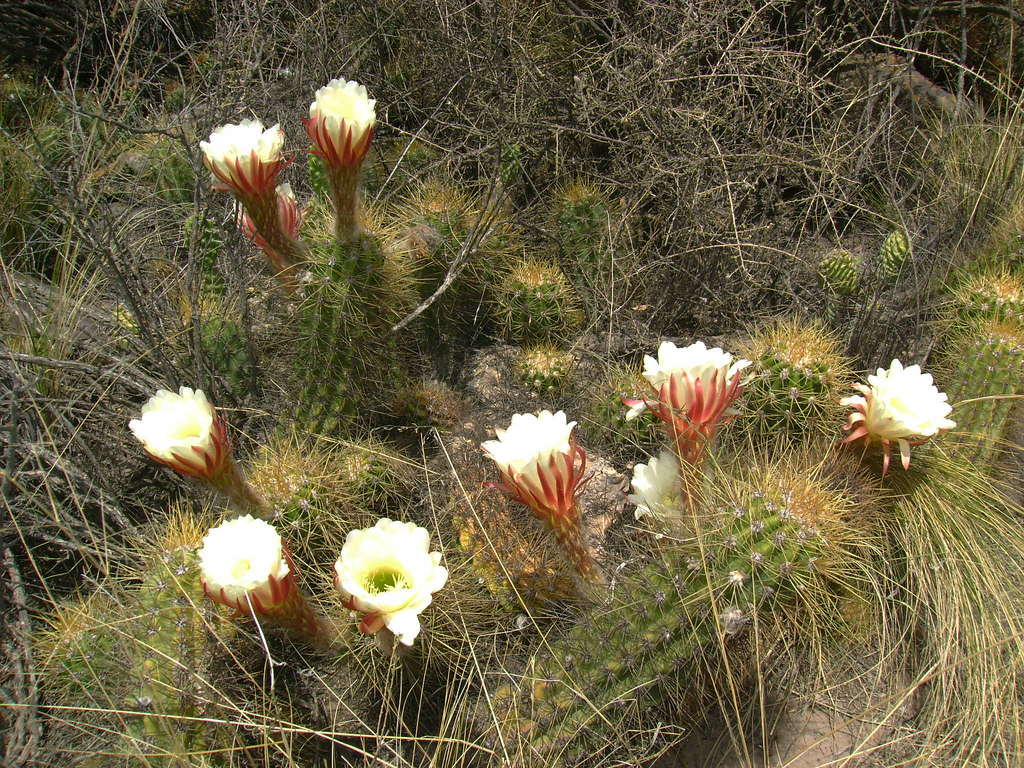
Argentine Giant
Echinopsis candicans
A low sprawling cactus grown for enormous fragrant white flowers that open at night in spring — the “giant” is the bloom, not the plant.
Lucas Burgos from Mendoza, Argentina / Wikimedia Commons / CC BY-SA 2.0 — license
Not sure if this plant belongs near your pool, wall, pavers, or foundation?
AE reviews microclimate, root intrusion risk, and soil compatibility.
Schedule: Very infrequent — often monthly or less once established. None when soil is cool and damp.
Emitters: Single low-flow emitter offset from base, or hand-watering only.
Overwatering is the #1 cause of cactus and agave loss. AE designs cactus zones on their own valve.
Arizona yards have very different microclimates. West-facing walls, glass, artificial turf, pavers, travertine, porcelain, and pool decking all increase reflected heat. AE considers these before confirming placement.
- Low root impact
AE verifies pool deck, paver, foundation, wall, and utility clearances before final planting.
Quick Facts
- Plant type
- Cactus
- Mature size
- 2 ft tall, 3 ft wide
- Growth rate
- Moderate
- Sun
- Full sun
- Water use
- Low
- Bloom season
- Spring, opening at night
- Flower color
- White
- Foliage
- Medium green stems with small yellow spines
- Evergreen / Deciduous
- Evergreen
- Thorns / spines
- Sharp
- Litter level
- Low
- Pool area
- Avoid nearby
- Pet/kid placement
- Avoid near play areas
- Maintenance
- Very low
- Privacy value
- Low
- Shade value
- Low
- Native
- Desert-adapted
About Argentine Giant
Argentine Giant is a clumping, sprawling cactus from Argentina that AMWUA lists at roughly 2 feet tall and 3 feet wide, hardy to about 10°F, with low water needs and moderate growth. Evergreen medium-green stems carry small yellow spines, and in spring the plant produces fragrant white flowers six to eight inches across that open at night and close during the heat of the following day. Nocturnal pollinators work the blooms, litter is low and the plant is rabbit resistant. In a Phoenix yard the value is the flower event, so placement should put the clump inside a normal line of sight from a patio or path without placing the spines within reach. It wants fast drainage and deep, infrequent water; it declines in a lawn zone or on a shrub irrigation schedule that keeps the root zone damp.
Best uses: A low, spreading flowering cactus for a dry boulder bed where the huge night blooms can be seen from a seating area without putting spines on a contact route
AE Designer Opinion
Design Uses
- Flowering accent in a dry cactus and boulder composition
- Low groundplane interest between taller columnar cactus
- Night-garden feature viewed from a patio or courtyard
- Decomposed granite bed with sculptural rock
- Low-water front-yard desert planting away from the sidewalk
Care & Maintenance
- Plant in full sun to light afternoon shade with fast drainage
- Water deeply but infrequently and let the root zone dry between cycles
- Keep it off lawn and regular shrub irrigation valves
- Expect little to no pruning; remove damaged stems with tools, not hands
- Protect new plants from a hard freeze in an open cold pocket
- Top-dress with mineral mulch rather than organic bark
Common Homeowner Mistakes
- Buying it expecting a tall columnar cactus
- Edging a walkway with it because the spines are described as small
- Watering it on a shrub or lawn schedule
- Planting it in compacted clay or a basin that collects runoff
- Placing it where the night bloom cannot be seen from a used space
- Crowding it so the sprawling clump has nowhere to go
Placement Warnings
⚠ Small yellow spines are still sharp. Keep the mature three-foot spread away from walkways, pool traffic, play areas, pet routes and narrow maintenance passages.
- Allow the full three-foot mature spread plus clear access on all sides
- Keep out of walkways, gates and side-yard maintenance routes
- Keep away from pool decks, steps and seating edges
- Keep away from children’s play zones and regular pet paths
- Do not plant in lawn or shared shrub irrigation zones
- Plant high in fast-draining mineral soil, never in a low spot that holds water
AE reviews final placement based on sun, irrigation, drainage, mature size, and overall design.
Pairs Well With
- Golden Barrel Cactus
- Brittlebush
- Damianita
- Ocotillo
More Arizona Plants Like This




Ready to Build Your AE Plant Wishlist?
Add Argentine Giant and your other favorites to your wishlist, then send it to the AE design team for the final plant palette.