
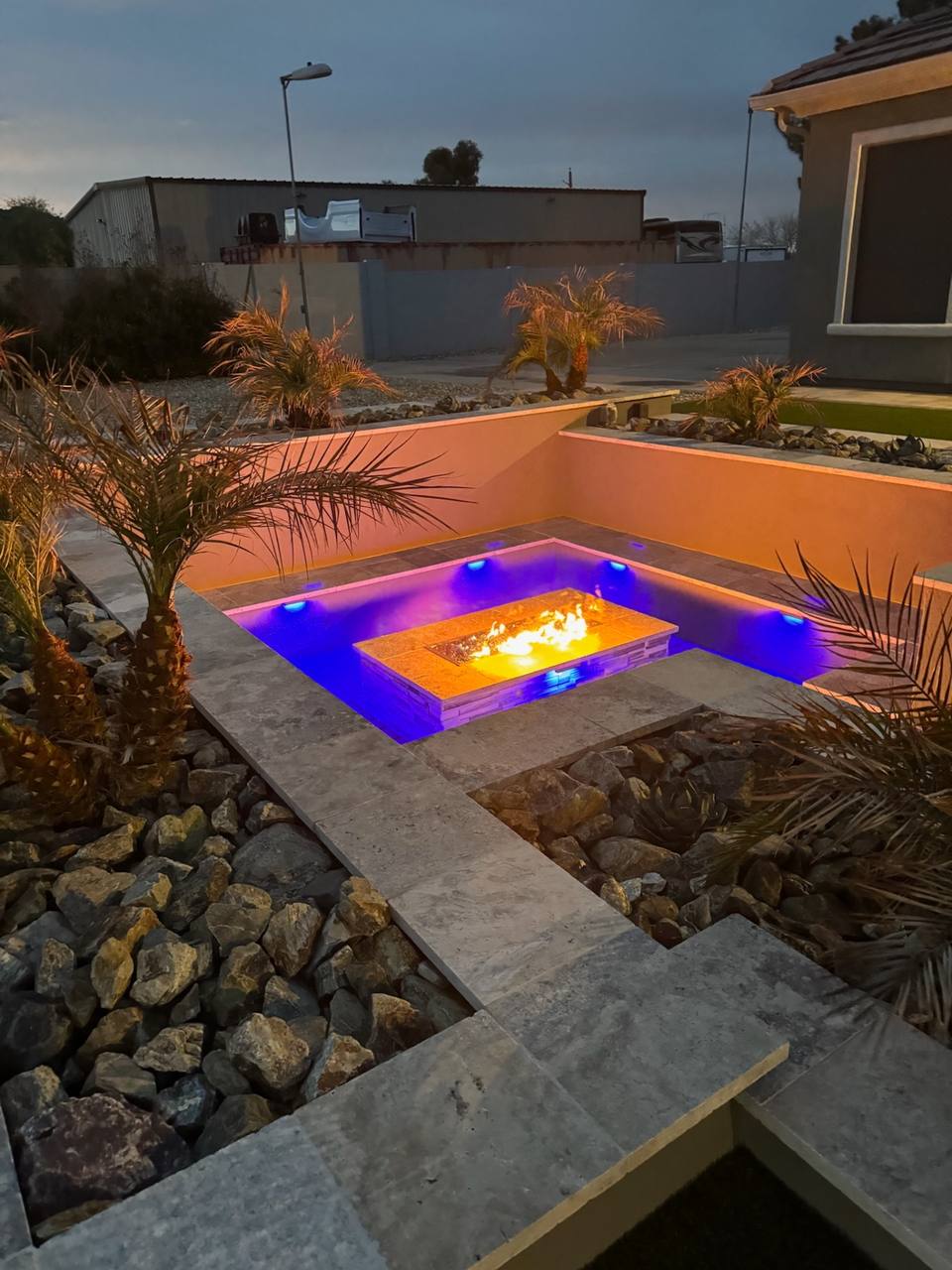
Low-Voltage Landscape Lighting in Arizona
Low-voltage landscape lighting is the layer that makes a desert yard usable after dark. It runs on a transformer that steps household power down to a safer low voltage, which is why fixtures can be moved, added, and re-aimed as plants mature without tearing up the yard.
In Arizona, the design problem is specific: intense sun on the fixtures all day, plants that change shape fast, decomposed granite that hides wire, and neighbors close enough that glare control matters. Here is how AE plans it.
The techniques that do the work
A good plan uses three or four of these deliberately rather than lighting everything at once. Over-lighting is the most common mistake in Valley yards.
- Uplighting — saguaros, ocotillo, palms, and specimen trees; the single highest-impact move in a desert yard
- Moonlighting — fixtures set high in a tree casting dappled light down through the canopy
- Path lighting — low fixtures spaced to mark the walk, not to line it like a runway
- Grazing — raking light across stone veneer, block, or stucco to bring out texture
- Wall washing — even light on a courtyard wall to create a bright backdrop for the space in front of it
- Step and seat-wall lighting — the safety layer people notice only when it is missing
What a professional low-voltage plan includes
The difference between a plan and a box of fixtures is almost entirely in the parts nobody sees.
- A fixture-by-fixture layout tied to actual plant locations and mature sizes
- Transformer sizing and placement with headroom for future zones
- Wire runs and gauge planned for the distance so the far end of the run is not dim
- Buried, protected connections — the most common failure point in DIY installs
- Zoning and control so the front, the patio, and accent trees are not all on one switch
- Aiming and adjustment after dark, which is the only time you can actually see what you built
What it costs in the Valley
Most residential landscape lighting plans run $4,000–$15,000 depending on fixture count, transformer sizing, trenching, and integration with an existing system. Estate-scale plans with multiple zones and architectural integration run higher. Small add-on packages scoped alongside other work start lower.
Why desert installs fail early
When a landscape lighting system dies in year two, it is rarely the LEDs. It is the parts of the install that were rushed.
- Connections that were twisted and buried instead of properly sealed
- Undersized wire over a long run, producing voltage drop and dim, color-shifted fixtures at the end
- Transformers loaded to capacity with no room for the zones the owner adds a year later
- Fixtures aimed once in daylight and never adjusted after dark
- Plants that grew into the light — a maintenance item, not a defect
What is low-voltage landscape lighting?+
A system where a transformer reduces household voltage to a lower voltage that feeds the fixtures. It is the standard for residential landscape lighting because fixtures and zones can be added or moved as the yard matures.
How much does low-voltage landscape lighting cost in Arizona?+
Most residential plans run $4,000–$15,000 depending on fixture count, transformer sizing, trenching, and integration with any existing system. Estate-scale multi-zone plans run higher.
Can low-voltage lighting be added to an existing yard?+
Yes. Wire is typically routed in decomposed granite, planting beds, and along hardscape edges, so a mature yard can usually be lit without rebuilding it. The layout is planned around what is already planted.
Can I add landscape lighting to a permanent trim lighting system?+
They are separate systems with separate transformers and controls, but they are commonly designed together so the roofline and the yard read as one lighting plan rather than two.