

Goodding's Verbena (Southwestern Mock Vervain)
Glandularia gooddingii
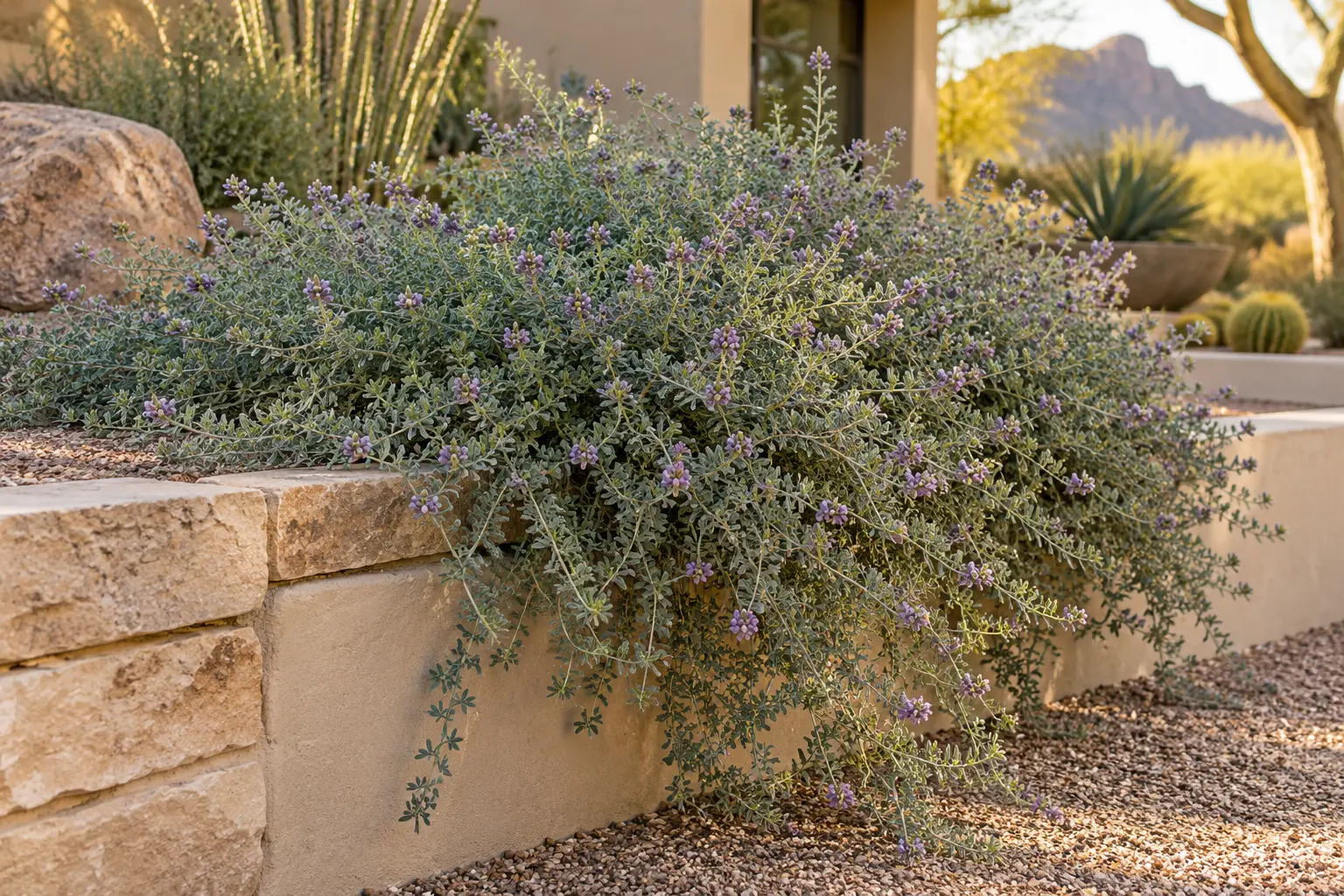
Goodding's verbena, also called southwestern mock vervain, is the exact native species Glandularia gooddingii rather than the broad verbena trade category. It is a low spreading perennial for drifts, not a permanent evergreen carpet.
Miwasatoshi / Wikimedia Commons / CC BY-SA 4.0 — license
Not sure if this plant belongs near your pool, wall, pavers, or foundation?
AE reviews microclimate, root intrusion risk, and soil compatibility.
Schedule: Weekly to twice-weekly in summer, less in cooler months.
Emitters: 1–2 emitters per shrub adjusted seasonally.
Most desert-adapted shrubs prefer drying out between waterings.
Arizona yards have very different microclimates. West-facing walls, glass, artificial turf, pavers, travertine, porcelain, and pool decking all increase reflected heat. AE considers these before confirming placement.
- Low root impact
AE verifies pool deck, paver, foundation, wall, and utility clearances before final planting.
Quick Facts
- Plant type
- Groundcover
- Mature size
- Roughly 1-1.5 ft tall, 2-3 ft wide
- Growth rate
- Fast in favorable conditions
- Sun
- Full sun
- Water use
- Low
- Bloom season
- Strongest in spring, with possible intermittent warm-season and fall flowering
- Flower color
- Lavender to pale purple-blue clusters
- Foliage
- Lobed, softly hairy gray-green
- Evergreen / Deciduous
- Semi-evergreen
- Thorns / spines
- None
- Litter level
- Low
- Pool area
- Good with placement
- Pet/kid placement
- Use with care
- Maintenance
- Seasonal pruning
- Privacy value
- Low
- Shade value
- Low
- Native
- Arizona native
About Goodding's Verbena (Southwestern Mock Vervain)
This page is about Glandularia gooddingii, still widely sold under the synonym Verbena gooddingii, and commonly called Goodding's verbena or southwestern mock vervain. It is a specific native species, not the whole Verbena and Glandularia trade category. The species is native to the southwestern United States, including Arizona, and northern Mexico, in sandy and rocky desert habitat. Plan a low, softly spreading perennial of roughly 1-1.5 ft tall by 2-3 ft wide, with trailing decumbent stems and lobed, softly hairy gray-green foliage. Lavender to pale purple-blue flower clusters are strongest in spring, with possible intermittent warm-season and fall flowering under favorable conditions; a blanket spring-through-fall promise of continuous bloom is not honest for the low desert. Full sun to part shade both work. Water use is low to moderate in Phoenix: establish with regular deep watering, then let well-drained soil dry between thorough irrigations. Extra water can extend performance, but chronic wetness is inappropriate for this plant. Native does not mean immortal. Individual plants can be short-lived, may thin under extreme summer stress and can reseed where conditions suit, so plan drifts and periodic replenishment rather than expecting a permanent synthetic carpet. Pollinator value for bees and butterflies is one of the main reasons to use it, and that value comes with active insect traffic at ground level.
Best uses: Native and pollinator beds where seasonal gaps are acceptable; Loose spreading color beside boulders and rock outcrops; Drifts along wide bed edges away from barefoot circulation
AE Designer Opinion
Design Uses
- Native and pollinator beds where seasonal gaps are acceptable
- Loose spreading color beside boulders and rock outcrops
- Drifts along wide bed edges away from barefoot circulation
- Filler between slower woody natives during establishment
- Low informal groundcover in a desert-character front yard
Care & Maintenance
- Establish with regular deep watering, then dry between thorough irrigations.
- Plant in well-drained soil; avoid chronic wetness.
- Lightly clean out spent or declining growth after the main spring display.
- Allow healthy basal growth and reseeding where drifts are wanted.
- Do not shear repeatedly during bloom.
- Plan replenishment; individual plants can be short-lived.
Common Homeowner Mistakes
- Treating the page as generic verbena rather than this native species
- Expecting continuous spring-through-fall bloom
- Keeping the soil chronically wet
- Shearing repeatedly during bloom
- Assuming a native perennial never needs replenishment
Placement Warnings
⚠ Glandularia gooddingii is still sold under the synonym Verbena gooddingii, and generic verbena tags cover many unrelated selections; verify the species before ordering. Native does not mean permanent: plants can be short-lived, thin in extreme summer stress and reseed where conditions suit. Bee and butterfly traffic is part of the plant, so placement near barefoot circulation is a judgment call, and no plant should be described as universally pet-safe or nonallergenic.
- Keep drifts and bee activity back from barefoot pool circulation.
- Do not use it where a rigid evergreen edge is required.
- Allow 2-3 ft of spread per plant plus room to reseed.
- Avoid narrow entries where trailing stems cross the walk.
- Plan seasonal gaps; the display is strongest in spring.
AE reviews final placement based on sun, irrigation, drainage, mature size, and overall design.
Pairs Well With
- Brittlebush
- Angelita Daisy
- Parry's Penstemon
More Arizona Plants Like This



Ready to Build Your AE Plant Wishlist?
Add Goodding's Verbena (Southwestern Mock Vervain) and your other favorites to your wishlist, then send it to the AE design team for the final plant palette.