
Chuparosa
Justicia californica
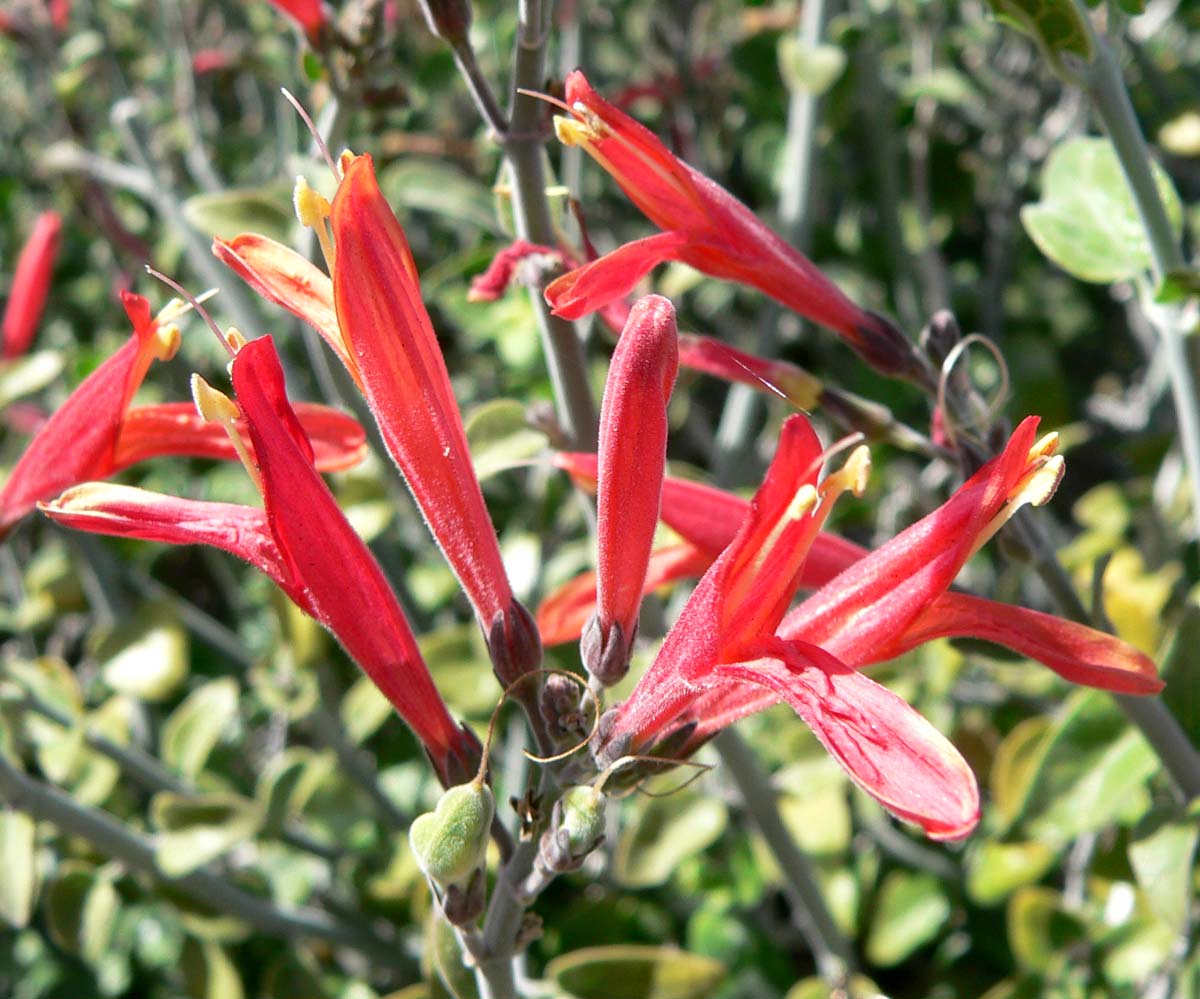
A sprawling 4-by-4-foot Sonoran native that carries orange-red tubular flowers through the cool months, when almost nothing else is feeding hummingbirds in a Phoenix yard.
Stan Shebs / Wikimedia Commons / CC BY-SA 3.0 — license
Not sure if this plant belongs near your pool, wall, pavers, or foundation?
AE reviews microclimate, root intrusion risk, and soil compatibility.
Schedule: Weekly to twice-weekly in summer, less in cooler months.
Emitters: 1–2 emitters per shrub adjusted seasonally.
Most desert-adapted shrubs prefer drying out between waterings.
Arizona yards have very different microclimates. West-facing walls, glass, artificial turf, pavers, travertine, porcelain, and pool decking all increase reflected heat. AE considers these before confirming placement.
- Low root impact
AE verifies pool deck, paver, foundation, wall, and utility clearances before final planting.
Quick Facts
- Plant type
- Shrub
- Mature size
- 4 ft tall, 4 ft wide
- Growth rate
- Moderate
- Sun
- Full sun
- Water use
- Low
- Bloom season
- Winter–spring
- Flower color
- Orange-red
- Foliage
- Gray-green
- Evergreen / Deciduous
- Semi-evergreen
- Thorns / spines
- None
- Litter level
- Low
- Pool area
- Great
- Maintenance
- Low
- Privacy value
- Low
- Shade value
- Low
- Native
- Sonoran native
About Chuparosa
Chuparosa earns its place on timing. AMWUA lists it as a Sonoran Desert native, hardy to about 25°F, low in water use, moderate in growth, and maturing at roughly 4 feet tall and 4 feet wide with a loose, sprawling habit and semi-evergreen gray-green foliage. Its orange-red tubular flowers arrive in winter and spring — the exact window when a desert yard usually has no color and resident hummingbirds are still working. It is thornless, non-irritating, low-litter and rated pool friendly, which makes it one of the few genuinely wildlife-forward shrubs we are comfortable placing near a water feature or deck edge. AMWUA also flags it as rabbit resistant. The honest limit is form: this is not a tidy, architectural shrub. Stems arch and sprawl, and in the heat of summer it can thin out and look sparse before recovering. Design around that informality instead of fighting it.
Best uses: Sonoran native hummingbird shrub for winter and spring color in low-water beds, wash-style plantings and clean pool-area borders
AE Designer Opinion
Design Uses
- Winter and spring hummingbird color in low-water beds
- Clean, thornless, low-litter planting near pool decks and water features
- Wash-style and native desert compositions with boulders
- Spillover over low seat walls and granite edges
- Mixed native shrub massing with evergreen backdrop plants
- Pollinator corridors in turf-conversion projects
Care & Maintenance
- Low water once established; deep and infrequent rather than frequent and shallow
- Water through the first summer to establish, then taper
- Hand-prune lightly after the spring bloom to renew the form
- Never shear; thin old stems at the base instead
- Keep granite and mulch slightly pulled back from the crown
- Protect from hard freezes in exposed, open West Valley yards
Common Homeowner Mistakes
- Shearing it into a ball, which removes the flowering wood
- Overwatering a low-water native and forcing weak, floppy growth
- Judging it in August and pulling out a plant that peaks in winter
- Planting it alone with no evergreen companion for off-season structure
- Spacing it too tightly against a walkway edge it will quickly overhang
Placement Warnings
⚠ Habit is loose and sprawling, and the plant can thin noticeably in peak summer heat. Plan for a 4-foot spread and pair it with evergreen structure so the bed does not look empty off-season.
- Sprawling, informal habit — not suited to tightly clipped or formal beds
- Can look sparse in peak summer before recovering in cooler weather
- Allow the full 4-foot spread; stems arch well past the crown
- Low shade and privacy value — use it for color, not screening
- Freeze damage is possible below roughly 25°F in exposed locations
AE reviews final placement based on sun, irrigation, drainage, mature size, and overall design.
Pairs Well With
- Jojoba
- Brittlebush
- Arizona Rosewood
- Parry's Penstemon
More Arizona Plants Like This




Ready to Build Your AE Plant Wishlist?
Add Chuparosa and your other favorites to your wishlist, then send it to the AE design team for the final plant palette.