
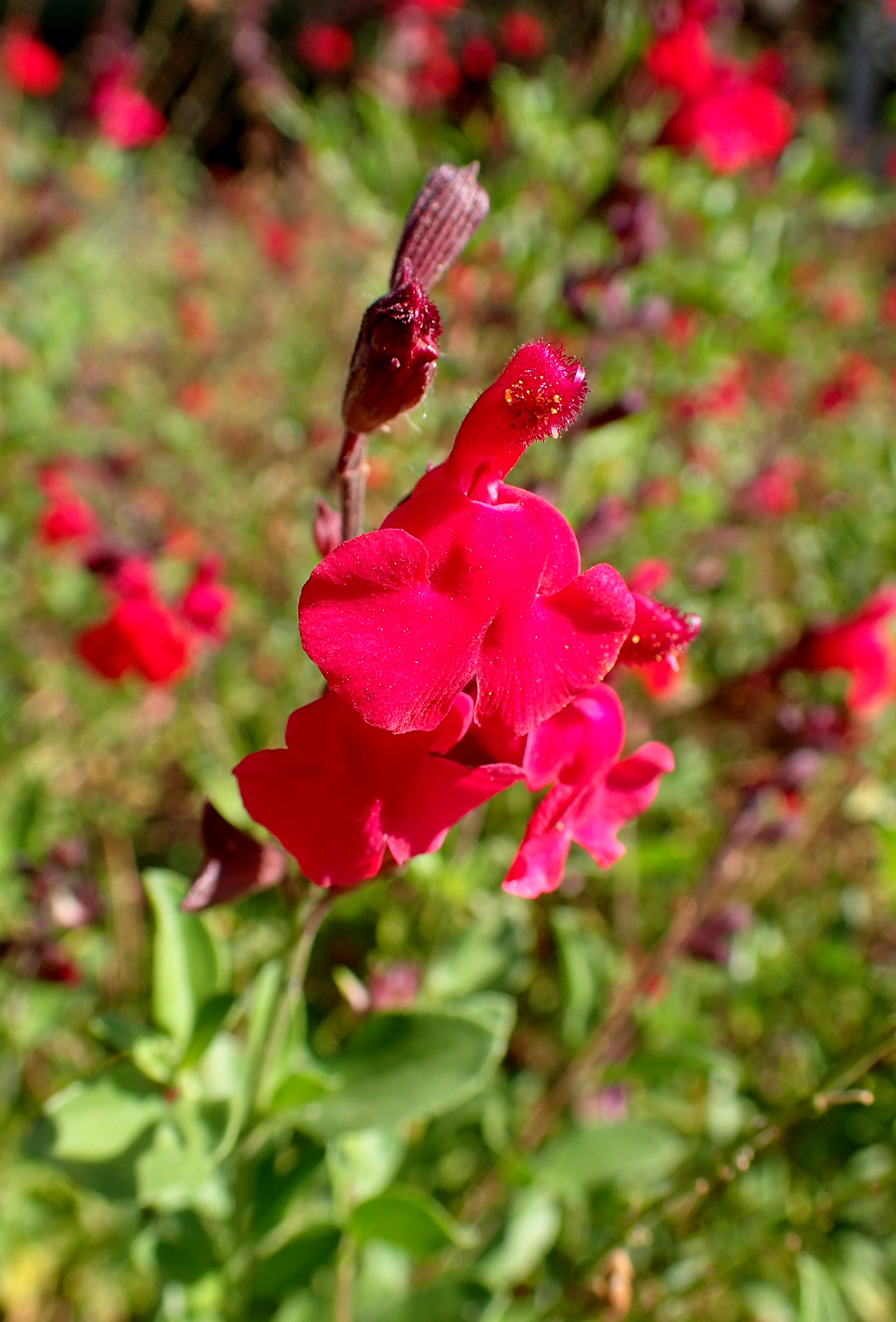
Autumn Sage
Salvia greggii
A compact evergreen perennial that blooms hardest in spring and fall in red, pink or white — thornless, low litter, and one of the most reliable hummingbird plants for a Phoenix front border.
Krzysztof Ziarnek, Kenraiz / Wikimedia Commons / CC BY-SA 4.0 — license
Not sure if this plant belongs near your pool, wall, pavers, or foundation?
AE reviews microclimate, root intrusion risk, and soil compatibility.
Schedule: Twice-weekly in summer, weekly in shoulder seasons.
Emitters: 1–2 emitters per plant, monitored during heat waves.
Flowering perennials, citrus, and lush accents need more attention than true desert plants.
Arizona yards have very different microclimates. West-facing walls, glass, artificial turf, pavers, travertine, porcelain, and pool decking all increase reflected heat. AE considers these before confirming placement.
- Low root impact
AE verifies pool deck, paver, foundation, wall, and utility clearances before final planting.
Quick Facts
- Plant type
- Flowering Perennial
- Mature size
- 2 ft tall, 2 ft wide
- Growth rate
- Moderate
- Sun
- Full sun
- Water use
- Low
- Bloom season
- Spring and fall
- Flower color
- Red, pink or white by variety
- Foliage
- Dark green
- Evergreen / Deciduous
- Evergreen
- Thorns / spines
- None
- Litter level
- Low
- Pool area
- Great
- Maintenance
- Low
- Privacy value
- Low
- Shade value
- Low
- Native
- Desert-adapted
About Autumn Sage
Autumn Sage is a small sprawling shrub-perennial that stays around 2 feet tall and 2 feet wide with medium-textured dark-green foliage it holds year-round. AMWUA records its native range as central and western Texas and northeastern Mexico — it is desert-adapted here rather than a Sonoran native — and rates it hardy to about 5°F, so Valley winters are not a concern. Flowers come in red, pink or white depending on variety and peak in spring and fall, which is exactly when Phoenix outdoor living gets used most, and those flowers bring in hummingbirds and other birds. Water use runs low to moderate, litter is low, and there are no thorns or irritating parts, so it works right at the edge of a walkway or pool deck. AMWUA also notes it is rabbit resistant. The one thing to get right in the low desert is exposure: AMWUA lists full or partial sun, and in Phoenix the plants that get some afternoon protection stay fuller and hold up better through July and August than the ones baking on a west-facing wall all day.
Best uses: Repeat spring and fall color in front borders, hummingbird planting near patios and windows, softening walkway edges, small-scale filler in courtyards and entry beds
AE Designer Opinion
Design Uses
- Front borders and walkway edges where the bloom is seen up close
- Hummingbird planting near patios, courtyards and windows
- Color pockets between evergreen structural shrubs
- Thornless, low-litter planting near pool decks and seating
- Entry and courtyard beds that need seasonal color at small scale
Care & Maintenance
- Water deeply and infrequently; low to moderate use, never daily drip
- Shear or hand-prune lightly after each bloom cycle to keep growth dense
- Renew the plant with a harder cutback in late winter if it goes woody
- Site with morning sun and some afternoon protection in the low desert
- Keep granite and mulch pulled back slightly from the crown for drainage
Common Homeowner Mistakes
- Planting it in a hot west-facing bed with no afternoon relief
- Never pruning, so the plant opens up and goes woody in the center
- Running it on a daily drip schedule instead of deeper, less frequent watering
- Using it as a filler in a large bed where a 2-foot plant is lost
- Expecting continuous bloom rather than spring and fall peaks
Placement Warnings
⚠ Small 2-by-2-foot mature size with no screening or shade value. In full west exposure it can look tired by late summer; light pruning after each bloom cycle keeps it dense.
- Too small for screening, privacy or shade — keep it as a border plant
- Full, unshaded west exposure stresses it in Phoenix midsummer
- Needs drainage; avoid low spots where irrigation water collects
- Allow the full 2-foot spread rather than crowding plants for instant fill
- Not a Sonoran native — do not specify it where a strict native palette is required
AE reviews final placement based on sun, irrigation, drainage, mature size, and overall design.
Pairs Well With
- Damianita
- Brittlebush
- Trailing Rosemary
- Deer Grass
- Angelita Daisy
More Arizona Plants Like This


Ready to Build Your AE Plant Wishlist?
Add Autumn Sage and your other favorites to your wishlist, then send it to the AE design team for the final plant palette.