Arizona Pool Fence Laws (2026) — What to Confirm
Phoenix-area pool-barrier requirements in plain English, plus glass, mesh, and wrought-iron options to evaluate with your municipality or AHJ.
What the Arizona statute addresses
ARS §36-1681 applies to pools within its scope and includes exceptions, and cities, counties, HOAs and insurers can add requirements. Confirm what applies to your property with your municipality/AHJ before design is finalized.
- An enclosure at least five feet high, with a limited lower alternative under stated statutory conditions.
- Limits on the size of openings in the barrier.
- Self-closing and self-latching gates, with latch placement stated in the statute.
- Gates opening away from the pool.
- Separate conditions where a door of the residence forms part of the enclosure — local rules may add alarms or self-closing doors.
- Read the statute at https://www.azleg.gov/ars/36/01681.htm and CPSC's non-mandatory guidance at https://www.cpsc.gov/s3fs-public/362%20Safety%20Barrier%20Guidelines%20for%20Pools.pdf
Barrier options to evaluate
No barrier replaces active adult supervision — designate an undistracted Water Watcher whenever children are in or near water.
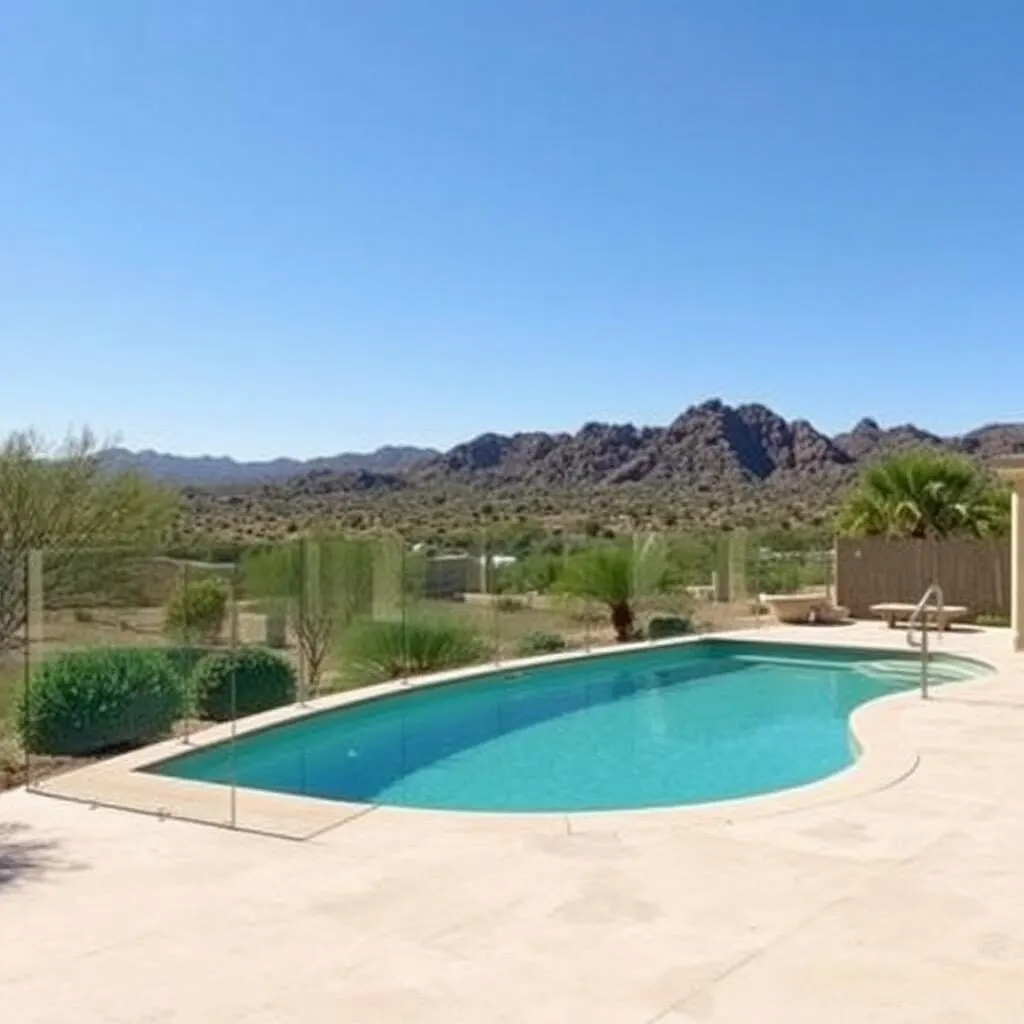
- Glass fencing — see-through, premium look; AE uses 1/2-inch tempered safety glass with Duplex 2205 stainless core-mount spigots as its fence standard.
- Wrought iron — classic and view-friendly, with picket spacing set by the applicable requirement.
- Mesh (removable) — a lower-cost option subject to AHJ acceptance.
- Block wall — solid perimeter option that blocks the view; we use it selectively.
City variations
Municipalities may apply their own adopted barrier ordinances in addition to state law. The property owner confirms the governing requirements with the municipality/AHJ and, where relevant, the HOA and insurer; AE designs and installs to the approved written scope.
Why it matters
Barrier requirements exist because drowning is a leading cause of death for young children. Requirements are enforced by the jurisdiction, and insurance terms are between you and your insurer. Layers of protection — barriers, alarms, covers, swim skills — reduce risk, and none of them replace an undistracted adult watching the water.