

Mexican Bird of Paradise
Erythrostemon mexicanus
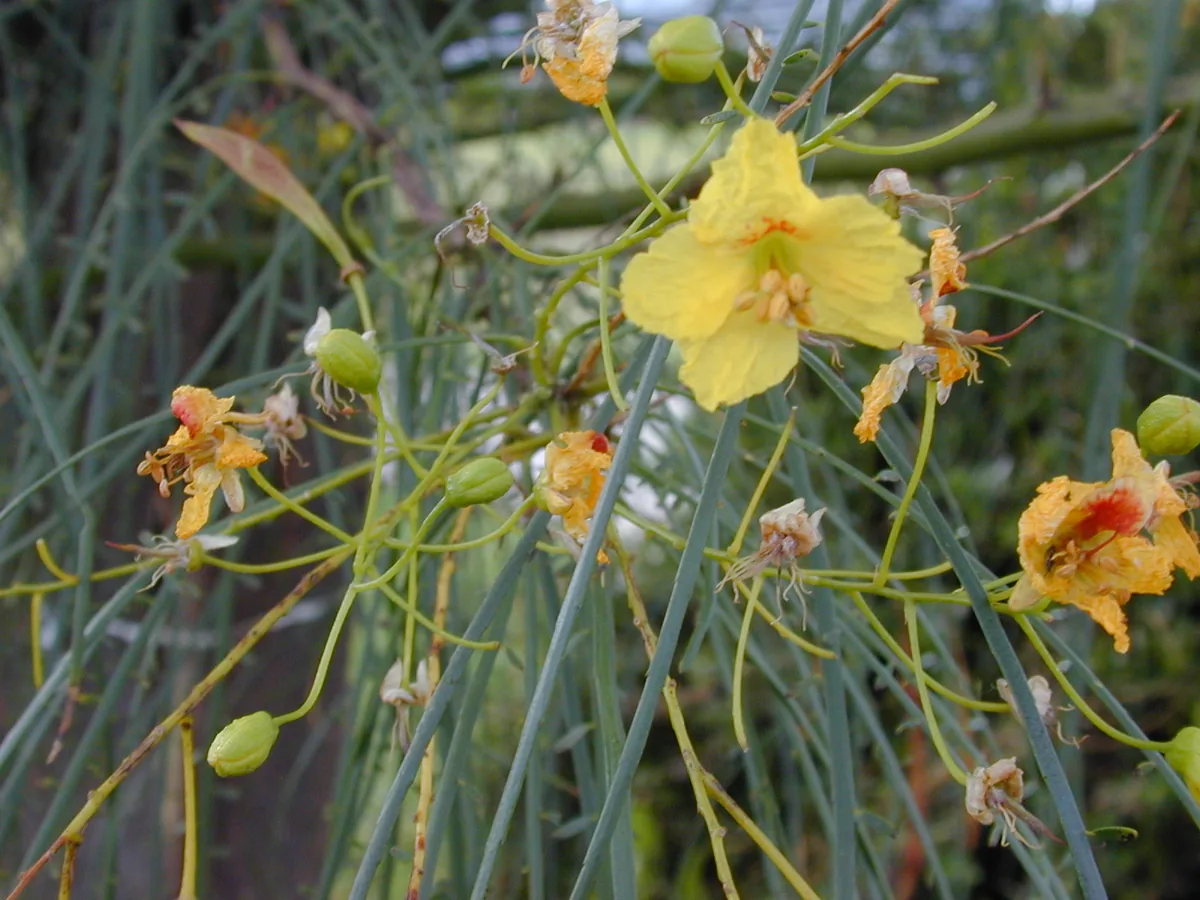
An evergreen Mexican native that reaches about 15 feet tall by 10 feet wide and throws yellow flower spikes off and on through the year — beautiful, thornless, and genuinely messy.
Consultaplantas / Wikimedia Commons / CC BY-SA 4.0 — license
Not sure if this plant belongs near your pool, wall, pavers, or foundation?
AE reviews microclimate, root intrusion risk, and soil compatibility.
Schedule: Deep, infrequent — typically every 10–21 days mature, more often in summer establishment.
Emitters: Multiple large emitters or bubblers placed out at the drip line, not at the trunk.
Encourages deep roots and long-term tree stability. AE designs irrigation to expand as the tree matures.
Arizona yards have very different microclimates. West-facing walls, glass, artificial turf, pavers, travertine, porcelain, and pool decking all increase reflected heat. AE considers these before confirming placement.
- Mind clearance from pool deck
- Mind clearance from walls
AE verifies pool deck, paver, foundation, wall, and utility clearances before final planting.
Quick Facts
- Plant type
- Tree
- Mature size
- 15 ft tall, 10 ft wide
- Growth rate
- Moderate to fast
- Sun
- Full sun
- Water use
- Moderate
- Bloom season
- Intermittently through the year
- Flower color
- Yellow
- Foliage
- Dark green
- Evergreen / Deciduous
- Evergreen
- Thorns / spines
- None
- Litter level
- High
- Pool area
- Avoid nearby
- Maintenance
- Seasonal pruning
- Privacy value
- Medium
- Shade value
- Medium
- Native
- Desert-adapted
About Mexican Bird of Paradise
Mexican Bird of Paradise is grown in the Valley two ways: left alone as a big billowing shrub, or limbed up into a small multi-trunk tree with an open, upright frame. AMWUA lists it as native to Mexico, hardy to about 15°F, moderate in water use, and moderate to fast in growth, maturing near 15 feet tall and 10 feet wide with dark green, medium-textured foliage that holds through the year. The yellow flower spikes appear intermittently rather than in one tidy season, which is exactly why homeowners like it — there is almost always something blooming, and hummingbirds work it. Two honest tradeoffs drive where we place it. First, litter is high: flowers drop, then pods form and drop, and the cleanup is continuous rather than seasonal. Second, this is a moderate-water plant, not a very-low-water native, so it belongs on an irrigation zone with other moderate users instead of sharing a valve with desert shrubs. Place it for the color and the evergreen screen, plan for the sweeping, and it is a strong performer.
Best uses: Evergreen flowering accent tree or trained large shrub for courtyards, side entries and patio corners that need long-season yellow color
AE Designer Opinion
Design Uses
- Evergreen flowering accent at a courtyard or side entry
- Trained multi-trunk small tree for a narrow planting bed
- Long-season color in a moderate-water planting zone
- Soft screening along a block wall set back from hardscape
- Hummingbird and pollinator planting away from seating areas
- Backdrop layer behind lower desert shrubs and groundcovers
Care & Maintenance
- Water deeply and regularly — moderate use, on its own valve where possible
- Prune in late winter to set the shrub or multi-trunk form you want
- Remove spent pods to reduce litter and volunteer seedlings
- Thin interior growth rather than shearing the outside
- Expect continuous light cleanup rather than one seasonal pass
- Protect young plants during hard freezes in open, exposed yards
Common Homeowner Mistakes
- Planting it beside a pool and then fighting constant flower and pod drop
- Underwatering it like a desert native and losing the bloom and the foliage density
- Shearing it into a formal hedge, which removes the flowering wood
- Crowding it against a wall or walkway that cannot take a 10-foot spread
- Assuming it blooms in one tidy season instead of intermittently all year
Placement Warnings
⚠ Litter is high year-round — dropped flowers and seed pods are continuous, not seasonal. It also needs moderate water, so it should not share an irrigation valve with very-low-water desert plants.
- High flower and pod litter — keep it away from pool decks, spas and dining patios
- Moderate water use; do not put it on a very-low-water native valve
- Allow a full 10-foot mature width and 15-foot height before planting near a wall
- Plan the form early — shrub or limbed-up small tree — rather than shearing later
- Cold snaps below roughly 15°F can damage it in exposed West Valley locations
AE reviews final placement based on sun, irrigation, drainage, mature size, and overall design.
Pairs Well With
- Texas Sage
- Damianita
- Red Yucca
- Angelita Daisy
More Arizona Plants Like This


Ready to Build Your AE Plant Wishlist?
Add Mexican Bird of Paradise and your other favorites to your wishlist, then send it to the AE design team for the final plant palette.