Does a pool increase home value in Arizona? Honest answer.
A pool may contribute to home value, but construction investment and resale contribution are different. Local buyers, condition, site fit and competing homes matter. Separate your household’s use budget from a property-specific valuation rather than assuming a Phoenix-wide premium.
- AZ ROC 211530 · 347738 · 341002 · 340966
- Arizona-built since 2005
- President, Southwest Hardscapes Association
Evaluate value in the competitive local market
A neighborhood name or home-price tier cannot establish the contribution of a pool. Start with the particular property and its alternatives.
- Ask a qualified local appraiser to select recent competitive sales with relevant physical and legal characteristics.
- Consider differences in the home, lot, pool condition and transaction circumstances rather than treating every price difference as pool value.
- Do not use the calculator’s fixed scenario factors as observed local recovery rates.
Read national pool research in context
NAR’s 2023 national survey report describes an illustrative 18-by-36-foot inground gunite pool with concrete surround: landscape professionals estimated $90,000 in construction expense and REALTORS estimated $50,000 recovered, or 56% rounded. These nationwide representative-project survey estimates are not paired Phoenix MLS sales or a prediction for your property. See the report, printed pages 27–28 and methodology pages 31–32.
- Climate and outdoor habits can influence use; they do not prove a universal Arizona buyer premium.
- National estimates describe a defined project and survey population, not an appraisal of your home.
- Keep the national benchmark separate from the calculator’s retained hypothetical assumptions.
Want a number for your own property?
Tell us the space and we'll come back with a real range for your site — no pressure, no "call for pricing."
Compare features by site fit and intended use
Decking, shade, spas and equipment involve different practical tradeoffs, not a universal resale ranking.
- Compare concrete, stone and pavers for surface condition, maintenance, drainage and suitability for the approved design.
- Evaluate a spa, shelf or water feature against actual use, circulation and maintenance needs.
- Review equipment condition, controls and lighting with qualified professionals; do not assume an upgrade creates an equal buyer premium.
Keep finish and size choices proportionate
An elaborate finish or larger pool can increase project scope without establishing a matching resale contribution.
- Balance swimming space with circulation, shade and other outdoor activities.
- Compare tile and water-feature upkeep as well as appearance; design tastes differ among buyers.
- Discuss access, utilities and future repair needs before choosing features.
Address condition, safety and approval questions
Visible wear or unresolved requirements can influence buyer decisions, but the effect is property-specific.
- Review maintenance records and obtain condition assessments when needed.
- Confirm permits, barrier requirements and other project approvals with the applicable authority and HOA where relevant.
- No fence, gate or barrier replaces active adult supervision. Designate an undistracted adult Water Watcher whenever children are in or near water.
Evaluate an existing pool before selling
Prioritize documented repair needs and a realistic selling plan rather than assumed renovation payback.
- Obtain written estimates for surface, equipment or deck issues.
- Discuss how condition compares with competing properties with a qualified local professional.
- Preserve permits, service records and warranty documents; confirm whether warranty terms transfer.
- Separate necessary repairs from optional finishes; neither automatically returns its full investment at closing.
Analyze rentals and commercial properties separately
Rental performance needs property-specific revenue and expense assumptions, not residential resale factors.
- Check applicable rental rules, insurance conditions and operating obligations.
- Model vacancy, management, cleaning, maintenance, heating, utilities and reserves alongside revenues.
- Test less favorable revenue and expense scenarios; do not assume a universal pool-related rate or occupancy increase.
- Keep any rental analysis separate from this calculator, which contains no income or expense model.
Plan an affordable scope with AE
Define how you intend to use the space, the investment you can support and the site constraints before selecting materials.
- Compare construction and ongoing ownership expenses with your use budget.
- Request a project-specific scope review and estimate; use an appraiser for market valuation.
- Keep enjoyment distinct from financial return. No holding period guarantees full recovery.
Common questions.
Discuss your pool project scope with AE
Discuss your intended use, site constraints and investment range. Request a project-specific scope review and estimate, not an appraisal or a comparable-sales report.
Discuss My Pool ProjectWhy this is an investment, not a cost.
An AE backyard is engineered to add daily livability and long-term home value. We publish honest ranges and build to code with a licensed and bonded Arizona crew. AE provides project-specific workmanship and manufacturer-warranty information in the signed agreement. Website summaries are for planning only.
- Licensed, bonded & insured in Arizona. ROC 340966 (R-62) · ROC 341002 (R-3) · ROC 347738 (KA-5) · ROC 211530 (CR-21). Most Arizona contracting work valued at $1,000 or more — or requiring a permit — must be performed by a properly licensed contractor, subject to statutory exemptions. Verify the legal entity, license status, and classification with the Arizona Registrar of Contractors.
- Real ranges, itemized scope. You see materials, finishes, equipment models, and a line-item budget before you sign — not a one-line "pool — $90,000."
Plan your investment with a designer.
Five minutes, a real range, and no sales pressure. Or vet any Arizona contractor (us included) before you spend a dollar.
Watch
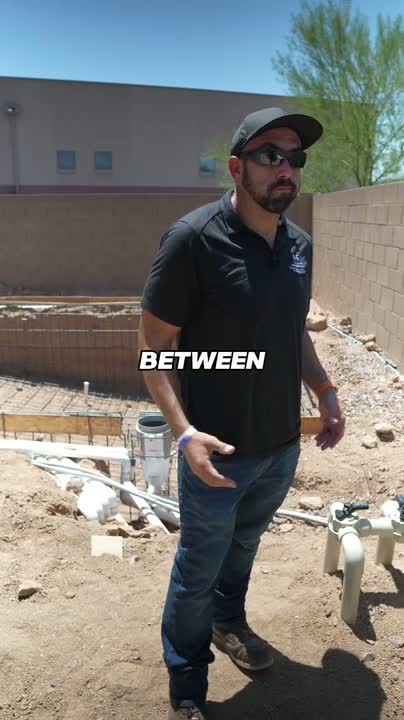
Owner on pool value