
A Better Turf Base for Dog Yards.
Built to Rinse. Designed to Infiltrate.
No drain pipe. No offsite discharge. The entire pet-turf area is designed to store, spread, and infiltrate routine rinse water into qualified native soil.
For Arizona residential dog yards where the soil passes AE's site evaluation.
An Open-Bottom Infiltration Bed Beneath the Whole Turf Footprint
Most artificial turf is installed over a tightly compacted base containing small particles and stone dust. That creates a firm surface, but it can reduce connected drainage space and make concentrated pet areas harder to rinse.
The AE Pet Turf Infiltration System uses clean, washed, open-graded stone over a tested, scarified native-soil interface. Instead of sending rinse water to one drain, the system distributes it across the full turf footprint.
- 1Dog urine and rinse water pass through high-flow artificial turf.
- 2A serviceable zeolite layer near the surface helps capture accessible ammonium.
- 3A smaller washed-stone finish course creates a stable turf surface.
- 4A deeper open-graded stone reservoir temporarily stores and spreads the water.
- 5Water infiltrates through an open bottom into field-tested native soil.
- 6No perforated drain pipe or offsite discharge is used when the site qualifies.
Plain-language clarification: The system is similar to a broad, shallow French-drain concept, but the technically correct term is an open-bottom infiltration bed. A traditional French drain normally uses a perforated pipe to move water elsewhere. The AE system spreads water across the whole turf footprint and allows it to soak into suitable native soil.
We do not describe the system as a dry well, septic system, wastewater-treatment system, or engineered drain.
What's Under the Turf
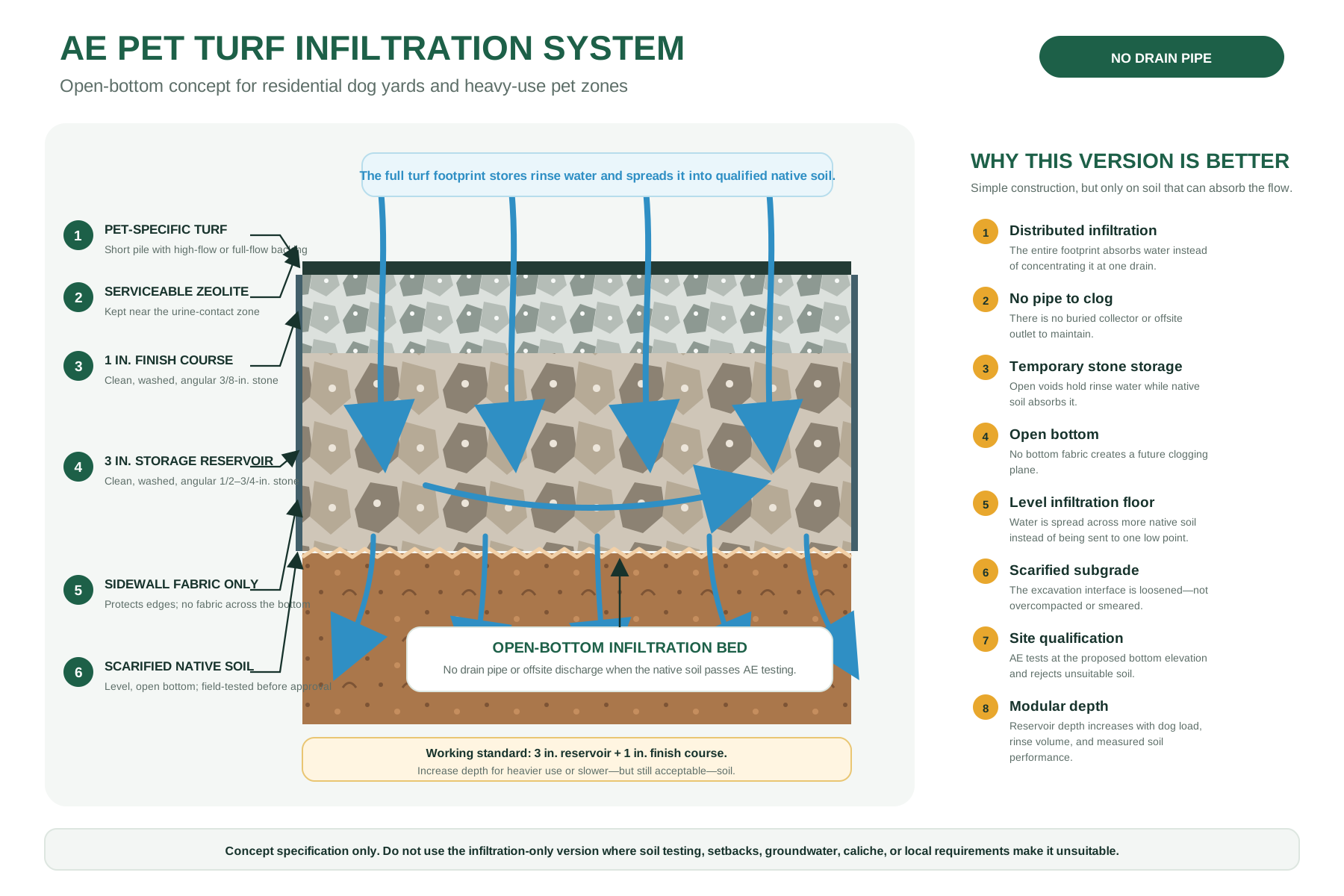
Six Layers, From Blade to Native Soil
1. Pet-Specific Artificial Turf
A pet-appropriate turf selected for cleanability, appearance, traffic level, and Arizona heat exposure. Preferred characteristics include:
- Short, dense pile that is easier to rinse and brush
- Approximately 1 to 1.25 inches unless the manufacturer specifies otherwise
- High-flow perforated or full-flow backing
- No absorbent foam pad in the pet-relief zone
- Minimal seams; seams kept away from the most concentrated potty area when practical
- Corrosion-resistant fastening system and nonabsorbent perimeter nailers where practical
A high drainage rating for the turf does not guarantee that the completed yard will drain properly. Backing, stone base, native soil, borders, construction quality, and maintenance all affect real-world performance.
2. Serviceable Zeolite Near the Urine-Contact Zone
Pet-grade natural zeolite (typically clinoptilolite), only when compatible with the selected turf system. Zeolite can adsorb accessible ammonium through ion exchange and support odor control when urine actually contacts it.
- It does not destroy every urine component.
- It does not replace rinsing, biological cleaning, solid-waste removal, or drainage.
- It should remain near the surface where it can be inspected, replenished, or replaced.
- It should not be buried deep in the lower stone reservoir as a permanent cure.
- The original product and installed quantity are documented for the homeowner.
AE position: we treat zeolite as a serviceable odor-control material — not a miracle ingredient hidden beneath the turf.
3. One-Inch Washed-Stone Finish Course
- ~1 inch of clean, washed, angular 3/8-inch stone
- Free of clay, dirt, organic material, crusher dust, and excessive fines
- Mechanically seated to create a smooth, stable turf surface
- Installed directly over the larger drainage reservoir
- No quarter-minus or stone-dust cap in the designated heavy-pet infiltration zone
The smaller washed stone acts as a stabilizing or choker course. It gives the turf a smoother support layer without intentionally filling the connected voids in the larger stone below.
4. Open-Graded Stone Storage Reservoir
AE Standard Residential
- ~3 in. of washed angular 1/2–3/4″ stone
- + 1 in. smaller finish course
- ~4 in. total open-graded aggregate
AE Enhanced Heavy-Use
- 4–5 in. of washed angular 1/2–3/4″ stone
- + 1 in. finish course
- ~5–6 in. total
Multiple/large dogs, concentrated potty areas, frequent rinsing, slower-but- acceptable soil, runoff-prone areas.
AE should not advertise two or three inches of total base as a universal heavy-dog standard. When the system relies entirely on native-soil infiltration, temporary storage and soil performance matter more, not less.
Internal sizing formula (estimating only): gallons = area(sq ft) × depth(in) × void ratio × 0.623. Published storage numbers require verified void ratio, depth, and field conditions.
5. Sidewall Geotextile — Not Bottom Fabric
Permeable geotextile is used along excavation sidewalls when needed to reduce migration of surrounding native fines, protect the reservoir from soil piping, and separate the reservoir from disturbed perimeter soils.
We do not automatically install geotextile across the bottom of the infiltration bed.
- Bottom fabric can become a clogging plane.
- The design goal is direct contact between clean stone and scarified native soil.
- A project-specific geotechnical or civil design may specify another detail.
The sides are protected from migrating soil, while the bottom remains open for direct infiltration.
6. Level, Scarified Native-Soil Infiltration Floor
The bottom of the reservoir is level or gently benched so water spreads across the largest practical soil area. We do not slope the reservoir bottom aggressively toward one low point — that concentrates flow and defeats distributed infiltration.
- Excavate to the approved bottom elevation.
- Avoid smearing the native soil with a smooth excavator bucket.
- Avoid construction traffic on the infiltration floor.
- Remove loose sediment, construction debris, and contaminated fill.
- Scarify or loosen the final native-soil surface ~4–6 in. where appropriate.
- Do not heavily compact the infiltration interface.
- Keep the bottom free of standing water before installing aggregate.
- Field-test the soil at the actual proposed bottom elevation.
- Re-test if caliche, clay lenses, fill, or different soil is encountered.
AE seats and stabilizes the washed stone above, but does not intentionally compact the native infiltration floor into an impermeable pan.
No Drain Pipe. No Offsite Outlet.
On qualifying residential sites, routine pet-area rinse water is temporarily stored in the open stone and infiltrates through the full open bottom into native soil. No drain pipe or offsite discharge is required.
The Soil Must Pass Before the Turf System Is Approved
The no-pipe design only works when the existing subgrade can accept the expected water. These are conservative starting criteria for internal development — not a substitute for local requirements or a licensed design professional.
Preliminary AE Working Criteria
- Test at the proposed bottom elevation — not only at the existing surface.
- Pre-soak the test area before taking the final measurement.
- Test more than one location on larger or visibly variable sites.
- Use a field-measured infiltration rate, not just a soil map.
- Working screen: ~0.5 in./hr or better during product development.
- Test volume should draw down within 48 hours, preferably within 24.
- No persistent standing water at the proposed bottom.
- Maintain required setbacks (groundwater, wells, foundations, pools, walls, septic, slopes, utilities, neighbors).
EPA stormwater guidance commonly treats ~0.5–3 in./hr as workable and recommends field confirmation. AE uses that only as a starting benchmark while developing a pet-turf-specific test protocol.
Site Does Not Qualify When
- Water remains in the test area beyond the accepted drawdown period.
- Native soil is effectively impermeable.
- Continuous caliche cannot be practically removed or penetrated and re-tested.
- The site is too close to a sensitive structure or water source.
- The area is located on unstable fill.
- Infiltration may affect a neighboring property, retaining wall, pool, or foundation.
- Commercial animal-wastewater rules may apply.
- The expected dog load or rinse volume exceeds a reasonable residential application.
What AE Can Do When Soil Fails
- Excavate and remove a shallow restrictive layer where practical, then re-test.
- Increase reservoir area or depth when the soil is slow but still acceptable.
- Relocate the pet zone to a better part of the property.
- Reduce outside runoff entering the turf area.
- Design a smaller dedicated potty zone with controlled maintenance.
- Refer the project for civil, geotechnical, environmental, or wastewater design.
- Decline the infiltration-only system when a reliable solution is not available.
We do not tell homeowners that adding more rock automatically fixes impermeable soil. More rock provides temporary storage; it does not create infiltration capacity in sealed clay or solid caliche.
Eight Things This Version Gets Right
Distributed Infiltration
The entire turf footprint becomes the infiltration area. Water is not concentrated at one pipe or discharge point.
No Buried Drain Pipe
There is no collector pipe to clog, crush, disconnect, or require an offsite route on qualifying sites.
More Temporary Storage
Open-graded stone holds rinse water while the native soil absorbs it.
Open Bottom
Direct stone-to-soil contact avoids automatically placing a fabric clogging layer across the infiltration surface.
Level Infiltration Floor
A level or gently benched bottom spreads water across more soil and reduces concentrated saturation.
Scarified Native Soil
The final soil surface is protected from overcompaction and loosened to restore infiltration pathways.
Modular Reservoir Depth
Stone depth scales with dog load, rinse volume, rainfall exposure, and measured soil performance.
Site Testing Is Part of the Product
AE does not assume every Arizona yard drains. Soil testing and a drawdown check are part of the install.
Caliche Can Stop the Entire System
Caliche is common in Arizona and can range from loose calcium-carbonate deposits to a nearly solid layer. A tight caliche layer can prevent water from moving into deeper soil and cause it to perch above the hard layer.
AE identifies caliche during the site evaluation and excavation.
Residential vs. Commercial Use
Residential Pet Yards
The infiltration-only concept is primarily intended for ordinary residential use where:
- Solid waste is removed promptly
- The dog count is reasonable
- Rinse volume is controlled
- A biological cleaner is used according to its label
- Native soil passes testing
- Sensitive setbacks are maintained
Commercial or Concentrated Animal Use
Kennels, veterinary facilities, boarding operations, multifamily dog parks, shelters, and other concentrated animal-use areas can generate wastewater loads far beyond a typical home.
They should not automatically receive the residential infiltration-only specification. Local wastewater, aquifer-protection, health, and engineering requirements may apply.
Drainage Does Not Replace Cleaning
- Remove solid pet waste promptly.
- Remove hair, leaves, and debris before rinsing.
- Rinse concentrated urine areas with a controlled amount of water.
- Apply a turf-safe biological urine cleaner according to its label.
- Do not flood the turf unnecessarily.
- Do not mix cleaning chemicals.
- Do not use chlorine bleach as the routine cleaner.
- Do not allow surface runoff to leave the property.
- Inspect zeolite and replenish it according to the selected product.
- Schedule professional service if odor returns quickly.
Natural soil does not reliably remove all nitrogen. The system reduces concentration at the surface through prompt waste removal, controlled rinsing, zeolite where appropriate, and biological maintenance — not by treating native soil as an unlimited waste-disposal medium.
See the full homeowner protocol: How to Remove Dog Urine Smell From Artificial Turf.
A Ten-Step Build, From Pet Assessment to Final Drawdown
- 1
Pet-Use Assessment
Number and size of dogs, concentrated potty locations, rinse frequency, yard size, desired appearance, household maintenance ability, and whether this is a new install or an existing-odor situation.
- 2
Site Constraint Review
Foundations, pool shell and plumbing, retaining walls, hardscape borders, utility trenches, irrigation, septic, wells, property lines, slopes, existing runoff, low spots, caliche and clay indicators.
- 3
Test Pits at Proposed Bottom Elevation
Excavate representative test locations and document the native soil profile.
- 4
Pre-Soaked Infiltration Testing
Use AE's approved field protocol and document the drawdown.
- 5
Reservoir Sizing
Set aggregate depth using turf area, measured infiltration, dog load, rinse volume, rainfall exposure, aggregate void space, and the required drawdown period.
- 6
Excavation and Soil Protection
Avoid compaction, smearing, and sediment contamination of the infiltration floor.
- 7
Scarification and Sidewall Separation
Scarify the open bottom. Install approved geotextile along sidewalls where necessary. Do not automatically cover the bottom.
- 8
Washed-Stone Installation
Install the larger open-graded reservoir and the smaller washed finish course. Seat the aggregate without crushing or contaminating its voids with fines.
- 9
Turf and Zeolite Installation
Install pet-specific turf, nonabsorbent edge materials, corrosion-resistant fasteners, and documented zeolite where selected.
- 10
Final Controlled Rinse and Drawdown Check
Apply a measured volume of clean water over representative areas and verify the system accepts the flow, no prolonged ponding occurs, and water does not escape toward structures or neighboring property. Document with photos and written results.
AE Pet-Turf Infiltration Certificate
A branded project closeout that documents what was built, what was tested, and how to maintain it.
- Customer name
- Project address
- Installation date
- Turf area
- Number and size of dogs
- Turf manufacturer and product
- Backing type
- Zeolite product and installed amount
- Finish-stone source, gradation, and depth
- Reservoir-stone source, gradation, and depth
- Supplier-confirmed or measured stone void ratio
- Sidewall geotextile product
- Native soil description
- Caliche or clay observations
- Test-pit locations
- Field infiltration-test results
- Bottom scarification depth
- Final rinse-test volume
- Final drawdown result
- Required maintenance schedule
- Recommended professional-service interval
- Installation photographs
This is not an engineering certification unless a licensed engineer is responsible for it.
Conventional Fines Base vs. AE Open-Bottom Infiltration Base
| Feature | Conventional quarter-minus base | AE infiltration base |
|---|---|---|
| Main goal | Firm compacted support | Stable support plus temporary storage and infiltration |
| Small particles | Intentionally included | Intentionally minimized |
| Connected voids | Reduced as fines compact | Preserved with clean washed stone |
| Rinse-water movement | Can slow within the base | Spreads through open stone |
| Final destination | Often assumed | Verified native-soil infiltration |
| Bottom condition | Frequently compacted | Protected and scarified |
| Bottom fabric | Varies | Not automatic; open bottom is preferred |
| Pipe | Sometimes added | No pipe on qualifying sites |
| Soil test | Often omitted | Required by AE |
| Maintenance | General turf care | Turf, zeolite, cleaning, and drawdown monitoring |
Quarter-minus is not automatically a bad construction material. It is simply not AE's preferred drainage reservoir when the main objective is repeatable rinse-through performance in a concentrated pet area.
Infiltration System FAQ
It works on a similar storage-and-infiltration principle, but a traditional French drain normally includes a perforated pipe that carries water away. The AE system is better described as a shallow, open-bottom infiltration bed beneath the entire turf area.
Not when the native soil passes the AE site test and the project meets applicable setback and use requirements. The open stone temporarily stores the water while it infiltrates through the bottom.
Not automatically. Tight caliche can stop downward water movement. AE must expose, evaluate, and test the actual soil at the proposed bottom elevation. A restrictive layer may need to be removed or the system may need a different design.
A level or gently benched bottom spreads water across more native soil. Sloping everything toward one low point concentrates water and reduces the effective infiltration area.
Fabric can become a clogging layer. The AE concept keeps direct contact between clean stone and scarified native soil unless a project-specific design requires another detail.
The working residential standard is approximately four inches total: three inches of larger washed stone and one inch of smaller washed finish stone. Heavy-use or slower-soil projects may require five to six inches total.
No. Deeper rock adds temporary storage, but it does not make sealed clay or solid caliche absorb water. The soil must still pass the site test.
No. Zeolite can help capture accessible ammonium, but it does not replace cleaning, rinsing, drainage, or maintenance.
No responsible company should promise that. Odor depends on pet load, heat, solid-waste removal, cleaning, zeolite condition, soil performance, and maintenance. The system is designed to be easier to rinse and service.
Possibly, but not under the standard residential specification. Concentrated commercial animal use may require wastewater, environmental, or civil-engineering review.
Will Your Yard Qualify for the AE Infiltration System?
We test soil at the proposed base elevation, document drawdown, and only approve the no-pipe design when the site qualifies.
Our secure project request form is hosted on AE’s client hub and opens in a new tab. It takes a couple of minutes, and a designer reviews every request.
Existing clients with support, warranty, or service questions can email support@aeoutdoorliving.com.
Reference Information for Content Review
- U.S. EPA — Infiltration Trench Best Management Practice (PDF)
- University of Arizona Cooperative Extension — Managing Caliche in the Home Yard
- K9Grass Endura Outdoor Specification (PDF)
- U.S. EPA — Pet Waste Management (PDF)
- Simple Green — Pet & Outdoor Odor Eliminator
- ProVetLogic — Pet-turf cleaning instructions
Verify all external links and current manufacturer instructions before publication.